Battery manufacturing has exploded across North America, and the safety lessons learned in botanical processing labs now translate directly into lithium-ion gigafactories. Both industries handle volatile materials. Both face strict fire codes. Moreover, both demand engineered enclosures that protect workers, equipment, and surrounding facilities. At C1D1 Labs, we have spent years designing hazardous location rooms for solvent-based processing, and that expertise transfers cleanly into the battery sector.
In this article, we explore why battery manufacturers are adopting C1D1 and C1D2 rated enclosures, how electrolyte handling mirrors hydrocarbon processing, and what facility planners should know before breaking ground on a new production line.

Why Battery Plants Need Hazardous Area Classification
Lithium-ion battery production involves flammable electrolytes, typically carbonate-based solvents that flash at low temperatures. Consequently, regulators classify many production zones as Class I, Division 1 or Division 2 hazardous locations. The National Fire Protection Association publishes the codes that govern these areas, including NFPA 70 and NFPA 497, and authorities having jurisdiction enforce them rigorously.
Furthermore, OSHA requires employers to control ignition sources wherever flammable vapors may accumulate. Therefore, battery manufacturers must isolate electrolyte filling, formation, and aging areas inside properly rated rooms. Otherwise, a single spark could trigger a thermal runaway event that propagates across an entire production floor.
C1D1 Labs designs hazardous areas for battery production using the same engineering principles that secure botanical processing labs. The result is a fast, code-compliant pathway to occupancy.
Lessons from Botanical Processing
processing professionals have refined hazardous area design over the last decade. They learned how to manage butane, propane, and ethanol inside compact rooms. They built ventilation systems that exceed code minimums. They installed gas detection that triggers automatic shutdowns. Battery plants face nearly identical challenges, only at much larger scale.

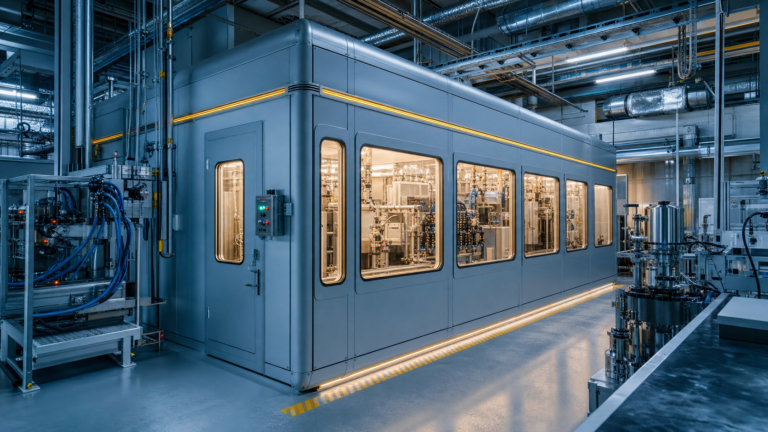
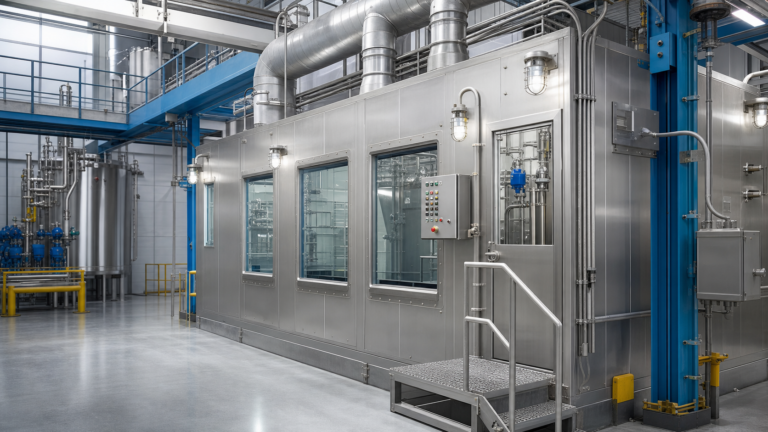
For instance, a 1-hour fire-rated booth originally built for hydrocarbon processing can house electrolyte mixing tanks. Likewise, an outdoor C1D1 module designed for ethanol recovery can isolate cell formation racks. Because the underlying physics of vapor accumulation does not change, the engineering solutions transfer directly.
Additionally, our team writes engineer peer reviews that battery plants can submit to local fire marshals. These reports cover solvent calculations, ventilation rates, and equipment listings, which streamlines permitting in unfamiliar jurisdictions.
Modular Rooms Versus Site-Built Construction
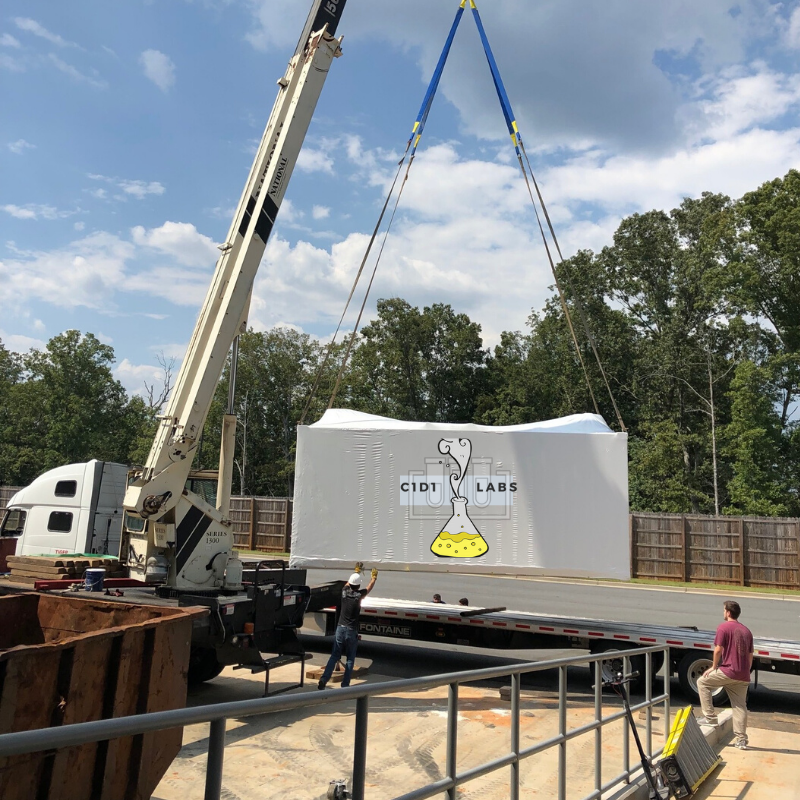
Battery facilities often need to scale fast. Meanwhile, traditional construction can drag on for many months while regulators review every detail. Modular C1D1 rooms solve this problem. They arrive pre-engineered, pre-tested, and ready for utility hookups. Subsequently, plant managers can reconfigure production lines without tearing down walls.
According to the U.S. Department of Energy Vehicle Technologies Office, domestic battery capacity will continue expanding through the rest of the decade. As a result, manufacturers need flexible infrastructure that adapts to new chemistries and form factors. Modular hazardous area rooms deliver exactly that flexibility.

Fire Protection Engineering for Battery Plants
Insurance carriers scrutinize battery facilities even more aggressively than botanical labs. Therefore, comprehensive fire protection documentation pays for itself within the first underwriting cycle. C1D1 Labs offers fire protection engineering services that cover the full lifecycle, from initial concept through final inspection.
Our engineers calculate solvent quantities, model vapor dispersion, and specify suppression systems. Additionally, they coordinate with mechanical and electrical teams to ensure every penetration, conduit, and damper meets the assembly rating. Because fire marshals trust documentation prepared by licensed professionals, approvals move faster and rework drops dramatically.
Shared Equipment and Process Overlap
Surprisingly, several pieces of processing equipment also serve battery production. Vacuum ovens, for example, dry electrode coatings and remove residual moisture from cell stacks. Similarly, jacketed tanks blend electrolyte components under controlled temperature. Even centrifuges find use in cathode active material recovery during recycling operations.
This crossover means our manufacturing capacity, supply chain, and engineering knowledge directly serve a second major industry. Consequently, customers benefit from proven designs rather than first-generation prototypes.
Planning Your Hazardous Area Strategy
Before you finalize a battery plant layout, walk through these questions with your design team. First, which zones will contain flammable electrolytes during normal operation? Second, where might vapors accumulate during a maintenance event? Third, what fire rating does your insurer require for separation between production and storage?
Once you answer those questions, you can map specific rooms and ratings to each process step. Then, our team can quote modular enclosures, engineered drawings, and permitting support as a single package.
Build It Right the First Time
Battery manufacturing rewards facilities that take safety seriously from day one. Retrofits cost more, delay production, and frustrate regulators. By contrast, a properly engineered C1D1 strategy speeds permitting, lowers insurance premiums, and protects your workforce.
Reach out to C1D1 Labs to discuss your battery production plans. Our engineers will walk through your process flow, identify hazardous zones, and recommend modular solutions that fit your timeline. Furthermore, we will deliver the documentation your AHJ needs to issue permits without unnecessary delay.