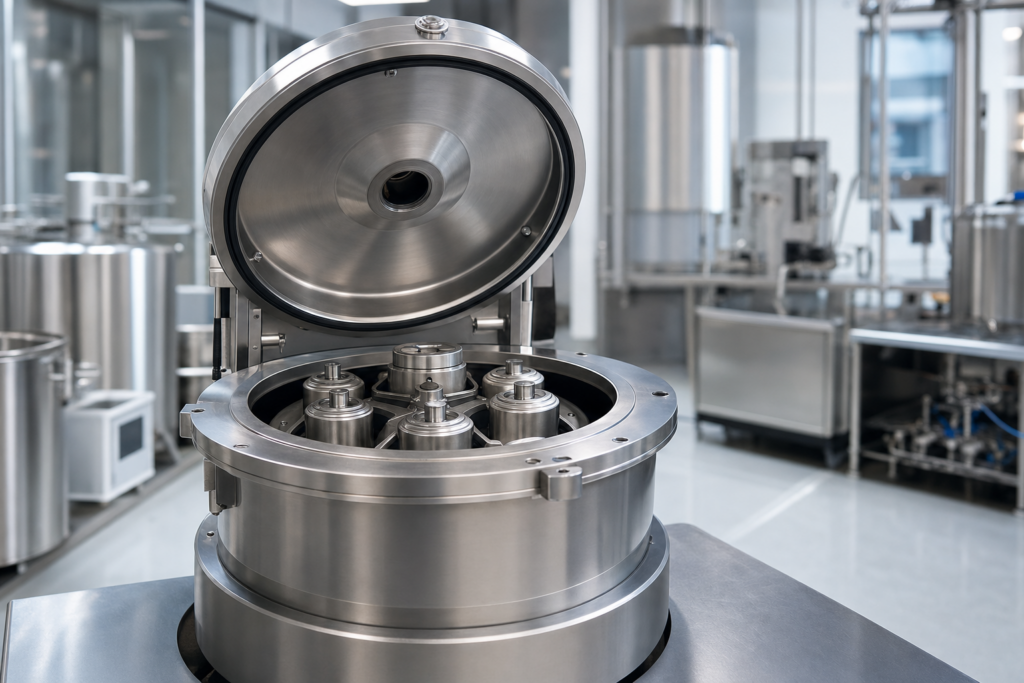
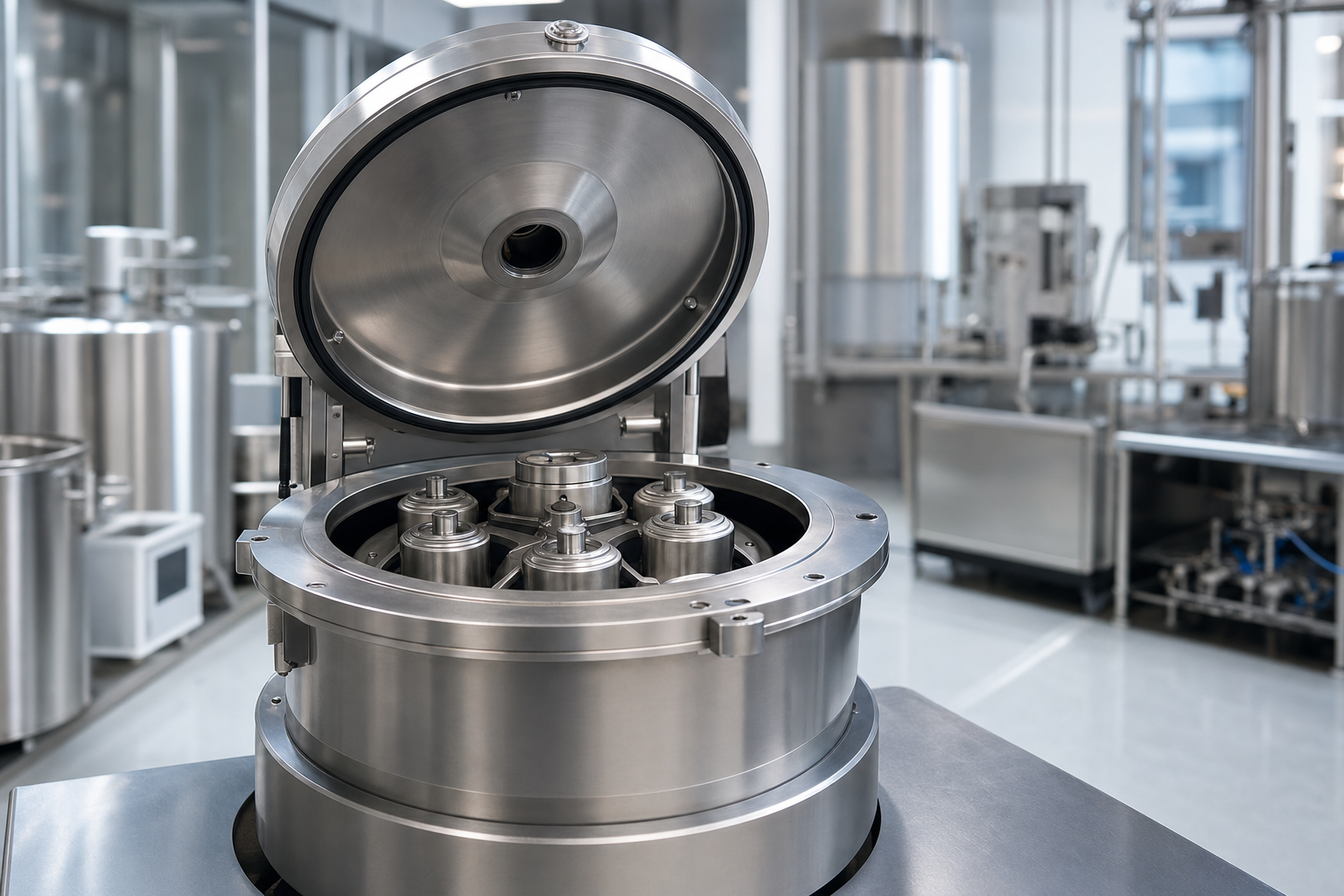
A planetary centrifuge has become an indispensable tool across a growing range of industries, prized for its ability to combine high g-force separation with rapid mixing in a single, compact system. By rotating a sample container both around the machine’s central axis and around its own axis at the same time, a planetary centrifuge generates powerful, multi-directional forces. This unique motion makes it possible to infuse, purge, separate, and homogenize materials far faster than conventional equipment. In this article, we look at the most common industrial uses of the planetary centrifuge and why it has become a workhorse in modern processing facilities.
What Makes a Planetary Centrifuge Different
Unlike a standard centrifuge, which spins a sample around one fixed axis, a planetary centrifuge adds a second rotation. The result is a continuously changing force vector that drives materials through one another while still separating components by density. This dual action is what allows a single machine to handle tasks that would otherwise require several pieces of equipment—mixing, degassing, infusing, and separating—often in a matter of minutes rather than hours. You can explore a range of industrial processing centrifuges to see how these systems are configured for different production needs.
Using a Planetary Centrifuge to Infuse Biomass With Oil
One of the most valuable applications is the rapid infusion of biomass with oil. By loading prepared biomass together with a carrier oil into the planetary centrifuge, the planetary motion forces the oil deep into the processed material while the centrifugal force simultaneously drives the infused liquid out of the solids. This dramatically shortens infusion times compared with traditional soaking or heating methods, improves consistency from batch to batch, and reduces the amount of oil lost in the spent material. For producers of botanical extracts, nutraceuticals, and food-grade infusions, this means higher yields and a more uniform end product.
Purging Solvents and Isolating Quickly
A planetary centrifuge is also widely used to purge residual solvents and isolate refined compounds quickly. After processing, the centrifuge’s combined spinning and mixing action helps drive off trapped solvent and separate the desired fraction from unwanted material in a single, controlled step. Because the process is fast and fully enclosed, it supports tighter quality control, reduces operator exposure, and helps facilities meet strict residual-solvent and purity standards. The speed of isolation also frees up production capacity, allowing labs to process more batches per shift. The underlying principle relies on well-understood centrifugal separation physics applied at industrial scale.
Homogenizing Powders and Oils With a Planetary Centrifuge
Beyond separation work, the planetary centrifuge excels at homogenizing powders, oils, and powder-oil blends. The continuous folding and shearing motion produces an extremely uniform mixture without introducing excess air, which is critical for products where consistency directly affects performance—such as pharmaceuticals, cosmetics, lubricants, and specialty coatings. Many systems can mix and de-air in the same cycle, eliminating a separate degassing step and producing bubble-free, ready-to-use material.
Industries That Rely on the Planetary Centrifuge
The versatility of the planetary centrifuge has earned it a place in a wide variety of sectors:
- Pharmaceutical and nutraceutical manufacturing – for uniform blending of active ingredients and rapid solvent purging.
- Food and beverage production – for infusing oils, emulsifying ingredients, and creating consistent textures.
- Cosmetics and personal care – for bubble-free creams, serums, and emulsions.
- Adhesives, coatings, and advanced materials – for mixing high-viscosity pastes and dispersing fillers evenly.
- Research and laboratory settings – for small-batch, repeatable sample preparation.
Why Planetary Centrifuge Speed and Consistency Matter
Across all of these applications, the common theme is efficiency. A planetary centrifuge can compress what used to be multi-step, multi-hour workflows into a single rapid cycle, all while improving the uniformity and quality of the finished product. For facilities focused on throughput, repeatability, and regulatory compliance, that combination of speed and consistency translates directly into lower costs and higher output.
Conclusion
From infusing biomass with oil and purging solvents to homogenizing delicate powder-oil blends, the planetary centrifuge delivers a level of speed and uniformity that conventional equipment struggles to match. As more industries discover the benefits of combining separation and mixing in one machine, planetary centrifuge technology continues to expand its role as a versatile, high-performance solution for modern processing.