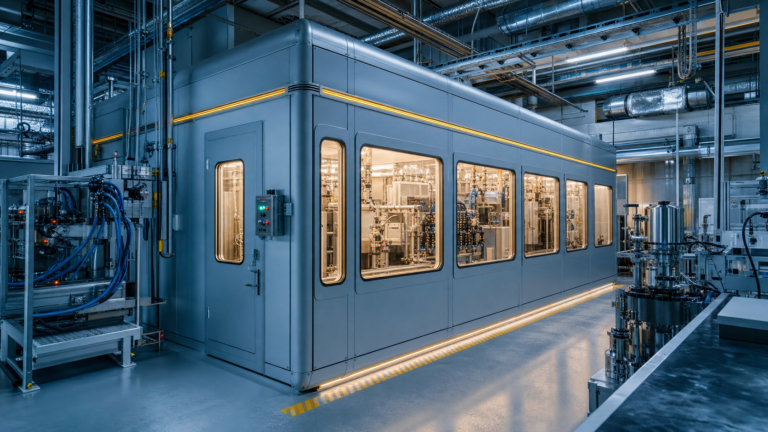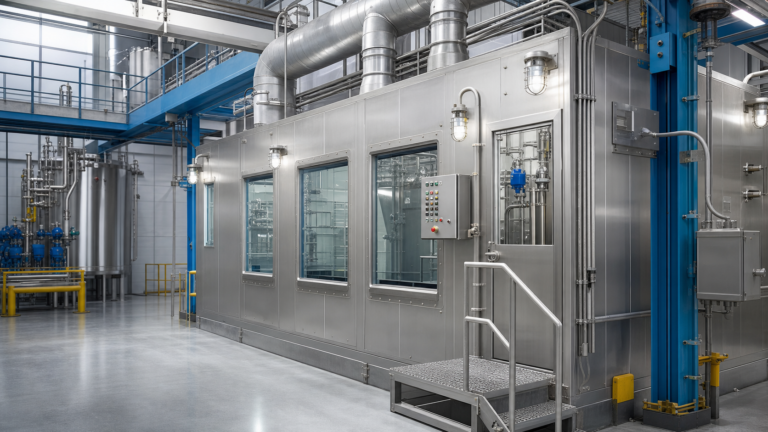
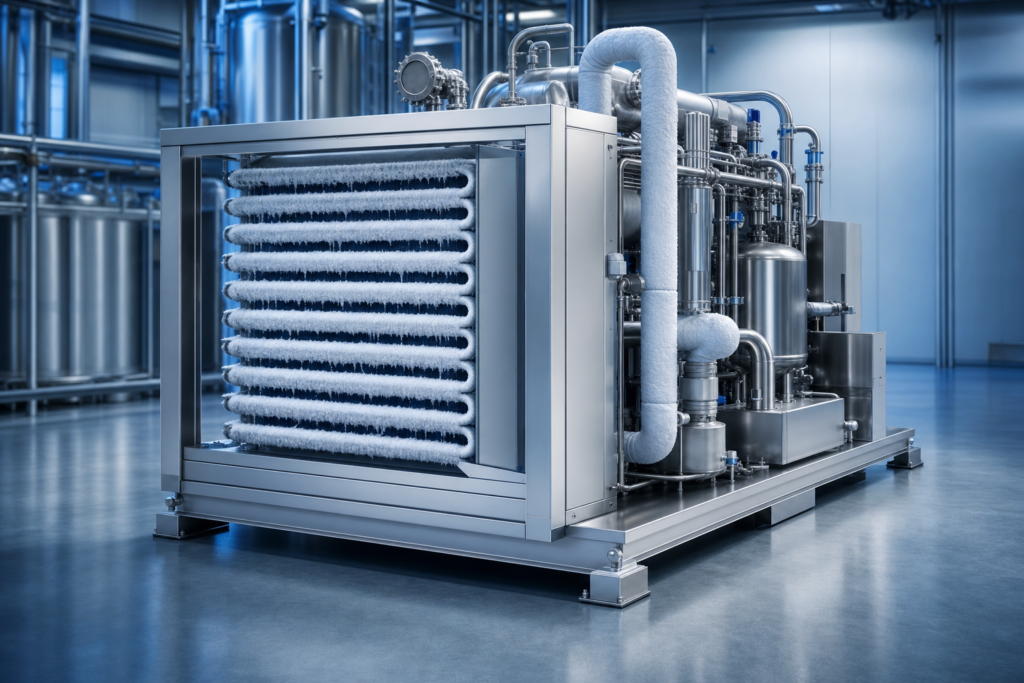
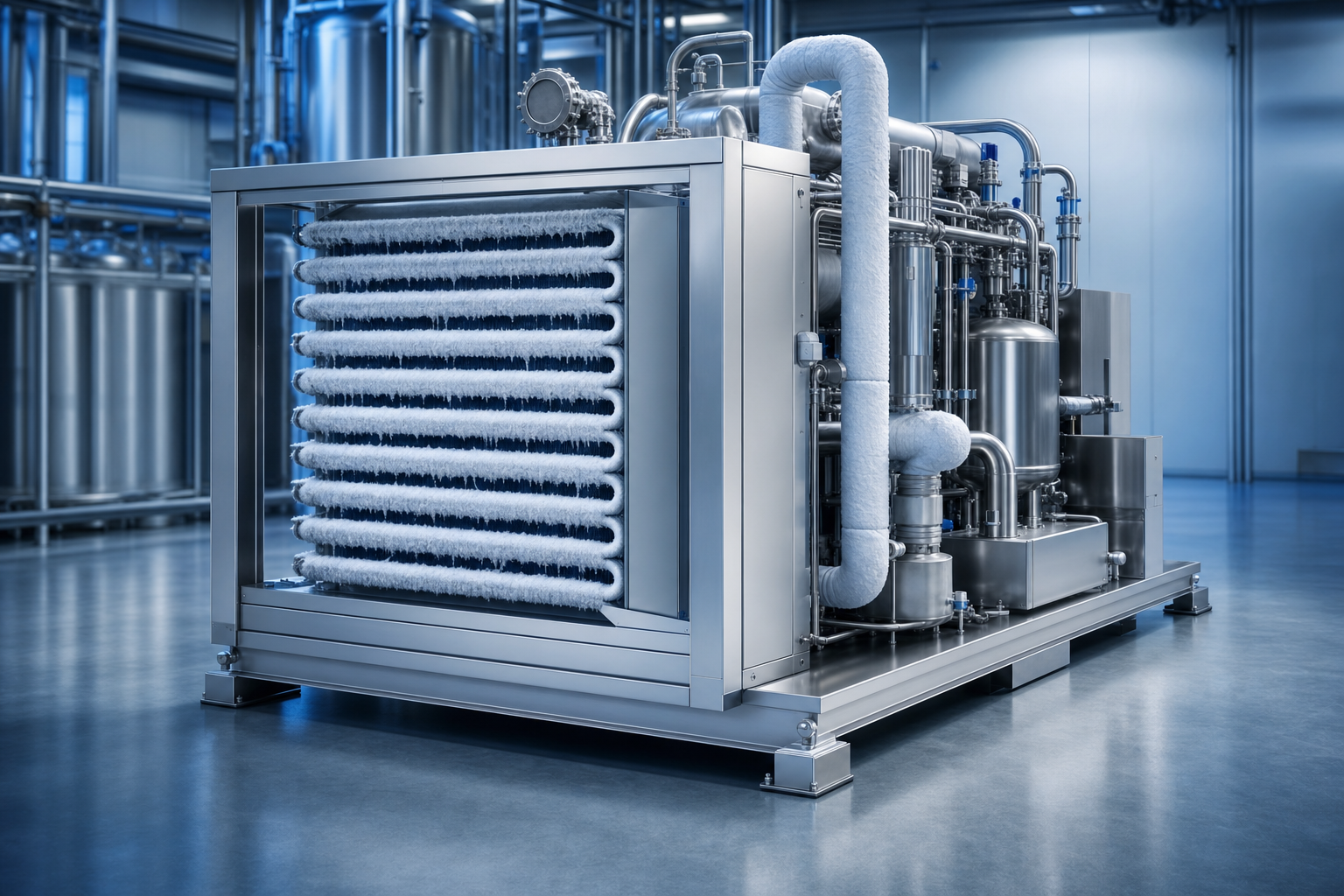
A cryogenic chiller is one of the most important pieces of equipment in any facility that depends on precise, low-temperature processing. From food and nutraceutical manufacturing to advanced materials work, a reliable cryogenic chiller keeps temperatures stable, protects product quality, and supports the strict safety standards that hazardous-location facilities are required to meet. In this article we look at how a cryogenic chiller works, where it fits into an industrial processing line, and what to consider when selecting one for a code-compliant build.
What a Cryogenic Chiller Does in Industrial Processing
At its core, a cryogenic chiller removes heat from a process loop and holds the working fluid at very low temperatures, often well below conventional refrigeration ranges. In an industrial processing environment, that capability is used to condition materials, control reaction temperatures, and stabilize equipment that would otherwise overheat or perform inconsistently. Because a cryogenic chiller can deliver consistent sub-zero temperatures on demand, operators gain tighter control over throughput, yield, and repeatability. For facilities that integrate this equipment alongside low-temperature and explosion-proof freezers, the chiller becomes the backbone of the entire cold-side workflow.
Why a Cryogenic Chiller Matters for Code Compliance
Selecting the right cryogenic chiller is not only a performance decision; it is a safety and compliance decision. In hazardous-location processing rooms, every piece of equipment must align with the adopted electrical, mechanical, and fire codes. A properly specified cryogenic chiller helps maintain safe operating temperatures, reduces the risk of thermal runaway, and supports the documentation needed for inspection and permitting. The principles behind this equipment rely on well-understood cryogenics engineering, applied at industrial scale with appropriate safeguards. When the chiller is integrated into a code-driven design from the start, facility owners avoid costly retrofits and pass inspections more smoothly.
Key Factors When Choosing a Cryogenic Chiller
Not every cryogenic chiller is suited to every application. The right choice depends on the cooling capacity required, the lowest temperature the process must reach, the type of working fluid, and the surrounding facility infrastructure. Important considerations include:
- Cooling capacity and temperature range – matched to peak process demand, not just average load.
- Footprint and utility requirements – electrical service, water or air cooling, and clearance for maintenance.
- Hazardous-location ratings – components specified for the classified area where the chiller will operate.
- Redundancy and uptime – backup capacity for operations that cannot tolerate downtime.
- Serviceability – access to parts, support, and qualified technicians.
Mapping these factors against the facility’s process sequence ensures the cryogenic chiller supports current production while leaving room for future expansion.
Integrating a Cryogenic Chiller Into a Processing Facility
A cryogenic chiller rarely operates in isolation. It is part of a coordinated system that includes process equipment, ventilation, electrical distribution, and fire protection. Planning utility loads and piping routes before equipment arrives prevents the common problems of undersized panels, inefficient duct runs, and crowded mechanical rooms. By treating the cryogenic chiller as one element of an engineered, code-compliant facility rather than a standalone appliance, operators achieve better performance, safer operation, and a cleaner path through permitting and inspection.
Conclusion
From temperature control and product consistency to safety and code compliance, the cryogenic chiller plays a central role in modern industrial processing. Choosing a unit with the right capacity, hazardous-location ratings, and integration plan gives facilities the reliability and regulatory confidence they need. For operators building or upgrading a processing line, investing in the correct cryogenic chiller is a decision that pays off in throughput, uptime, and long-term compliance.