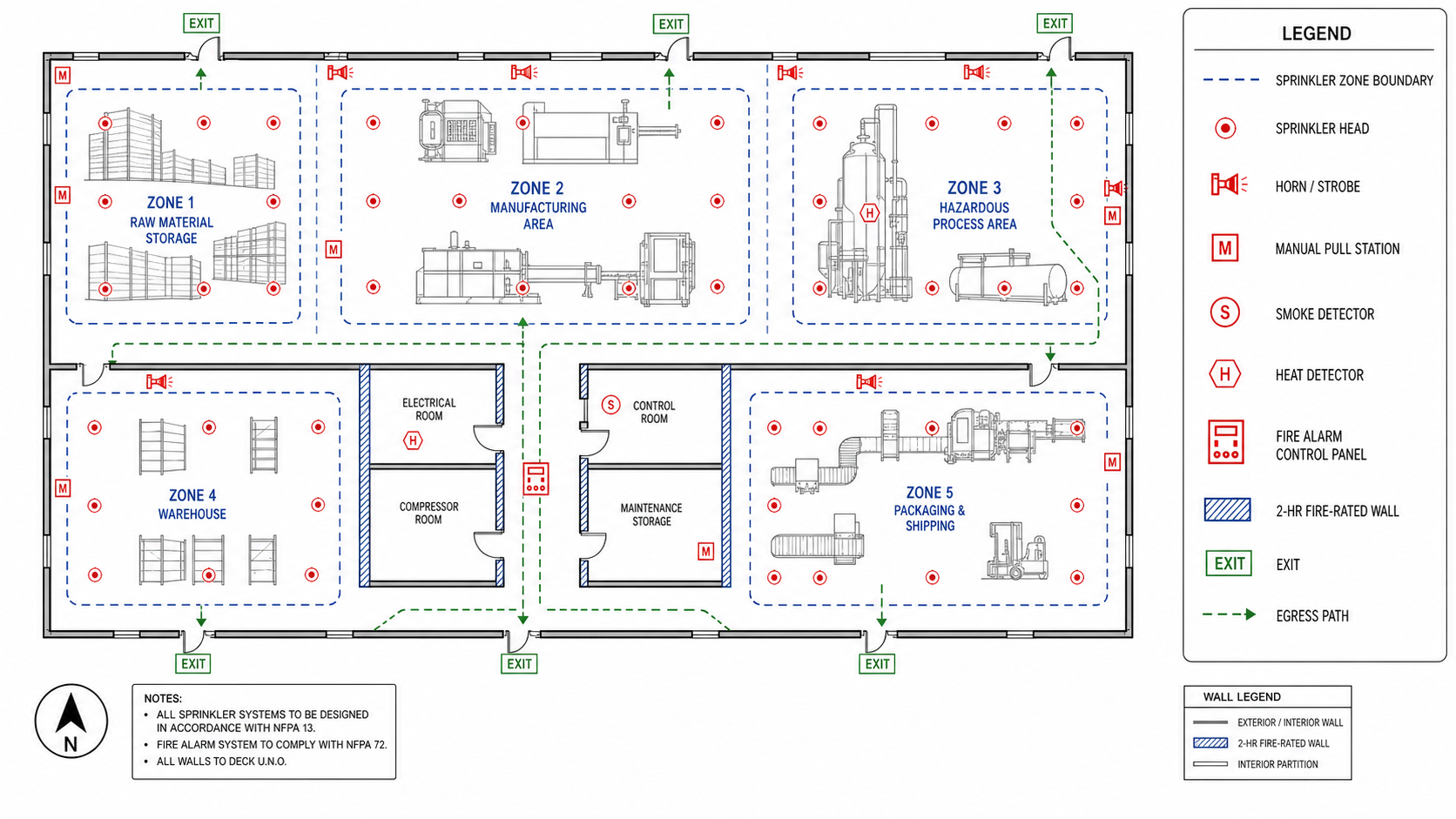
Fire protection engineering is the discipline that turns fire risk into measurable design decisions—so hazardous-location manufacturing facilities can meet code, support insurance objectives, and keep operations resilient.
In facilities that handle combustible dusts, flammable liquids, pressurized gases, or high-heat equipment, the consequences of a fire grow quickly. A well-scoped fire protection engineering plan coordinates the building layout, suppression, detection, alarms, and emergency response features into one coherent system.
Fire protection engineering starts with a hazard profile
Effective fire protection engineering begins with a practical understanding of what can burn, how it can ignite, and how fast conditions can escalate. For industrial sites, this typically means documenting:
- Materials handled and stored (flash points, dust explosibility, packaging type)
- Process heat sources and ignition controls
- Occupancy classification and intended operations
- Building construction type and fire-resistance ratings
- Water supply constraints (flow, pressure, reliability)
This upfront profile is what allows design teams to select suppression and detection strategies that are technically sound and defensible to authorities having jurisdiction (AHJs) and insurers.
Fire protection engineering for sprinkler and suppression design
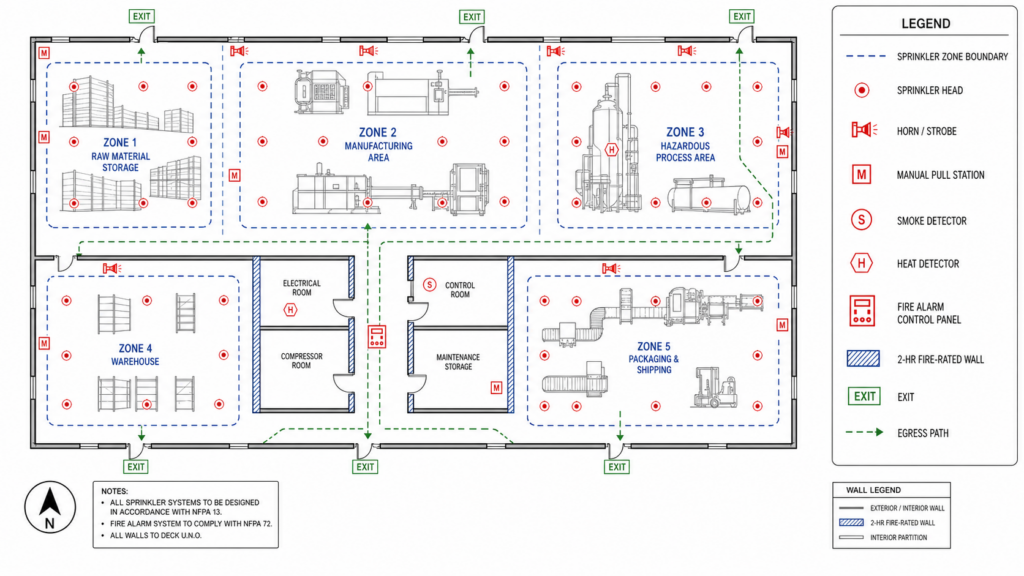
Sprinklers are often the most cost-effective first line of defense for industrial spaces, but “sprinklered” is not a one-size-fits-all label. Fire protection engineering is where the design density, hazard classification, system type, and coverage decisions get made—and coordinated with equipment layouts that can change during commissioning.
Common considerations include:
- Hazard classification and design basis (e.g., Ordinary Hazard vs. Extra Hazard areas)
- Ceiling heights and obstructions that impact sprinkler spacing and discharge patterns
- Special suppression needs for electrical rooms, compressed-gas areas, or high-value equipment zones
- System reliability: valves, monitoring, freeze protection, and maintenance access
When suppression is designed in parallel with the manufacturing layout, you reduce late-stage rework and avoid coverage gaps that can trigger plan-check comments.
Fire protection engineering for alarms, detection, and notification
A complete fire protection engineering scope pairs suppression with detection and clear occupant notification. The goal is fast awareness and predictable behavior during an incident—especially when noisy machinery, large footprints, or compartmented rooms could delay recognition.
Typical elements include:
- Smoke/heat detection placement strategies for different room uses
- Manual pull stations and emergency communication points
- Audible/visual notification appliances for high-noise industrial environments
- Monitoring and supervisory signals (valve tamper, flow, trouble conditions)
For many projects, aligning alarm requirements with NFPA 72 provides a clear framework for design intent, acceptance testing, and documentation.
Fire protection engineering for egress, compartmentation, and fire-rated construction
Fire protection engineering is not only about active systems. Passive protection—how the building is separated and how people exit—often drives the biggest life-safety outcomes.
In industrial hazardous facilities, passive protection can include:
- Fire-rated walls and penetrations (properly sealed and inspected)
- Smoke and fire dampers where required in ductwork
- Exit access travel distance evaluation and corridor protection
- Door hardware, swing direction, and signage consistent with occupancy
For a deeper look at how these elements tie into risk reduction goals, see C1D1 Labs’ overview of fire protection engineering for insurance risk reduction.
Fire protection engineering deliverables that help permitting go faster
Plan reviewers and inspectors want a clear story: what standards you followed, what assumptions you made, and how the final design meets performance intent. Fire protection engineering deliverables that commonly speed plan check include:
- Code summary sheets (occupancy, construction type, allowable areas, fire-resistance requirements)
- Life-safety plans (egress, exits, fire barriers, fire department access)
- Fire protection plans (sprinkler zoning, valve locations, standpipes if applicable)
- Fire alarm plans (device layout, sequences of operation, monitoring)
- Commissioning and acceptance test outlines aligned with AHJ expectations
When these documents are coordinated with MEP and architectural drawings early, you reduce conflicting notes, avoid late redesign, and produce a safer facility with fewer surprises during inspection.
Summary: Fire protection engineering brings together suppression, detection, alarms, and passive building features into a design that stands up to code review and real-world operations. For hazardous manufacturing facilities, that coordination is what turns compliance into resilience.