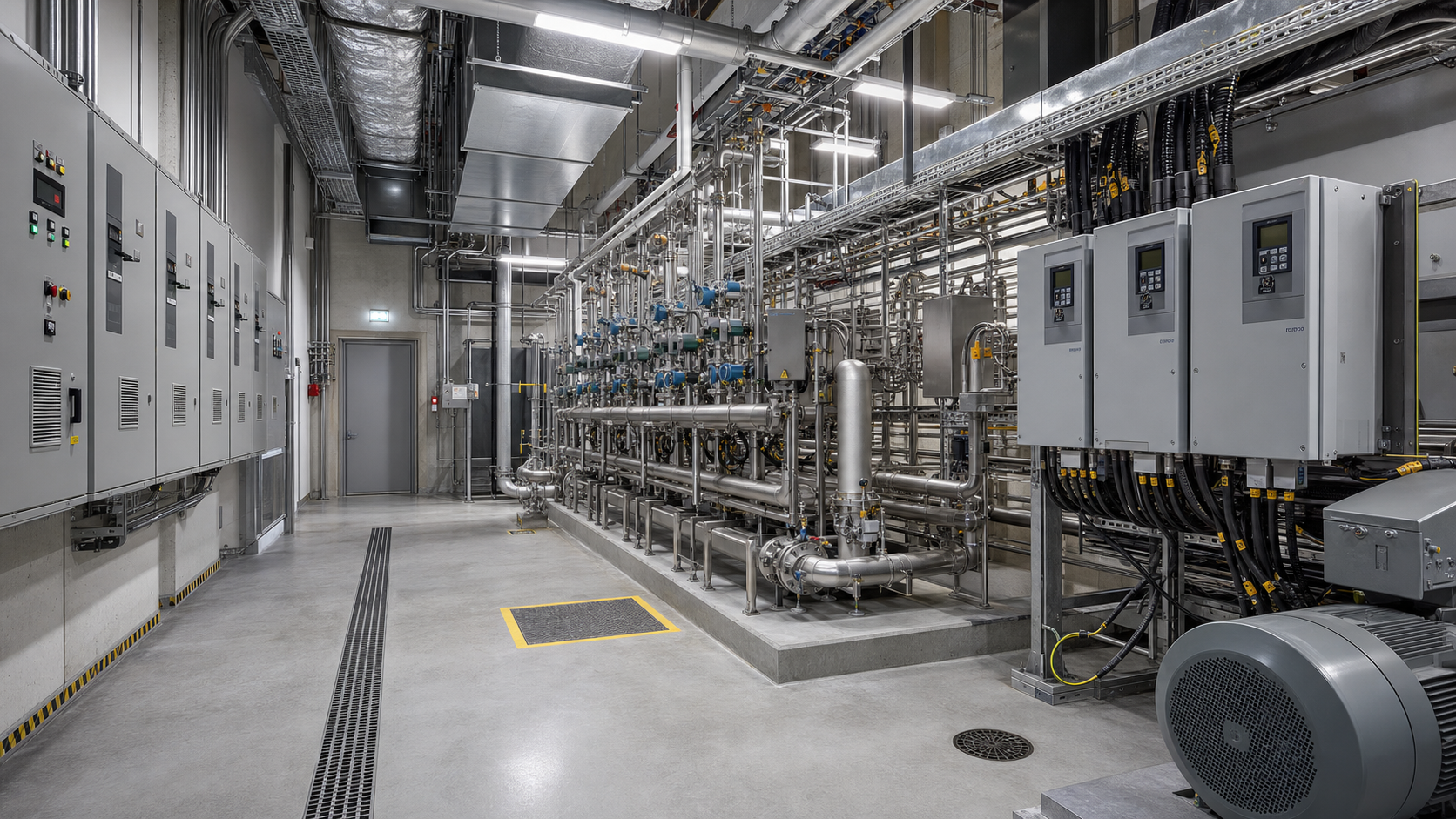
MEP engineering is the backbone of safe, reliable operation in hazardous-location manufacturing and industrial processing environments. When a facility handles flammable vapors, combustible dusts, or reactive materials, mechanical, electrical, and plumbing systems must do more than “work”—they must be coordinated to control ignition sources, manage ventilation, support emergency response, and maintain code compliance.
This article outlines practical design priorities, common coordination pitfalls, and the documents inspectors and insurers typically expect from an engineered, code-aligned MEP package.
MEP engineering starts with hazard definition and the right basis of design
Effective MEP engineering begins with a clear hazard definition: what materials are handled, where they can be present, and under what normal or abnormal conditions. That information drives the electrical area classification approach (such as Class/Division or Zone concepts), ventilation rates, detection strategy, and the selection of equipment suitable for the environment.
A strong Basis of Design (BOD) should document assumptions and criteria such as:
- Operating modes, batch/continuous workflows, and room pressurization intent
- Target ventilation strategy (general exhaust, local capture, dilution)
- Electrical distribution approach and grounding/bonding philosophy
- Drainage and spill-control approach (where applicable)
- Emergency power and life-safety interfaces
With these items defined early, the rest of the MEP engineering deliverables (plans, schedules, one-lines, and specifications) can be consistent and defensible during plan review.
MEP engineering for hazardous facilities: ventilation and pressure control
Ventilation is one of the most impactful risk controls in hazardous environments. The goal is to keep potentially hazardous atmospheres below critical concentrations and to manage migration between rooms. In practice, that means the mechanical design must coordinate airflow paths, make-up air, exhaust locations, and control sequences that react to abnormal conditions.
Key ventilation design considerations include:
- Defining pressure relationships between spaces (e.g., keeping higher-risk spaces from pushing air into corridors)
- Locating exhaust and make-up air to avoid short-circuiting and dead zones
- Integrating gas/vapor detection or particulate monitoring where required by the hazard assessment
- Specifying fan motors, drives, and controls that are appropriate for the classified area or located outside it
When MEP engineering is done well, mechanical sequences and electrical interlocks are documented clearly so operators understand what happens during alarms, shutdowns, and restarts.
Electrical design: ignition control is central to MEP engineering
Electrical systems are often the most scrutinized portion of a hazardous facility review because they can introduce ignition sources. The electrical scope of MEP engineering typically includes load studies, distribution design, equipment selection, wiring methods, and clear identification of where special protection methods are required.
Common electrical deliverables that support safer operation include:
- One-line diagrams with fault current and protective device coordination
- Panel schedules and motor control schedules tied to mechanical equipment
- Details for sealing fittings, cable routing, and boundary transitions
- Grounding and bonding notes to limit static and stray currents
For an accessible overview of how electrical hazard classifications are structured, see Hazardous area classification.
MEP engineering integration with fire protection and life safety
Even when fire protection is designed by a dedicated discipline, MEP engineering must integrate with life-safety systems so the full facility behaves predictably during an incident. Examples include:
- Emergency power for critical ventilation, alarms, and egress lighting
- Control interlocks between detection, ventilation shutdown, and equipment isolation
- Coordination of sprinkler/standpipe impacts on piping routes and equipment clearances
- Smoke control or special exhaust strategies (when applicable)
Facilities often benefit from aligning MEP documentation with the fire protection narrative used for insurers and authorities having jurisdiction (AHJs). For related guidance, see C1D1 Labs’ overview of fire protection engineering for insurance risk reduction.
Commissioning and documentation: making MEP engineering verifiable
Commissioning turns design intent into verified performance. For hazardous facilities, commissioning should be planned as part of the MEP engineering scope rather than treated as an afterthought. The goal is to prove that ventilation rates, alarm setpoints, interlocks, and emergency behaviors function as documented.
Practical documentation that supports approvals and ongoing operations includes:
- Sequence-of-operations narratives that match control drawings and points lists
- Test procedures for alarms, interlocks, emergency power transfer, and ventilation performance
- As-built drawings and equipment submittals organized for future maintenance
- Training materials for operators, with emphasis on what not to bypass
When MEP engineering is coordinated end-to-end—from hazard definition to commissioning—the facility is easier to permit, easier to insure, and safer to operate.