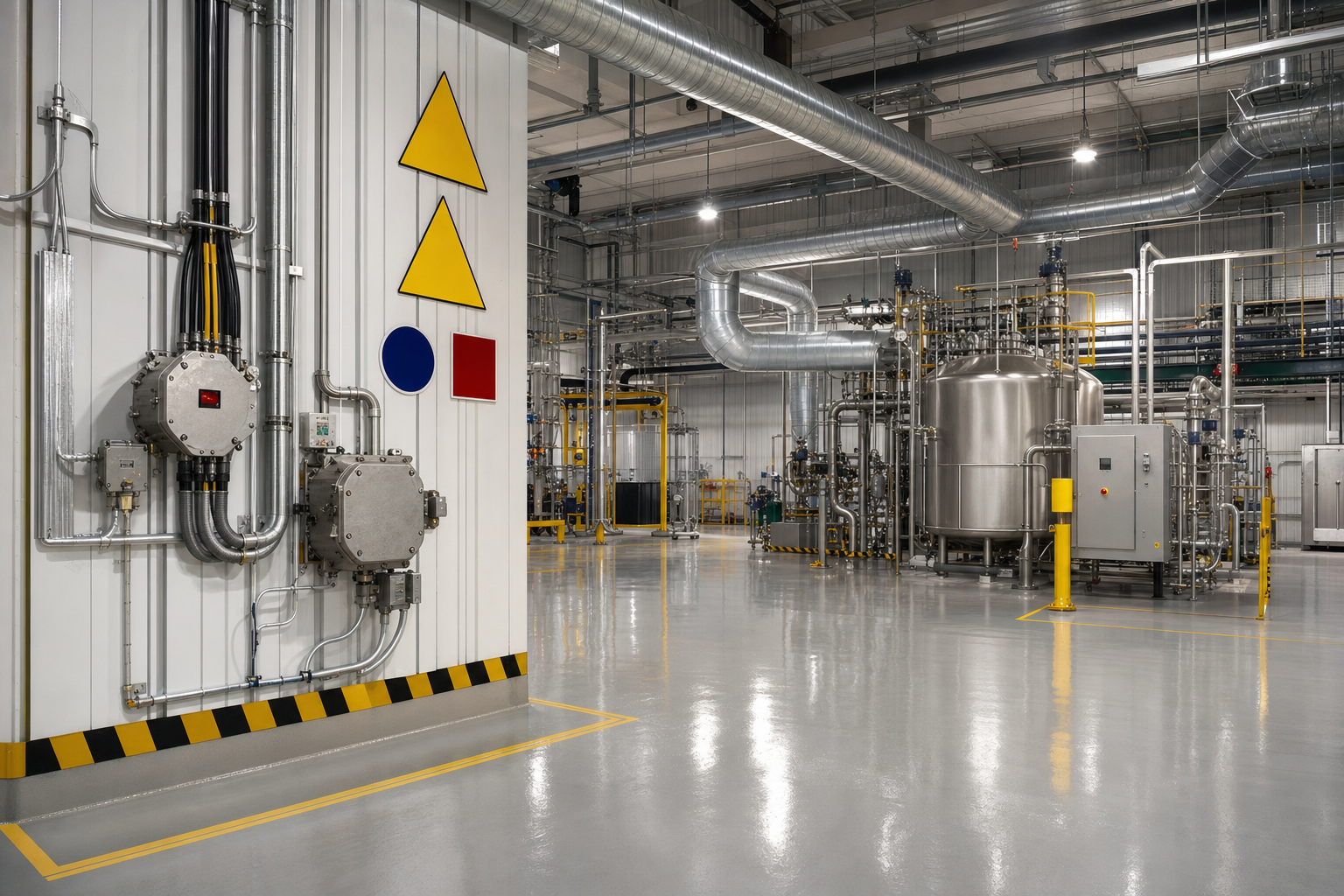
Understanding hazardous facility codes is the foundation of any safe, compliant industrial manufacturing operation. Whether you are designing a new processing plant or upgrading an existing one, hazardous facility codes determine how electrical systems, ventilation, fire protection, and equipment must be engineered to control ignition risk. This guide breaks down the core standards, the classification system, and the practical steps that keep facilities both operational and inspection-ready.
What Hazardous Facility Codes Cover
Hazardous facility codes are a coordinated set of national and international standards that govern locations where flammable gases, vapors, dusts, or fibers may be present. In the United States, the primary references include the National Electrical Code (NFPA 70), NFPA 497 for classifying flammable liquids and gases, and NFPA 30 for flammable and combustible liquids. Together, these documents define how a facility must be built, wired, and ventilated so that a normal process upset does not become an ignition event. Meeting hazardous facility codes is not optional — it is enforced through building permits, fire marshal inspections, and insurance underwriting.
Area Classification Under Hazardous Facility Codes
The heart of hazardous facility codes is area classification. Spaces are grouped into Classes (the type of hazardous material), Divisions or Zones (how often the hazard is present), and Groups (the specific material’s ignition properties). A Class I, Division 1 area, for example, is one where ignitable concentrations of vapors exist under normal operating conditions. Correctly classifying each room drives every downstream decision: the rating of electrical enclosures, the type of conduit, and the placement of ventilation. Misclassification is one of the most common — and most expensive — compliance failures.
Electrical and Equipment Requirements
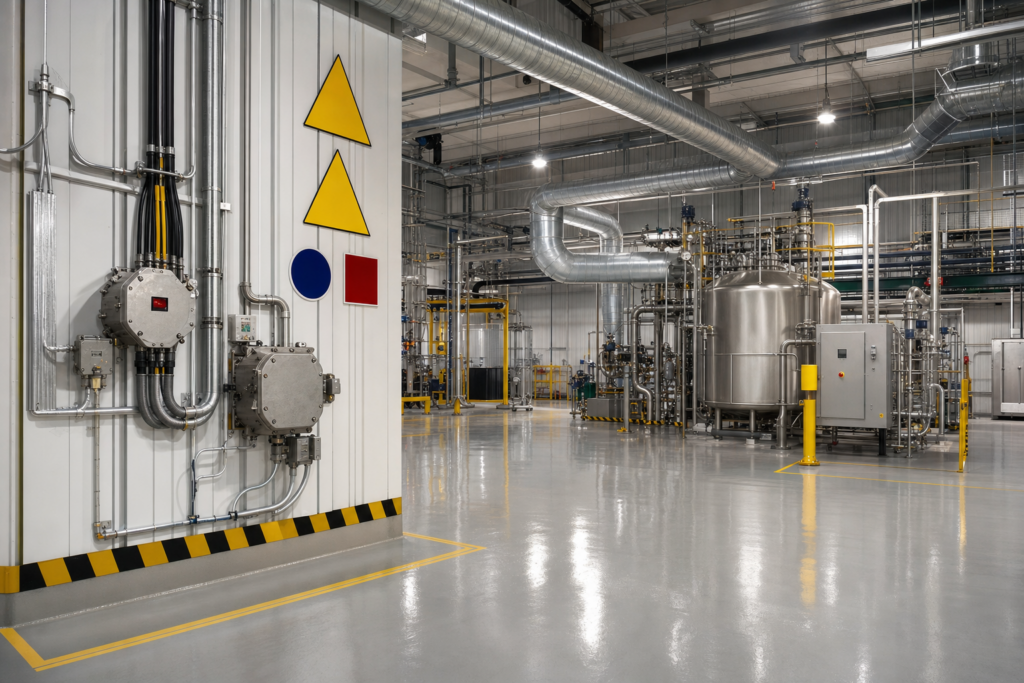
Once an area is classified, hazardous facility codes dictate the equipment allowed inside it. Explosion-proof enclosures, sealed conduit fittings, intrinsically safe control circuits, and properly rated motors all become mandatory in classified spaces. Every luminaire, junction box, and instrument must carry a listing appropriate to the Class, Division, and Group of the room where it is installed. Selecting compliant equipment early in design avoids costly retrofits and keeps the project on schedule. For temperature-sensitive processes, purpose-built enclosures such as low-temperature and explosion-proof freezers are engineered specifically to satisfy these requirements.
Ventilation and Fire Protection
Ventilation is a code-recognized method for reducing the classification severity of a room. Adequate mechanical ventilation can keep vapor concentrations below hazardous levels, and hazardous facility codes give specific air-change and monitoring criteria for taking credit for it. Fire protection engineering — detection, suppression, explosion relief, and emergency shutoff interlocks — works alongside ventilation to limit the consequences of any release. A well-designed facility treats ventilation and fire protection as an integrated system rather than isolated add-ons.
Staying Compliant Over Time
Compliance with hazardous facility codes is an ongoing responsibility, not a one-time approval. Codes are revised on multi-year cycles, and jurisdictions adopt updates on their own timelines, so a facility built to an older edition may need periodic review. Routine documentation, equipment inspections, and coordination with a qualified engineer keep operations aligned with current requirements. For authoritative background on how these standards are developed and maintained, the National Electrical Code overview is a useful reference. Building a durable compliance program protects workers, preserves insurability, and keeps production running without unplanned shutdowns.