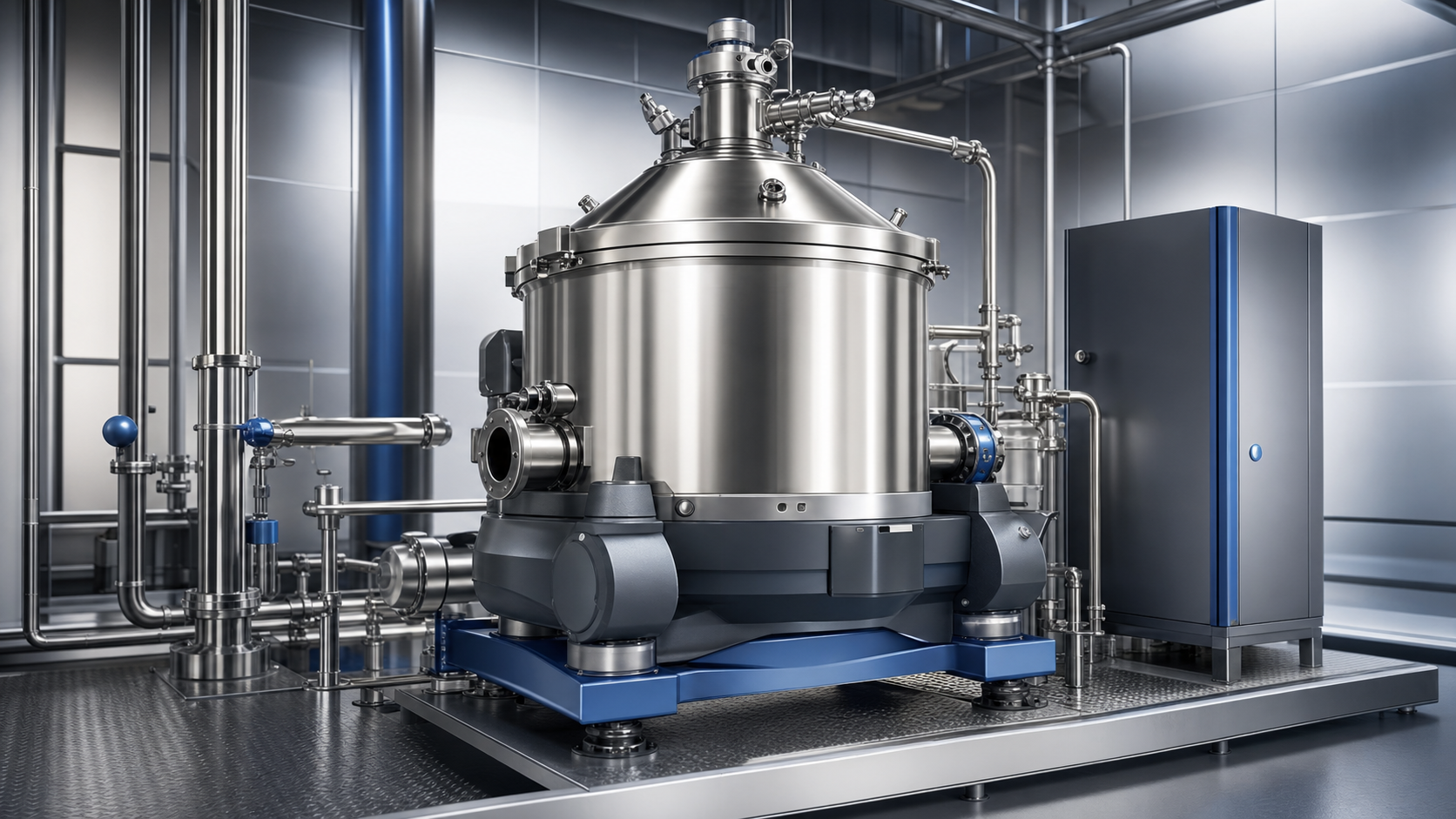
A planetary centrifuge gives industrial processors a compact way to manage separation, dewatering, and controlled material handling in a repeatable vessel. For owners of botanical, food, nutraceutical, and advanced-materials facilities, the right machine can improve consistency while supporting a clean, documented operating plan.
The best results come from treating the centrifuge as part of the full process—not as a standalone purchase. Feed properties, utility loads, guarding, controls, maintenance access, and the room classification all shape the final specification.
What a planetary centrifuge does in a modern process line
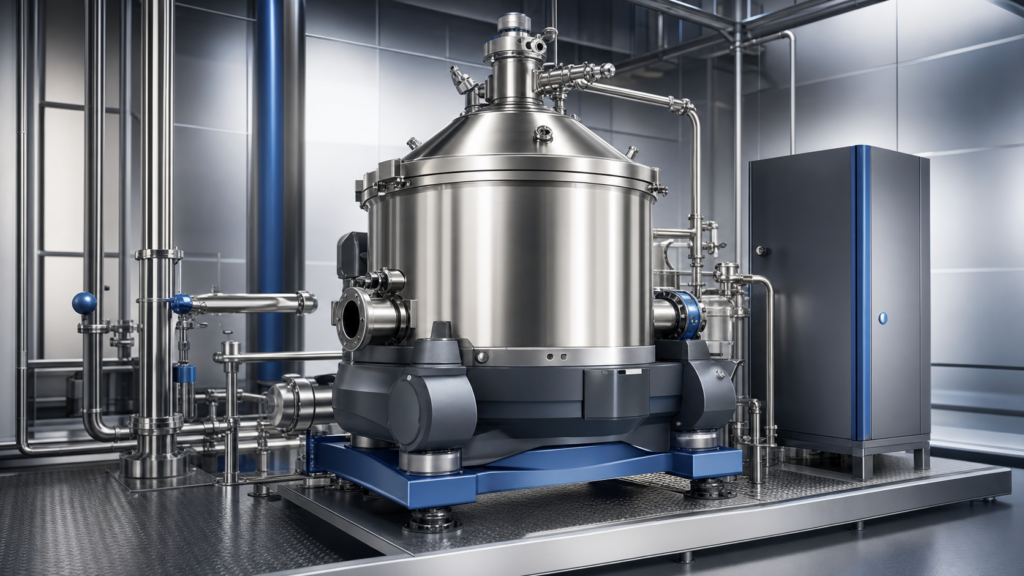
A planetary centrifuge combines a rotating vessel with a balanced drive system to apply controlled centrifugal force. That motion can help separate phases, remove excess liquid, or condition a material before the next step. The value is not simply high speed; it is the ability to repeat a defined cycle with known loading, acceleration, dwell, and discharge settings.
Start by mapping where the machine sits in the line. Document the upstream feed point, the desired output, the collection method, and the downstream equipment. A clear flow diagram helps the team identify transfer connections, containment needs, cleaning steps, and the space required for safe operator movement.
Planetary centrifuge sizing starts with the feed
Capacity should be based on the actual material and cycle, not only the nameplate volume. Record batch mass, bulk density, particle size, moisture range, viscosity, temperature, and the amount of liquid expected during a typical run. Note whether the feed changes seasonally or between product grades; a machine sized for one narrow condition may perform poorly when the process window moves.
Ask the equipment supplier for performance data that matches your operating case. Useful criteria include throughput per cycle, separation quality, residual moisture, vibration limits, noise, and time for loading, processing, discharge, and cleaning. C1D1 Labs’ industrial processing centrifuge resource is a practical starting point for comparing equipment layouts and process requirements.
Planetary centrifuge safety and containment
Safety begins with a documented hazard review. Evaluate the material, the maximum operating speed, stored mechanical energy, temperature, pressure, and credible upset conditions. Specify a robust lid or enclosure, interlocked access, overspeed protection, imbalance detection, emergency stopping, and a controlled restart sequence. The machine should not run when access is open or when a critical permissive is missing.
Guarding and anchorage deserve the same attention as the rotating assembly. Confirm foundation loads, mounting points, vibration isolation, clearances, and inspection access. Where the room has a classified electrical area, coordinate the drive, instruments, wiring methods, and control panel with the approved area classification. The OSHA machine guarding standards provide an authoritative reference for protecting workers from moving machinery; the project engineer and authority having jurisdiction should confirm the requirements adopted for the site.
Controls, utilities, and maintenance access
A reliable planetary centrifuge needs more than a motor. Define electrical service, compressed air if used, cooling or heating connections, drainage, ventilation, and the control network before the equipment arrives. Record normal and peak loads, disconnect locations, alarm behavior, and the response to utility loss. Integrate status signals with the line controls so an upstream or downstream fault cannot create an unsafe condition.
Design the room around routine work. Operators need clear sightlines to the HMI, sample points, loading area, and emergency stop. Maintenance teams need room to inspect bearings, seals, guards, sensors, and drive components without blocking egress. A short checklist for pre-start inspection, cleaning, lubrication, and vibration review helps convert the design intent into repeatable daily practice.
Commissioning a planetary centrifuge for dependable output
Commissioning should prove both the process and the safeguards. Begin with an empty-equipment check: verify rotation direction, interlocks, emergency stops, guarding, alarms, vibration, and abnormal-noise response. Then run a controlled material trial using the expected load range. Compare actual cycle time, output quality, temperature, vibration, and discharge behavior with the approved operating window.
Keep a signed record of tests, setpoints, calibration status, training, and open items. Update the operating procedure after the trial, and retain the final drawings, manuals, spare-parts list, and inspection schedule. If the material, batch size, speed, or room arrangement changes later, revisit the hazard review before making the change.
Choose the right planetary centrifuge partner
When evaluating a Spin Tech system from Purge Technologies, look beyond the equipment quote. Ask who will confirm the process assumptions, coordinate utilities, review the installation, train operators, and support future modifications. A supplier that can discuss vessel geometry, cycle development, guarding, documentation, and service planning will help reduce surprises during startup.
The strongest project connects process engineering, mechanical design, electrical controls, fire-safety planning, and operations from the beginning. With a well-defined duty, a properly protected machine, and disciplined commissioning, a planetary centrifuge can deliver dependable industrial performance while keeping safety and maintainability visible at every stage.