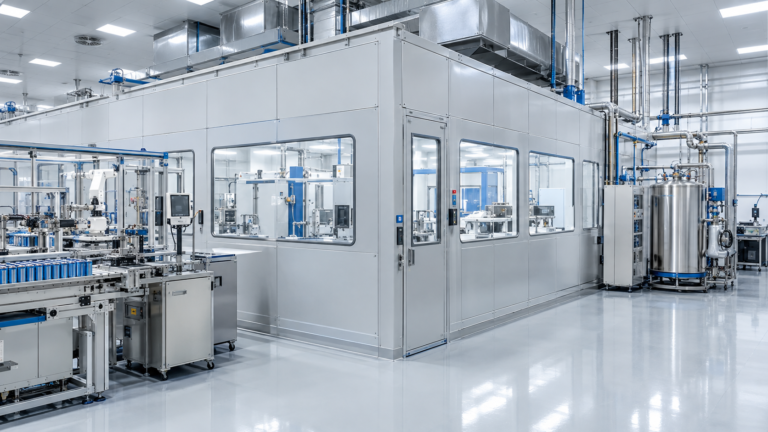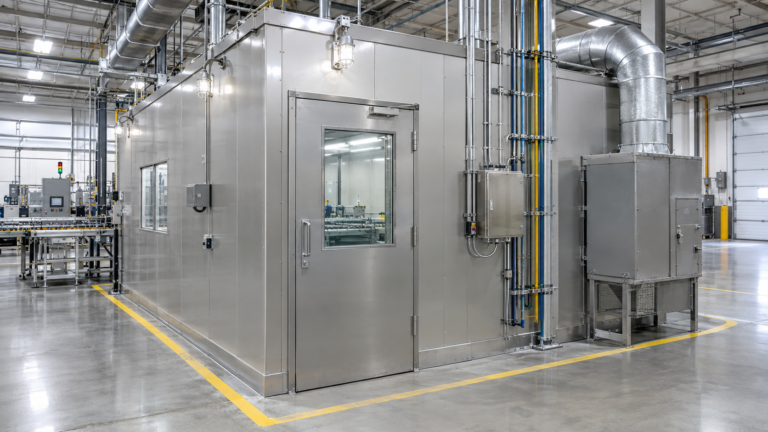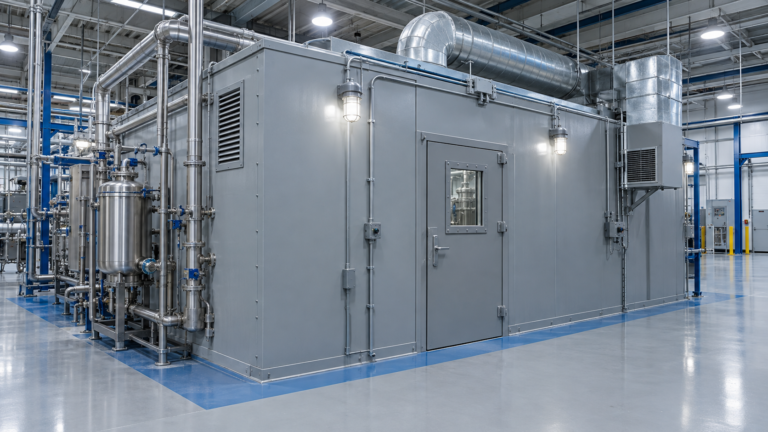
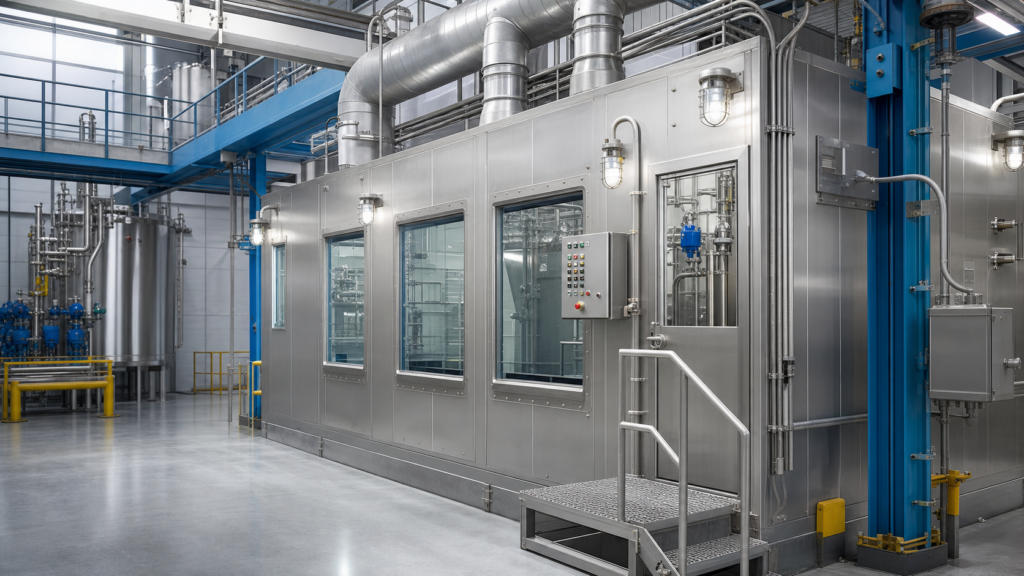
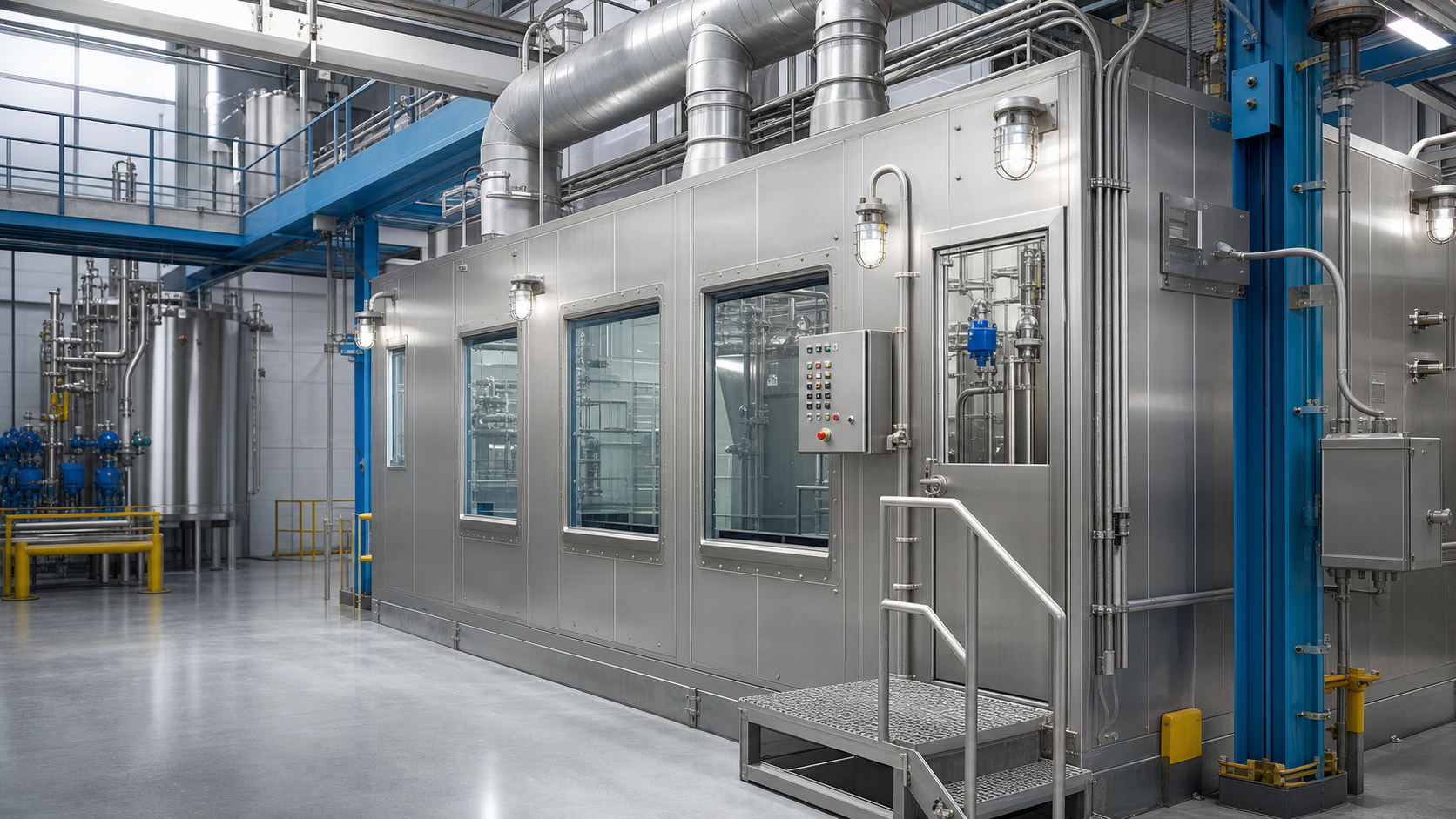
C1D1 booths give industrial processing teams a defined, engineered space for operations where flammable vapors or gases may be present. Instead of treating hazardous-location controls as a collection of isolated upgrades, a purpose-built booth brings containment, ventilation, electrical classification, and fire-safety planning into one coordinated system.
Why C1D1 booths matter in industrial processing
A Class 1 Division 1 area is a location where ignitable concentrations of flammable gases or vapors can exist during normal operations or may be present frequently because of maintenance or process conditions. That classification affects the equipment, wiring methods, ventilation strategy, access controls, and documentation selected for the space.
C1D1 booths create a clear boundary around the operation. The enclosure can help direct airflow, keep process hazards separated from surrounding work areas, and give operators a repeatable layout for staging, inspection, and cleaning. The result is a more manageable interface between the process and the rest of the facility.
Containment and airflow designed around the process
Effective containment starts with understanding the source, quantity, and movement of vapors. Engineers can use that process information to establish make-up air, exhaust paths, pressure relationships, capture points, and monitoring locations. A booth is not a substitute for a hazard analysis; it is a practical platform for implementing the controls that analysis identifies.
Well-planned airflow supports safer work and more predictable facility performance. It can reduce migration into adjacent areas, help maintain a controlled work zone, and make exhaust discharge points easier to coordinate with the building. Access doors, viewing panels, penetrations, and service connections should be detailed so the enclosure remains effective after installation and maintenance.
How C1D1 booths simplify electrical and ventilation design
Electrical design for a hazardous location must match the classified area and the adopted code requirements. C1D1 booths can be specified with appropriately rated lighting, controls, motors, junction boxes, instrumentation, and wiring methods, reducing the chance that ordinary equipment is carried into a location where it does not belong.
Ventilation and electrical decisions also need to work together. Interlocks can coordinate exhaust operation with process start-up, while alarms and shutdown logic can respond to loss of airflow or an abnormal condition. The final design should be reviewed by qualified professionals against the applicable NEC requirements, local amendments, and the facility’s electrical classification documents. The hazardous-area equipment overview provides useful background on the principles behind this type of equipment selection.
Permitting and facility integration from day one
Permitting moves more smoothly when the design package connects the booth to the facility instead of presenting it as an isolated piece of equipment. Early coordination should cover structural support, utilities, exhaust routing, sprinkler or suppression interfaces, egress, access for service, and the boundary between classified and unclassified areas.
Prefabricated construction can make that coordination more repeatable. Shop-built panels and assemblies allow many details to be checked before delivery, while a documented equipment schedule gives the owner, authority having jurisdiction, and installation team a common reference. Confirm the adopted NFPA, OSHA, IFC, and NEC requirements with the responsible design professionals and local reviewers; the applicable edition and site conditions control the final solution.
When to specify C1D1 booths
Consider C1D1 booths when an industrial processing step needs a dedicated hazardous-location work zone, when an existing room is difficult to separate from nearby operations, or when a project needs a repeatable module that can be added as capacity grows. The right specification begins with the process hazard review, not with a standard footprint.
- Define the hazard: document materials, release scenarios, operating temperatures, and the classified boundary.
- Set performance criteria: establish airflow, pressure, monitoring, fire protection, and access requirements.
- Coordinate interfaces: resolve utilities, exhaust, controls, structural loads, and maintenance access before fabrication.
- Plan for verification: retain drawings, equipment ratings, test records, and commissioning documentation.
For a closer look at how a purpose-built enclosure can fit an industrial project, review C1D1 Labs’ C1D1 processing booths resource. A coordinated design can help teams move from a general safety objective to a practical, inspectable installation.