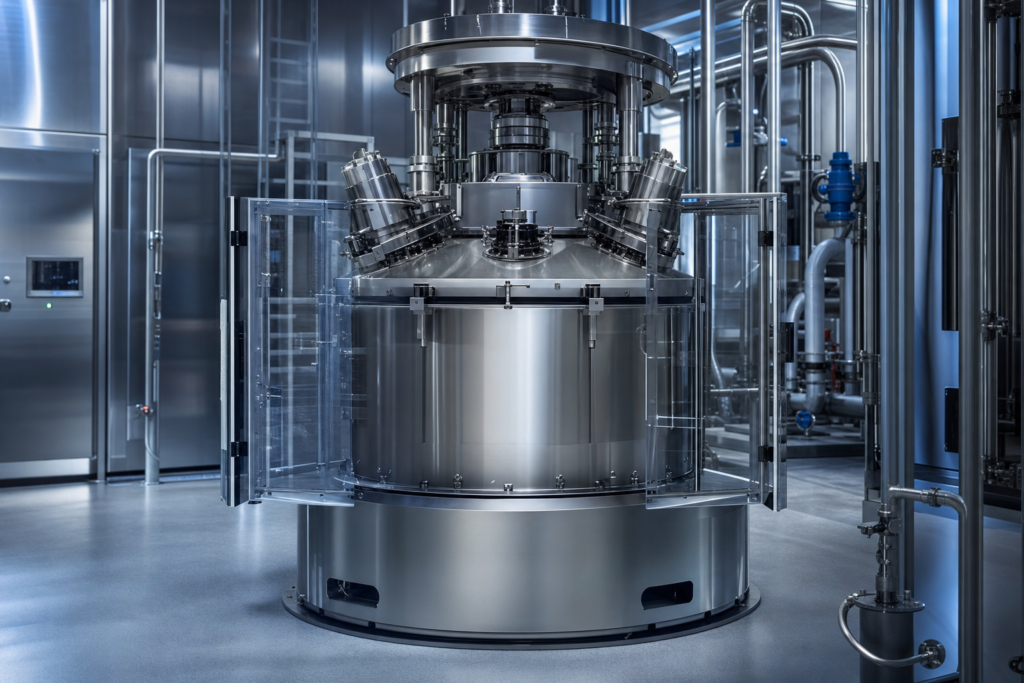
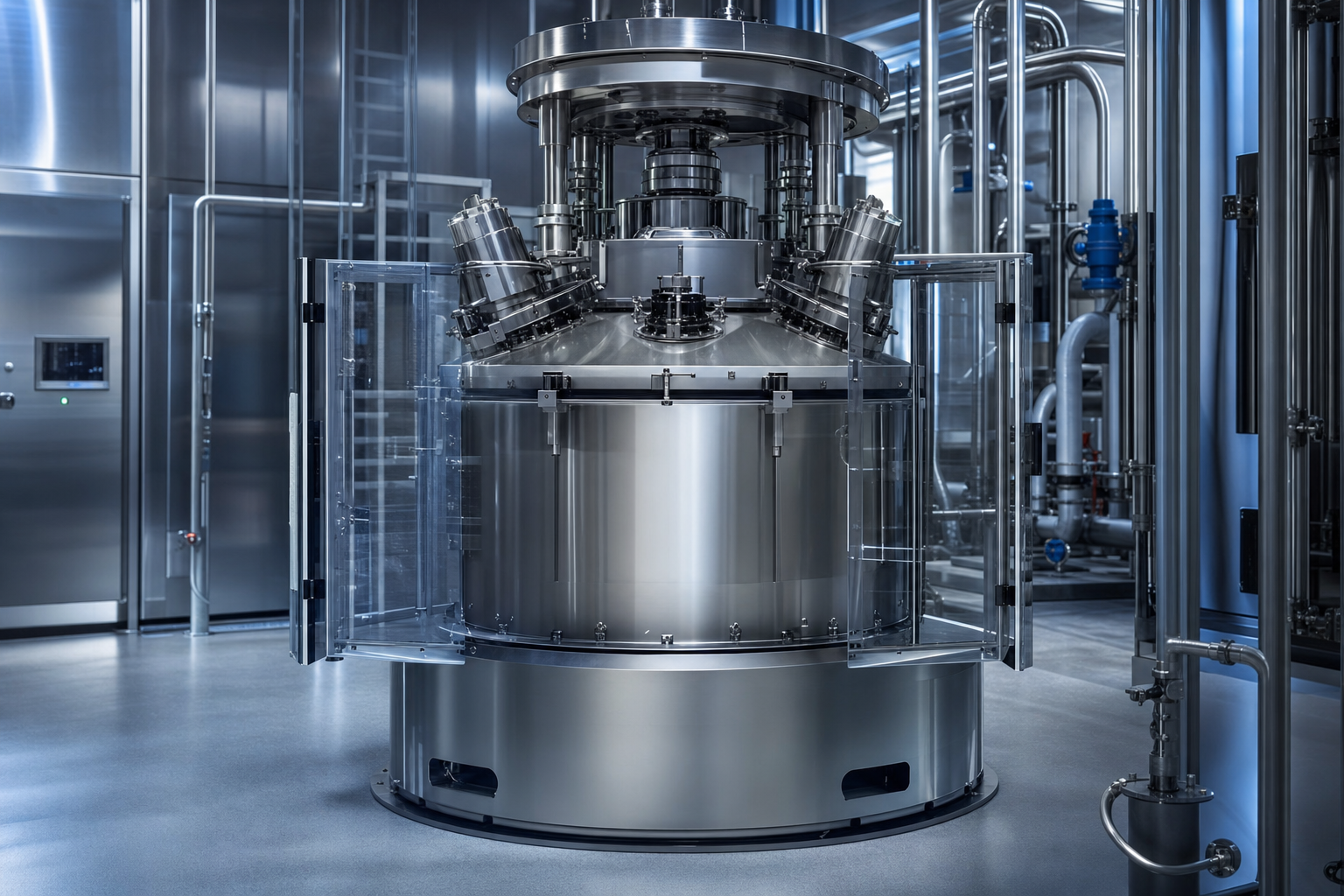
planetary centrifuge design can help industrial manufacturers achieve repeatable separation, controlled handling, and efficient use of floor space. A planetary machine combines a central drive with one or more rotating vessels, so the equipment team must coordinate mechanical loads, guarding, utilities, controls, and maintenance access from the beginning.
For owners planning a new line or modernizing an existing facility, the best result comes from treating the centrifuge as part of the process system rather than as a standalone machine. A clear duty statement, documented operating envelope, and coordinated installation plan make procurement easier and give the project team a stronger basis for commissioning.
planetary centrifuge selection starts with the process duty
Start by defining what the machine must accomplish. Document batch size, target throughput, feed characteristics, desired separation performance, temperature range, cycle time, cleaning method, and acceptable residual moisture. These inputs allow the supplier and engineer to compare vessel volume, drive configuration, speed range, and materials of construction without relying on vague capacity claims.
Also record the normal and upset conditions that affect the equipment. Viscosity changes, solids loading, unbalanced batches, start-stop frequency, and washdown requirements can change the mechanical and controls specification. A written duty statement keeps the selected planetary centrifuge aligned with the real production schedule and the facility’s quality requirements.
How a planetary centrifuge manages dynamic loads
Rotating equipment creates forces that must be addressed in the machine base, enclosure, and surrounding structure. The design review should consider operating speed, acceleration and deceleration, balance tolerance, bearing loads, vibration limits, and the consequences of an out-of-balance condition. Anchor details and housekeeping pads should be coordinated with the equipment supplier before concrete or steel is finalized.
Guarding is equally important. Interlocked access panels, emergency stops, and controlled restart logic should prevent access to moving components during hazardous motion. The control system should make the safe state clear and provide useful fault information without encouraging operators to bypass a protective device.
Utilities and layout for a planetary centrifuge
Give the machine enough room for loading, discharge, inspection, sanitation, and planned component replacement. Keep doors, panels, filters, drains, and service points reachable without dismantling unrelated systems. A layout that looks compact on paper can become inefficient if operators must move hoses, carts, or temporary platforms every time the machine is cleaned or serviced.
Coordinate electrical power, compressed air, process water, drainage, ventilation, and data connections on the same plan. Identify connection points, isolation valves, cable routes, and clearance zones. If the facility handles temperature-sensitive materials, coordinate the centrifuge with low-temperature and explosion-proof freezer solutions so storage, staging, and process flow support one another.
Controls, safety, and commissioning for a planetary centrifuge
Commissioning should demonstrate more than a successful spin cycle. Verify rotation direction, speed feedback, alarm thresholds, emergency-stop performance, access interlocks, balance detection, controlled braking, and restart behavior. Record baseline vibration and noise readings so maintenance teams have a reference for future condition checks.
- Confirm the equipment nameplate, motor protection, grounding, and disconnect labeling.
- Test permissives for lid position, vessel balance, utilities, and downstream readiness.
- Document maximum operating speed, approved batch limits, and cleaning instructions.
- Collect manuals, spare-parts lists, certificates, inspection records, and training sign-offs.
Projects with classified electrical areas should also review OSHA’s electrical requirements for hazardous locations. The authority having jurisdiction and the adopted project codes remain the final basis for approval.
Maintainability and lifecycle value
A reliable planetary centrifuge is one that can be inspected and serviced without unnecessary production disruption. Provide access for bearing checks, seal inspection, lubrication, instrumentation verification, and replacement of wear components. Use durable labels and keep the approved operating limits with the asset record, not only in a commissioning binder.
Plan a formal management-of-change review before changing the batch recipe, speed, vessel configuration, connected utility, or room layout. When rotating equipment is installed in a larger industrial project, pairing the machine plan with fire protection engineering for insurance risk reduction can help align facility safeguards, insurer expectations, and ongoing operations.
C1D1 Labs helps manufacturers coordinate equipment selection, room planning, utilities, safety functions, and documentation for dependable industrial processing. When your project needs a planetary centrifuge, start with the process duty, validate the dynamic loads, and commission every protective function before production begins.