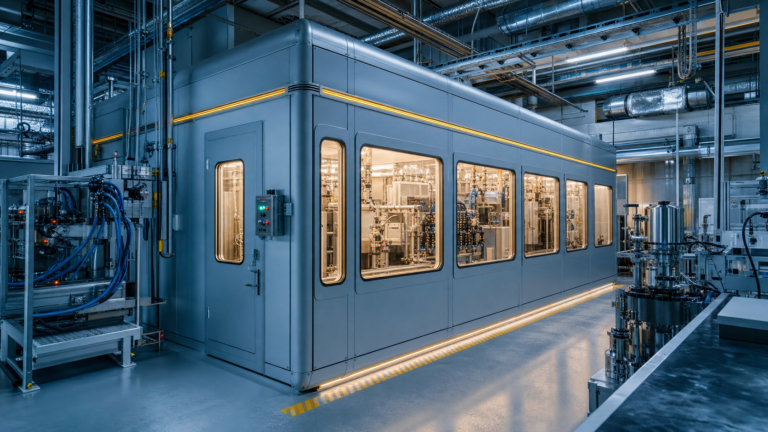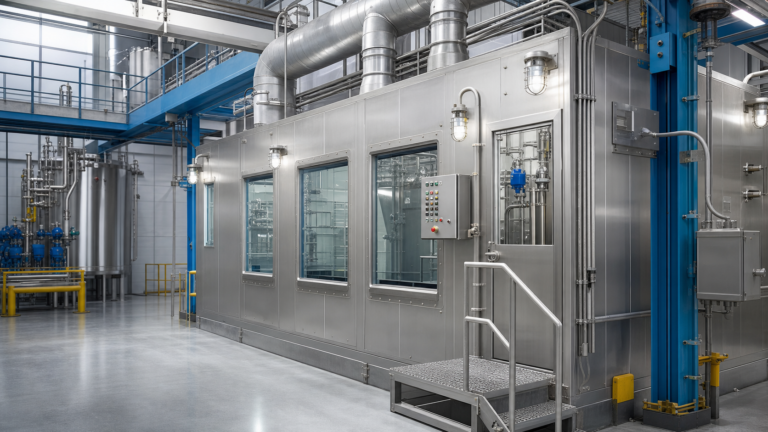
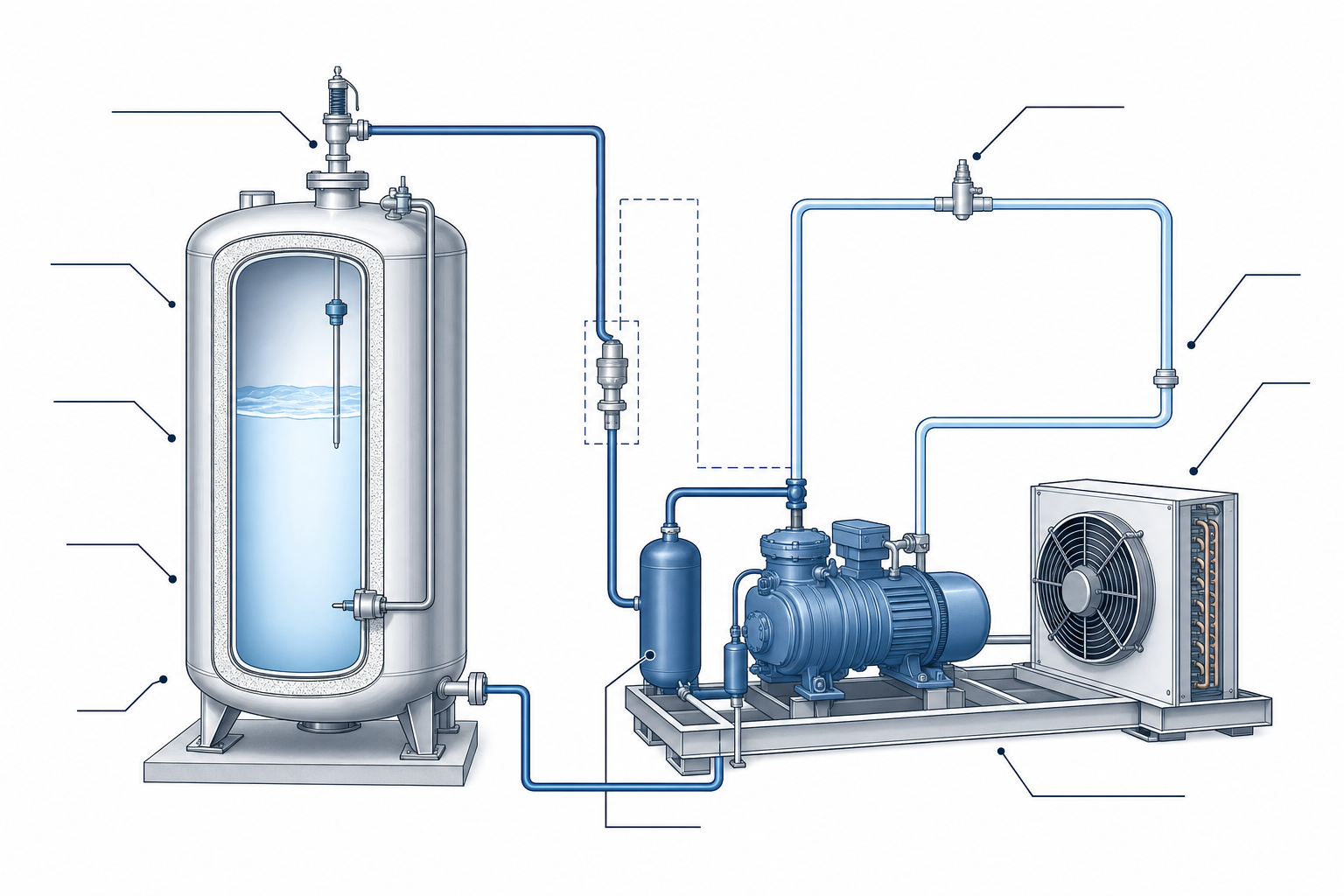
Cryogenic chiller selection matters when a processing facility depends on tight temperature control for quality, throughput, and safe handling of temperature-sensitive industrial materials.
Unlike standard HVAC cooling, a cryogenic chiller is engineered for lower operating temperatures, tighter stability, and integration with insulated vessels, jackets, recirculation loops, and heat exchangers.
What a cryogenic chiller does in an industrial process
A cryogenic chiller removes heat from a process loop so equipment can hold a setpoint without large temperature swings.
In practical terms, that loop may serve:
- Jacketed tanks or reactors
- Process heat exchangers
- Cold traps and condensers
- Low-temperature chambers used for conditioning or stabilization
When specifying a cryogenic chiller, engineers typically start with the required supply temperature, allowable return temperature, flow rate, and heat load profile (steady-state plus transients).
Cryogenic chiller components and how they work together
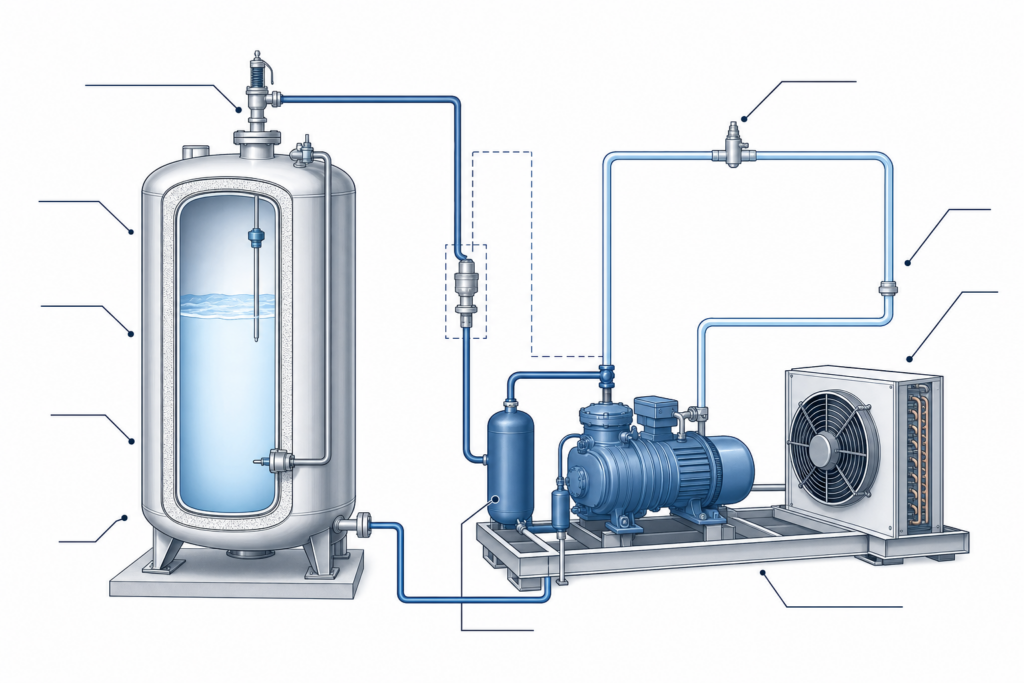
Most cryogenic chiller packages are assemblies of subsystems designed to deliver reliable cooling under demanding conditions.
Common elements include:
- Refrigeration system: compressor(s), condenser, expansion devices, and evaporator(s) sized for the target temperature range.
- Circulation module: pump(s), strainers, and valves to maintain stable flow and protect against cavitation.
- Reservoir and insulation: buffer volume and thermal insulation to reduce cycling and improve stability.
- Controls and instrumentation: temperature sensors, pressure transmitters, flow switches, and safety interlocks.
For background on how cryogenic refrigeration systems and cryocoolers are defined and categorized, NIST’s cryogenic resources are a useful reference (NIST cryocoolers overview).
Key cryogenic chiller sizing inputs engineers should verify
To avoid undersizing or unstable operation, a cryogenic chiller specification should cover more than “tons of cooling.”
Critical inputs include:
- Heat load (kW): include sensible heat, equipment losses, and any batch spikes.
- Operating range: required supply temperature and turndown.
- Process fluid: compatibility, viscosity at low temperature, and required filtration.
- ΔT and flow: the allowable temperature rise across the load and the required circulation rate.
- Utilities and environment: ambient temperature, ventilation, power quality, and heat rejection constraints.
For hazardous-location manufacturing, those items should be reviewed alongside area classification, ventilation design, and the broader electrical/mechanical integration plan.
Cryogenic chiller safety and code-compliance considerations
A cryogenic chiller is often installed in facilities where safety and compliance are driven by a combination of mechanical, electrical, and fire-protection requirements.
Typical engineering checks include:
- Overpressure protection: relief devices and safe discharge routing for vessels and piping.
- Materials of construction: low-temperature toughness and seal compatibility to reduce leak risk.
- Controls and alarms: high/low temperature, high pressure, low flow, and loss-of-power responses.
- Heat rejection: condenser airflow or water system capacity to prevent hot-weather derating.
Low-temperature equipment is often part of a larger safety strategy that can include protected storage, ventilation, and engineered safeguards.
For related low-temperature equipment options and integration considerations, see C1D1 Labs’ overview of low-temperature and cryogenic freezers (low-temp and cryogenic freezers).
How to select the right cryogenic chiller for uptime and maintainability
Beyond meeting the initial heat-load calculation, a cryogenic chiller should be chosen for maintainability and predictable performance over the full operating envelope.
Selection criteria that reduce downtime include:
- Service access: space for filter changes, pump service, and condenser cleaning.
- Redundancy options: dual pumps, staged compressors, or N+1 strategies where justified.
- Commissioning plan: functional testing of alarms, interlocks, and temperature stability under load.
- Documentation: P&IDs, control narratives, and maintenance procedures aligned to the facility’s EHS program.
When these elements are addressed early, a cryogenic chiller becomes a stable utility rather than a recurring bottleneck.
Need help with specification and integration? A targeted engineering review can confirm sizing assumptions, utility impacts, and compliance considerations before equipment procurement.