Planetary centrifuge systems are used in industrial manufacturing when you need controlled, repeatable separation or dewatering while keeping the process enclosed, balanced, and easy to clean.
This guide explains how a planetary centrifuge works, what to specify during procurement, and the safety, electrical, and maintenance considerations that matter most in modern processing facilities.
Planetary centrifuge fundamentals: what it is and what it does
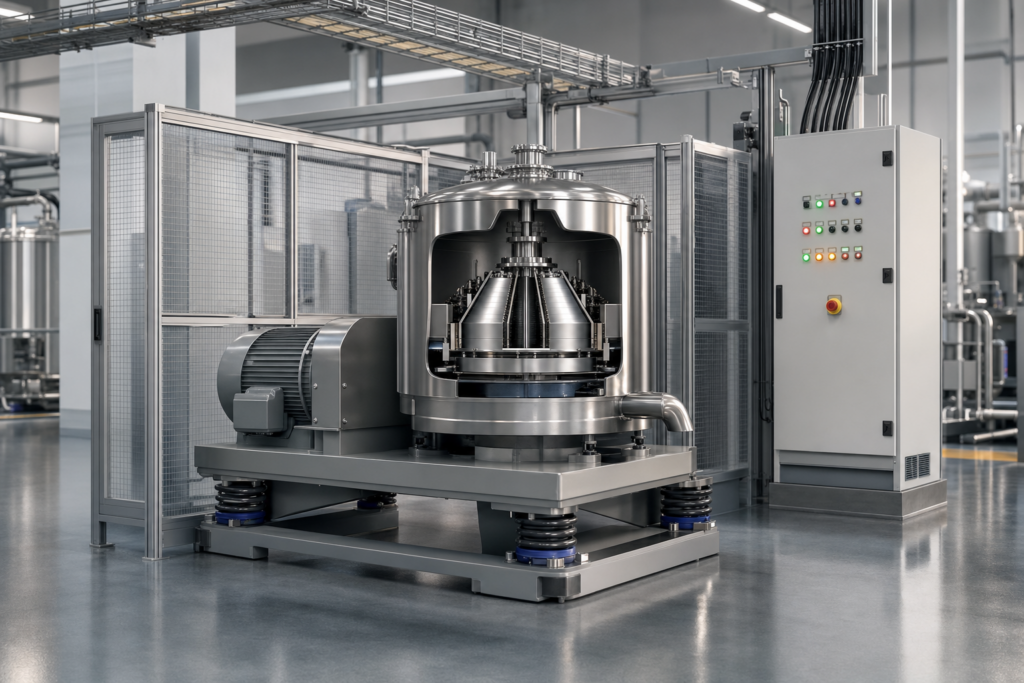
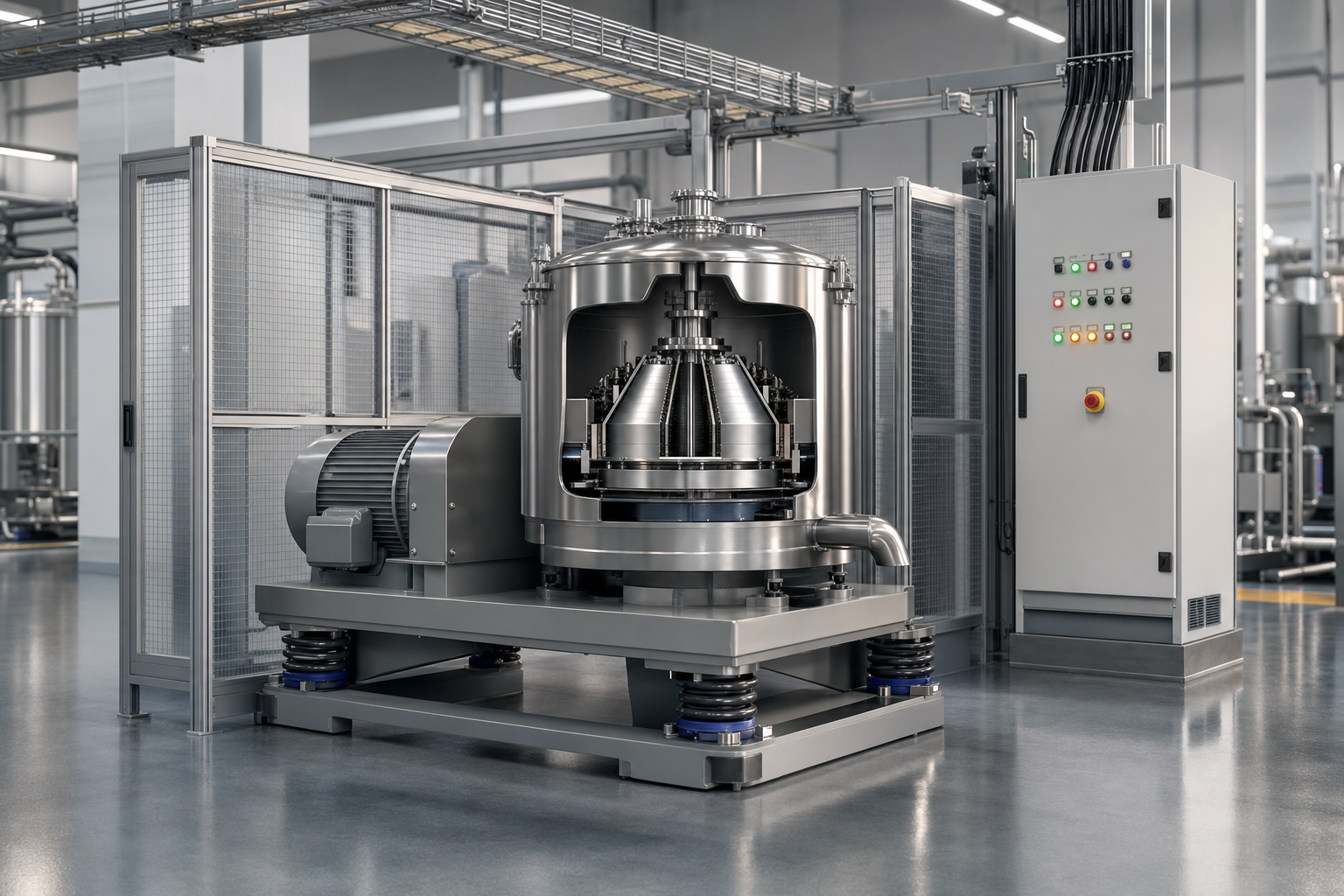
A planetary centrifuge is a high-speed separation machine where the rotating assembly is engineered to manage radial forces, vibration, and load balance while the product or material mixture is subjected to elevated g-forces. The term “planetary” is often used when the design includes compound motion or a rotor/bowl arrangement that improves mixing and separation uniformity across a batch.
In practical terms, these systems are chosen when you need:
- High separation efficiency with consistent batch-to-batch outcomes
- Enclosed operation to reduce airborne contamination and housekeeping load
- Robust construction for washdown or sanitary cleaning protocols
- Predictable vibration performance (critical for long bearing and seal life)
Planetary centrifuge selection: key performance specifications to request
When evaluating a planetary centrifuge, the most useful procurement documents are a clear process description plus a short list of measurable performance and design requirements. Consider asking suppliers for the following items in a formal datasheet:
- Rotor/bowl geometry and maximum g-force (and the method used to calculate it)
- Batch capacity and fill limits, including usable volume and recommended headspace
- Drive type and speed control (VFD details, ramp profiles, braking, overspeed protection)
- Materials of construction for wetted and non-wetted surfaces, plus surface finish if applicable
- Seal design and any containment strategy for aerosol or vapor management
- Utilities: power, compressed air, cooling water, drain connections, and any inerting requirement
- Noise and vibration performance, including acceptance criteria and test procedure
If you’re planning for hazardous-location manufacturing, remember that the centrifuge is only one part of the system. The surrounding room classification, ventilation strategy, and electrical design all influence what “compliant installation” means in your jurisdiction.
Planetary centrifuge safety: guarding, interlocks, and operating discipline
From a safety standpoint, centrifuges are a classic high-energy piece of rotating equipment. A good planetary centrifuge installation should treat safety as a system, not a feature list. Look for:
- Full perimeter guarding that prevents access to rotating components
- Door and lid interlocks that prevent opening until the rotor is fully stopped
- Emergency stop circuits that are tested and documented
- Imbalance detection with safe shutdown logic
- Documented operating procedures for loading, balancing, and cleaning
Operationally, consistent results and safe operation depend heavily on training. The best mechanical design cannot compensate for poor load balancing or shortcuts in cleaning and inspection routines.
Planetary centrifuge installation: electrical, ventilation, and room design
A planetary centrifuge is typically installed as part of a broader process line, so the room design and MEP integration can drive both cost and schedule. Common design topics include:
- Electrical service and controls: appropriate disconnects, lockout/tagout provisions, and panel location for clear egress
- Ventilation and heat rejection: motor and drive losses can be non-trivial at scale
- Floor loading and anchorage: concrete thickness, housekeeping pads, and vibration isolation strategy
- Cleanability and drainage: water management, slope-to-drain, and corrosion-resistant details
- Maintenance access: clearance for rotor service, seal replacement, and instrument calibration
For a practical example of how equipment selection interacts with permitting and facility constraints, see our internal overview on facility permitting and build-out planning.
Standards and documentation that support safer centrifuge operation
Even when you’re not working under a single prescriptive standard, good documentation practices reduce risk and simplify compliance conversations. Typical deliverables to request include a factory acceptance test (FAT) protocol, an installation qualification checklist, and maintenance procedures.
For general machine safety context and terminology (including guarding concepts and risk reduction), the Machine safety overview on Wikipedia is a useful starting point before you dive into facility-specific requirements and local codes.
Bottom line: A planetary centrifuge can be a high-value, high-throughput asset when it’s specified with clear performance metrics, installed with disciplined MEP coordination, and supported by robust guarding, interlocks, and operating procedures.