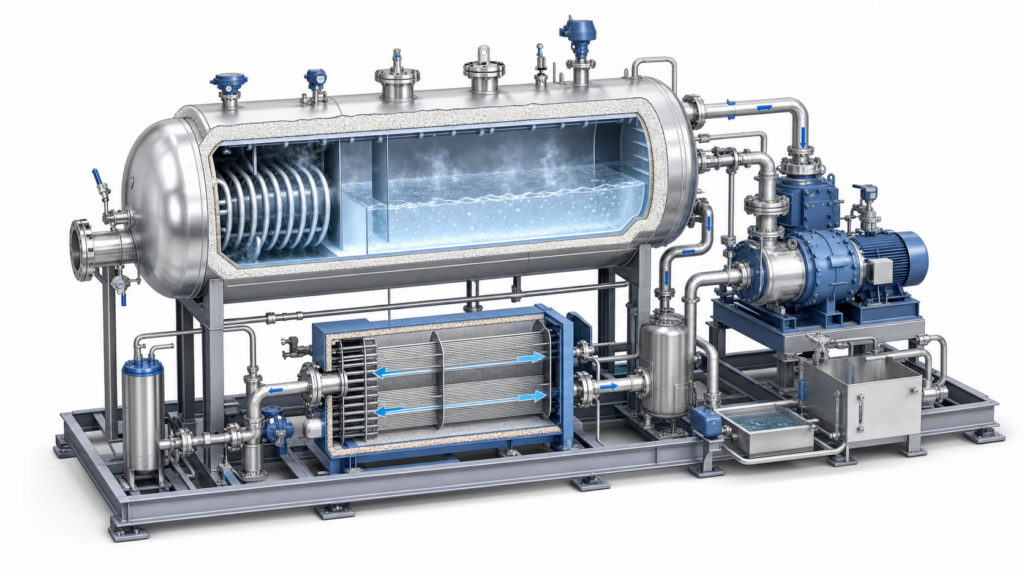
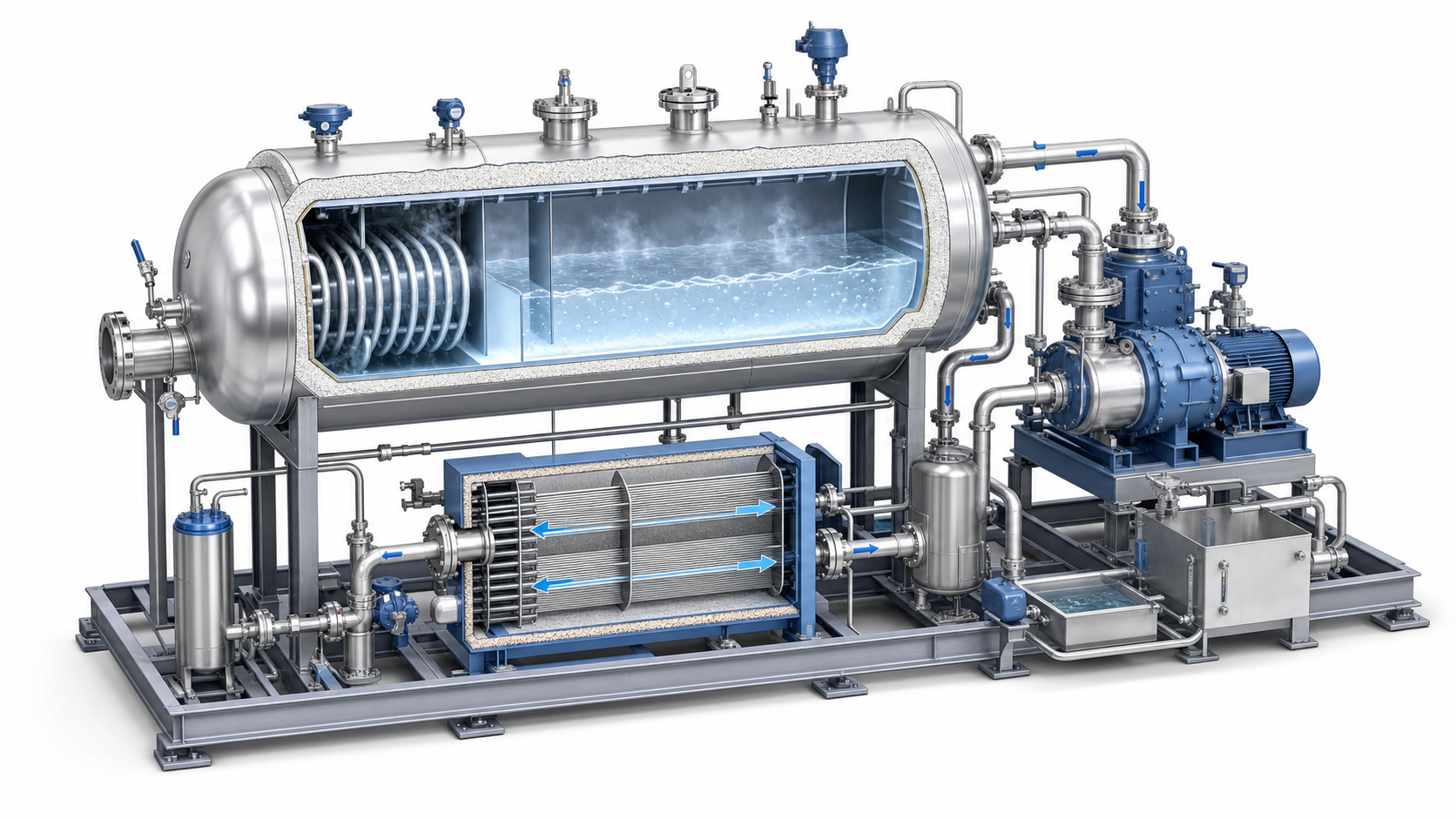
cryogenic chiller systems give industrial manufacturers a controlled way to manage very low process temperatures, but reliable performance starts with coordinated engineering. The equipment, insulated piping, controls, drainage, ventilation, and maintenance clearances should be designed as one system rather than selected as disconnected components.
For a new processing line or a facility upgrade, a clear design basis makes the chiller easier to size, install, validate, and operate. It also helps the project team document the operating envelope before equipment is ordered, reducing late changes to utilities, room layout, and safety functions.
cryogenic chiller selection starts with the thermal duty
Begin with the actual thermal duty, not a generic horsepower target. Record the product or process temperature range, inlet temperature, target outlet temperature, batch or continuous flow, heat load, pull-down time, ambient conditions, and required turndown. These values let the engineer compare refrigeration capacity, circulation rate, heat-exchanger approach temperature, and control response.
Also define normal, start-up, cleaning, and upset conditions. A system that performs well at steady state may struggle during a rapid pull-down or a warm restart. Document the acceptable temperature band, alarm limits, recovery time, and quality requirements so the selected cryogenic chiller supports production goals without overstating capacity.
How a cryogenic chiller manages heat transfer
The chiller’s heat exchanger is the bridge between the refrigeration circuit and the process side. Review materials of construction, pressure ratings, fluid compatibility, cleanability, isolation points, and the consequences of a loss of flow. Keep the process-side design distinct from the refrigeration-side design so each circuit has appropriate relief, monitoring, and service provisions.
Insulation quality matters as much as nameplate capacity. Poorly supported or damaged insulation can create unwanted heat gain, surface condensation, and difficult-to-maintain cold spots. Coordinate pipe supports, vapor barriers, flexible connections, expansion allowances, and access panels before the room finishes are installed.
Utilities and layout for a cryogenic chiller
Reserve space for the chiller package, service access, filters, pumps, valves, control panels, and replacement paths. Operators should be able to read instruments, isolate circuits, inspect connections, and reach maintenance points without moving temporary equipment. A compact layout is only efficient when it remains safe and practical during cleaning and planned repairs.
Coordinate electrical power, heat rejection, ventilation, process water, drainage, condensate control, and network connections on the same plan. If the facility also needs controlled low-temperature storage, pair the chiller layout with low-temperature and explosion-proof freezer solutions so staging, storage, and process flow remain aligned.
Controls, safety, and commissioning for a cryogenic chiller
Commissioning should verify the complete operating sequence, not only the ability to reach a setpoint. Test temperature sensors, flow switches, pressure alarms, high- and low-limit trips, emergency stops, pump permissives, compressor protection, controlled restart, and loss-of-utility behavior. Record baseline temperatures, pressures, flow rates, vibration, and sound so the maintenance team has a useful reference.
- Confirm equipment nameplates, disconnects, grounding, cable routes, and control-panel labeling.
- Test permissives for flow, level, ventilation, access, downstream readiness, and fault reset.
- Verify relief paths, isolation valves, drain points, and safe handling procedures for cold surfaces.
- Collect manuals, approved setpoints, calibration records, spare-parts lists, and training sign-offs.
Where electrical equipment is installed in a classified location, the design team should review OSHA requirements for electrical equipment in hazardous locations. The authority having jurisdiction and the adopted project codes remain the final basis for approval.
Maintainability and lifecycle value
A dependable cryogenic chiller is one that can be inspected, calibrated, and serviced without unnecessary production disruption. Provide access for filter changes, seal checks, sensor verification, pump service, insulation repair, and refrigerant-side inspection by qualified personnel. Keep approved operating limits with the asset record and use trend data to identify drift before it becomes a product or equipment issue.
Plan a management-of-change review before changing the process fluid, temperature range, connected load, control sequence, or room arrangement. When the chiller is part of a broader facility project, coordinating it with fire protection engineering for insurance risk reduction can help align equipment safeguards, facility planning, and insurer expectations.
C1D1 Labs helps manufacturers coordinate equipment, rooms, utilities, safety functions, and documentation for dependable industrial processing. When your project needs a cryogenic chiller, define the thermal duty, protect the heat-transfer path, and commission every safeguard before production begins.