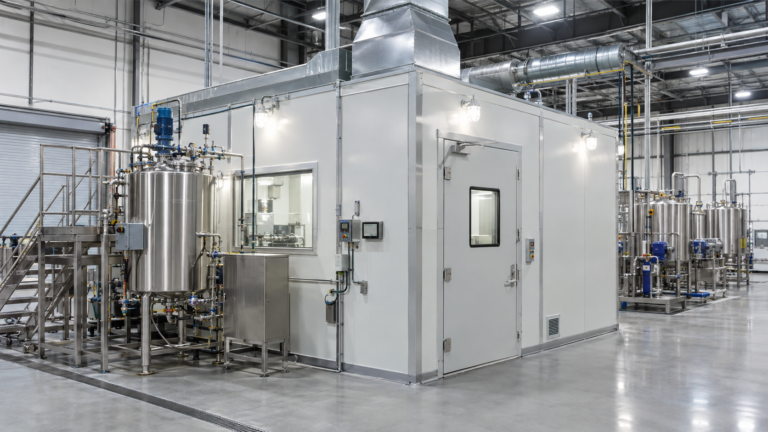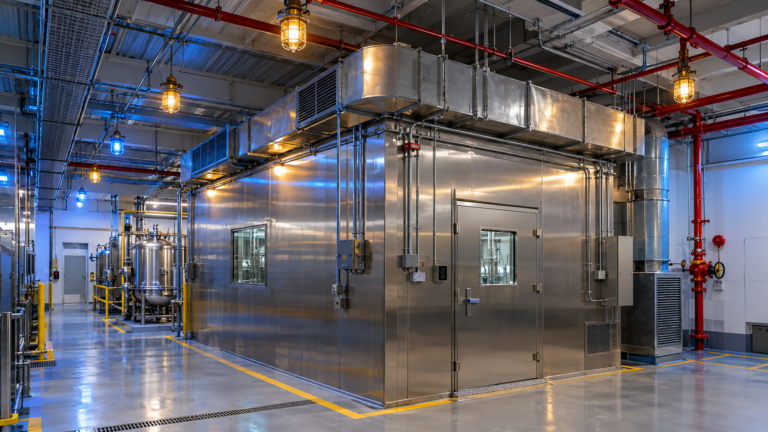
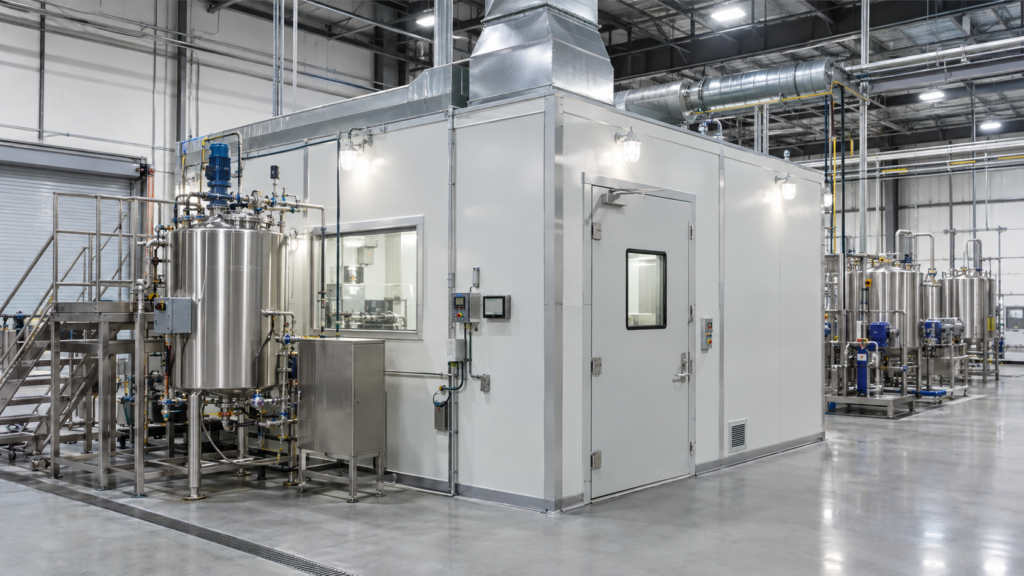
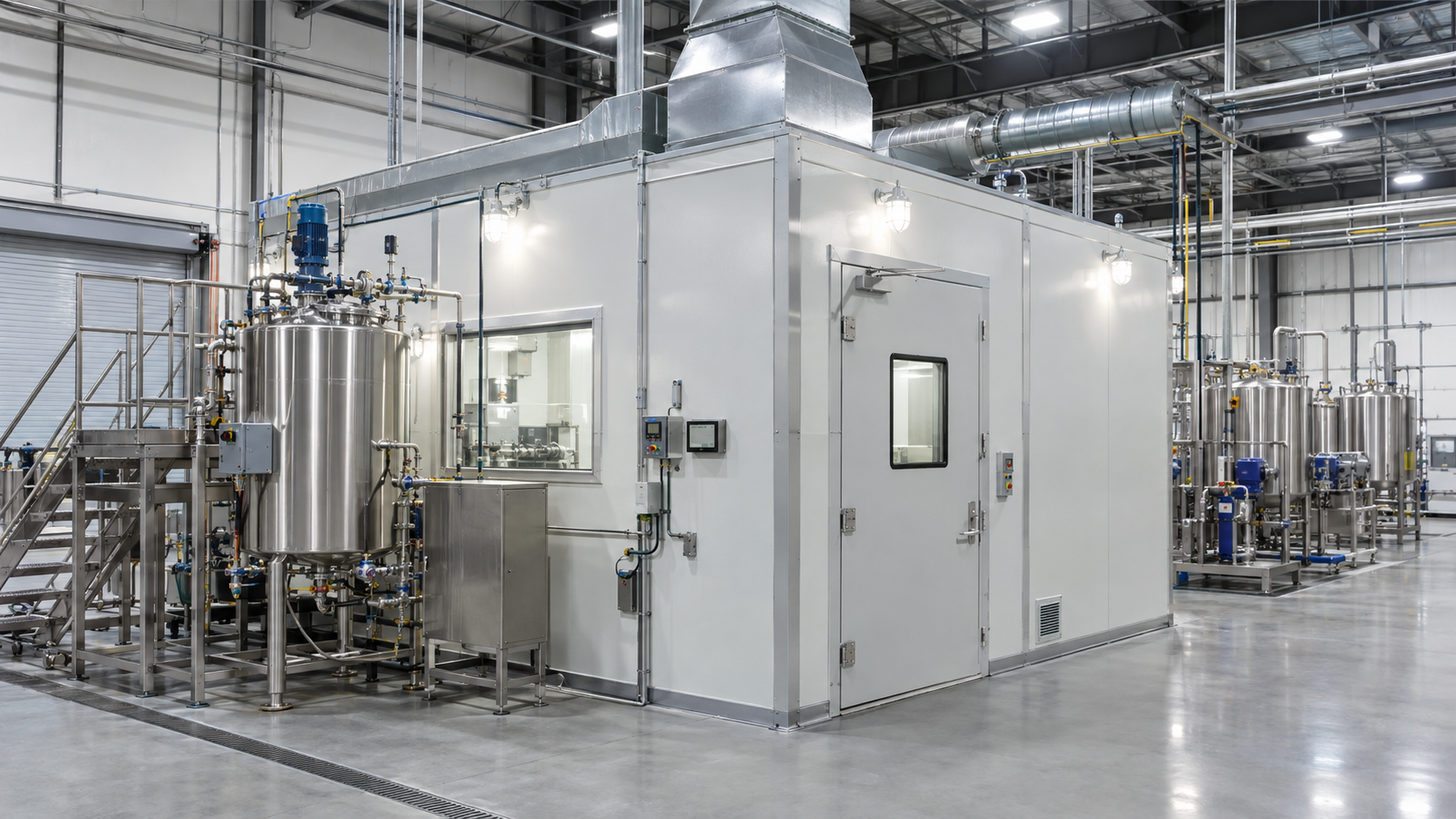
C1D1 booths give industrial processing teams a purpose-built boundary for operations where flammable vapors or gases may be present. By coordinating containment, hazardous-location electrical equipment, ventilation, and fire protection in one engineered enclosure, a booth can help an owner move from a process concept to a reviewable, maintainable installation.
The best results come from treating the booth as part of the facility rather than as a standalone box. Its doors, penetrations, exhaust, utilities, controls, access, and emergency systems must work with the surrounding building and the documented process hazards.
Why C1D1 booths fit industrial processing
C1D1 refers to a hazardous location where ignitable concentrations of flammable gases or vapors may be present during normal operations, or may occur frequently because of maintenance, process conditions, or equipment failure. A booth creates a defined area that engineers can analyze, document, and connect to the facility’s broader safety strategy.
That defined boundary can simplify planning for mixing, filling, coating, testing, or other industrial processing steps. The classification still depends on the actual materials, release points, temperatures, quantities, and ventilation performance. A label alone does not determine compliance; the process hazard analysis and adopted codes do.
C1D1 booths and hazardous-location electrical design
Electrical design is central to a safe installation. Lighting, switches, motors, controls, wiring methods, instrumentation, and disconnects must be selected for the classified location and the specific hazards identified by the project team. Equipment should be listed or approved for the applicable area and installed according to the governing electrical requirements.
Designers should also pay close attention to cable entries, conduit seals, panel joints, door hardware, grounding, bonding, and utility penetrations. These interfaces are easy to overlook when a project is assembled in the field. A coordinated modular design makes them visible earlier and supports consistent inspection before the booth reaches the site.
For a practical reference, review OSHA’s hazardous-location requirements and confirm the adopted code edition with the authority having jurisdiction and the project’s qualified engineers.
How ventilation makes C1D1 booths safer
Ventilation should be designed around credible release scenarios, room geometry, process temperatures, and the properties of the materials handled. Dedicated exhaust, controlled supply air, pressure relationships, airflow indication, monitoring, and alarm interlocks can help keep conditions predictable. The arrangement of grilles and equipment matters: the system should limit stagnant pockets and avoid short-circuiting from supply directly to exhaust.
Controls should communicate clearly with operators and the process. Depending on the risk assessment, loss of exhaust airflow may need to inhibit equipment, trigger an alarm, or initiate an emergency shutdown. Commissioning should verify airflow, alarm setpoints, interlocks, and discharge locations under documented operating conditions.
Fire protection and permitting benefits
Fire protection works best when it is integrated at the start. Rated panels and doors, detection, suppression, emergency shutdown, fire alarm interfaces, spill control, and responder access should be coordinated with the process layout. The final solution depends on the materials, equipment, building construction, and requirements enforced by the local authority.
Modular construction can also improve the permitting conversation. Fabricated panels, doors, ventilation connections, lighting, controls, and penetrations can be reviewed as a coordinated package, while site drawings show foundations, utilities, exhaust discharge, structural support, and connections to the building. That clarity can reduce late changes and help the installation team plan its work.
Planning C1D1 booths for your facility
Start with a process description, material inventory, equipment list, release analysis, production rate, and maintenance plan. Then align the owner, process, electrical, mechanical, structural, and fire protection disciplines before fabrication. Confirm classified boundaries, egress, service clearances, utility loads, exhaust routing, inspection points, and commissioning responsibilities.
For a turnkey path, explore C1D1 processing booths for industrial facilities and request a design review based on your actual process conditions. A well-engineered booth is not merely an enclosure; it is a documented system that supports safe operations, efficient installation, and long-term maintainability.