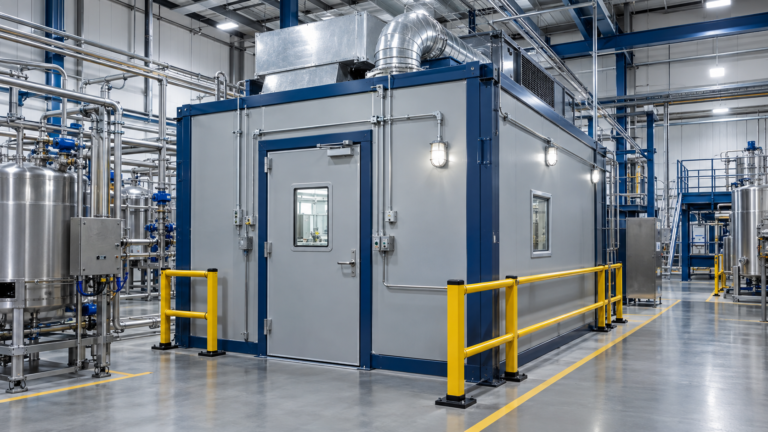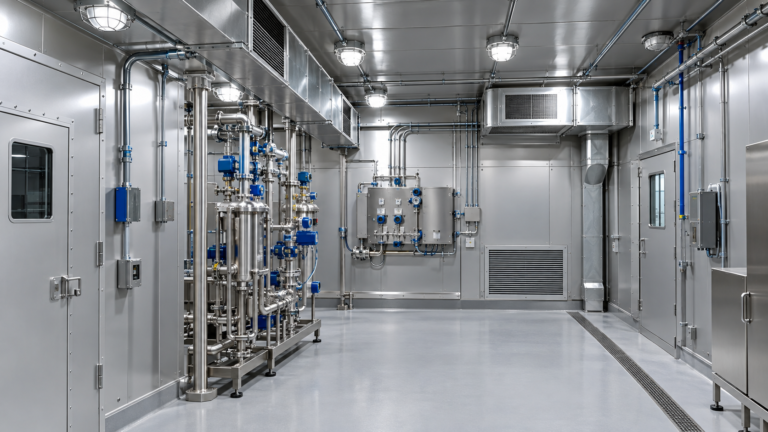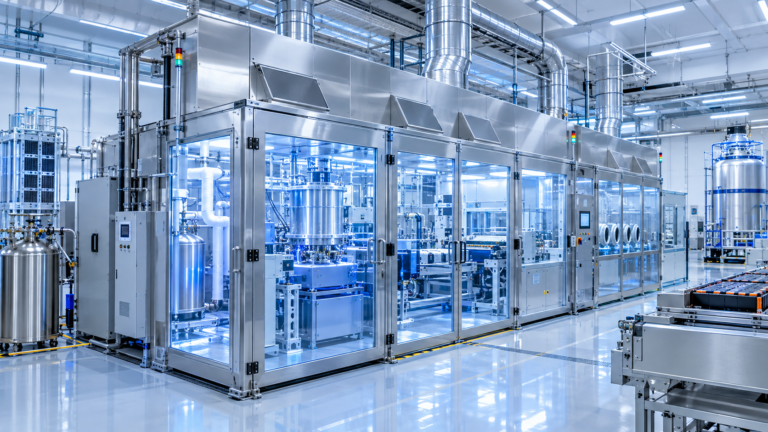
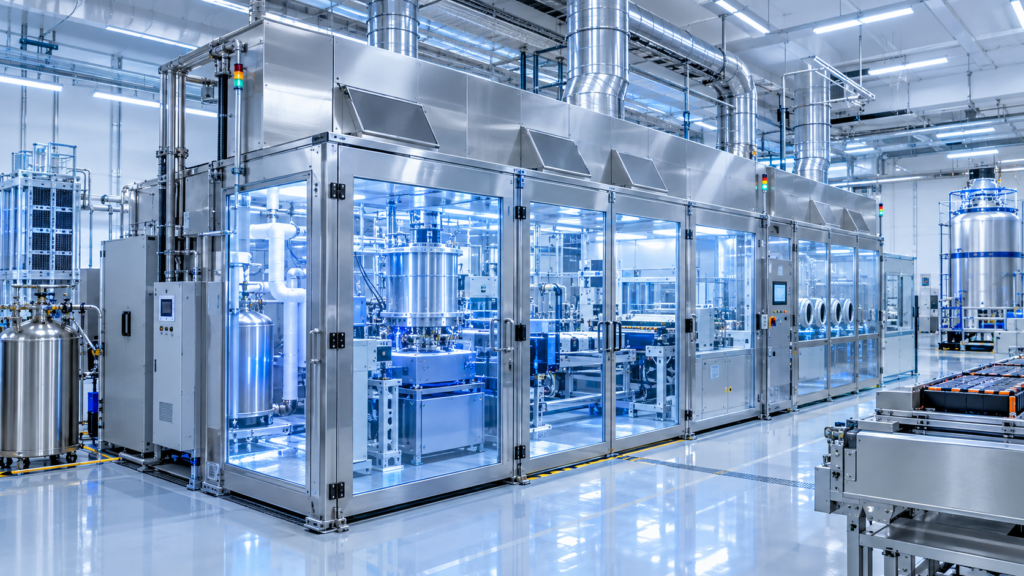
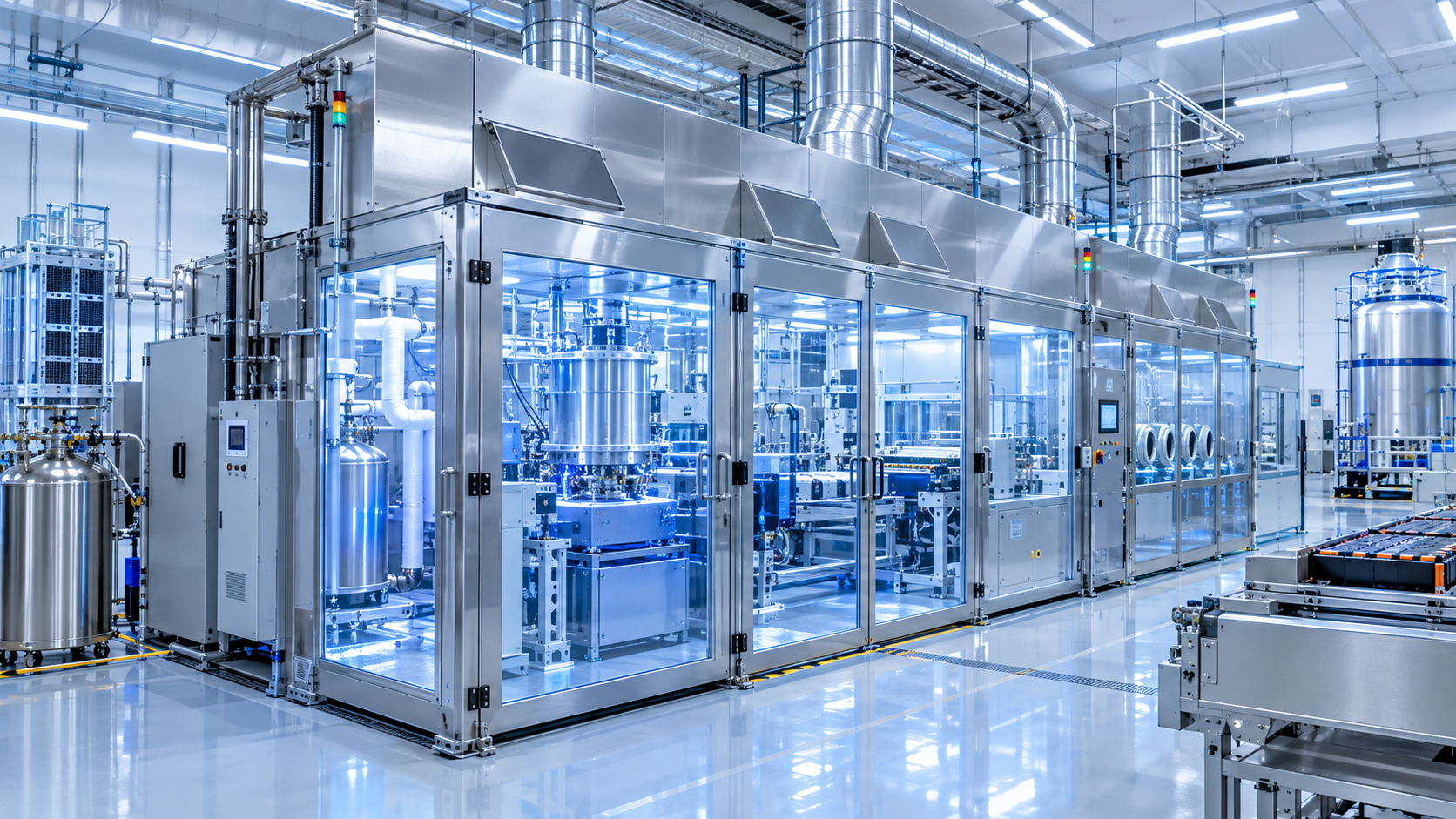
Modular high hazard rooms give battery manufacturers and superconductor fabricators a practical way to create controlled, code-minded production zones without waiting for a fully built permanent structure. By combining engineered enclosures, ventilation, fire protection, and hazardous-location electrical design, these rooms help teams introduce new processes with a clearer path from layout to commissioning.
Why modular high hazard rooms fit advanced manufacturing
Battery manufacturing and superconductor fabrication often require different environmental controls within the same facility. Battery lines may involve electrolyte handling, cell assembly, thermal-runaway mitigation, and tightly managed energy storage. Superconductor work can require cryogenic equipment, inert environments, precision utilities, and strict control of ignition sources. A modular room separates these activities from adjacent operations while preserving access for maintenance, material flow, and future line changes.
Because the enclosure is engineered as a coordinated system, the design team can address room boundaries, pressure relationships, utility penetrations, access doors, and equipment clearances together. That integrated approach reduces late changes that can delay construction or complicate inspections.
Design priorities for modular high hazard rooms
A useful design starts with the process hazard analysis and area classification. Engineers then match construction materials, electrical equipment, controls, and ventilation to the substances, temperatures, operating steps, and credible release scenarios in the room. Explosion-resistant electrical components, bonding and grounding, suitable lighting, and properly located control panels help reduce ignition risk in classified areas.
Ventilation should be designed around the process rather than treated as an afterthought. Supply and exhaust paths, monitoring, alarms, make-up air, and emergency shutdowns should support the room’s intended operating mode. For battery manufacturing, the design may also include detection and response features for abnormal heating. For superconductor fabrication, it may include oxygen monitoring and safe management of cryogenic or inert-gas systems. The final engineering basis should be reviewed against applicable NFPA, OSHA, IFC, and local requirements; OSHA’s electrical safety requirements for hazardous locations provide an important reference point.
How modular high hazard rooms improve deployment speed
Prefabrication moves repeatable work into a controlled manufacturing environment, where panels, doors, penetrations, and utility interfaces can be assembled and inspected before delivery. At the site, crews can focus on setting the room, connecting approved utilities, integrating controls, and completing the required verification steps. This can shorten the disruption to an operating plant and make the sequence easier to coordinate with equipment vendors.
Modularity also supports phased investment. A manufacturer can begin with one enclosed process cell, validate the workflow, and add matching rooms as production volume increases. Standardized interfaces make it easier to plan future capacity while keeping each high-hazard operation within a defined boundary.
Scaling protection from pilot line to production
Scalability should not mean repeating a room without reviewing changed conditions. Each expansion should revisit material quantities, equipment heat loads, ventilation demand, egress, fire detection, suppression, relief strategy, and emergency response. A repeatable modular platform makes that review more consistent because the core enclosure details are documented, while process-specific changes remain visible.
For teams planning a new industrial process area, C1D1 Labs also outlines fire-rated processing booth solutions that can complement a larger manufacturing layout. The right combination depends on the process, the classified area, the facility’s fire protection strategy, and the authority having jurisdiction.
Plan modular high hazard rooms around the full lifecycle
The strongest projects treat compliance as a lifecycle activity rather than a final inspection task. Start with process information, define the room’s performance requirements, document the electrical and ventilation basis, and coordinate fire protection and emergency procedures early. After installation, maintain inspection records, test alarms and interlocks, train operators, and control modifications through a formal management-of-change process.
With that discipline, modular high hazard rooms can give battery manufacturing and superconductor fabrication teams a safer, more adaptable foundation for innovation. A purpose-built enclosure supports faster deployment while preserving the engineering documentation and operational controls needed for dependable high-hazard production.