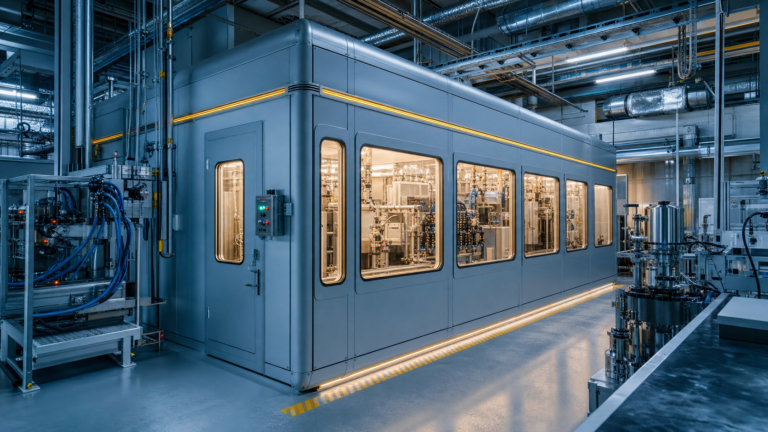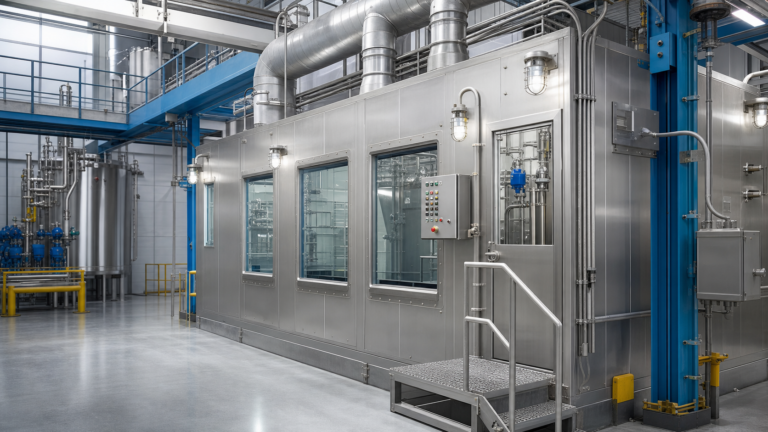
When planning an industrial processing room for hydrocarbon processing, perhaps the single most critical structural decision relates to the C1D1 processing booth. While operators are frequently consumed with the production capacity of individual processing professionals, fire code authorities are evaluating how quickly and safely your booth can exhaust flammable vapor.
C1D1 labs engineers emphasize that air changes per hour (ACH) drive both the exhaust strategy and the safety of the workspace. According to safety norms—heavily influenced by NFPA 58 and related standards regarding flammable gases—a minimum air velocity is required to ensure that butane and propane exhaust do not accumulate within the workspace. A poorly sized booth forces a facility to run processing professionals under hazardous conditions, risking devastating compliance failures or facility fires.

Proper sizing requires a firm understanding of hydrocarbon processing equipment dimensions, technician workflow, and allowable combustible loads. To satisfy rigorous fire code evaluation and an authoritative Life Safety review, your processing room design must include precise calculations for expected solvent-vapor release. Every C1D1 processing booth must be coupled with an explosion-proof exhaust system sized specifically to the volume of the booth and the processing method in use.
It is important to remember that as the overall footprint expands, the cfm (cubic feet per minute) requirement of the exhaust fan scales dramatically. Engineers must not only calculate the internal volume of the booth but also account for the restrictive flow introduced by hydrocarbon processing equipment inside it. For advanced setups involving massive material columns and complex piping runs, standard assumptions fail.
Furthermore, one frequently overlooked aspect of industrial processing room design is makeup air. The most powerful exhaust system in the world is useless if the building envelope is pulled into a harsh negative pressure, starved of fresh air. Installing a powerful exhaust implicitly requires a sophisticated make-up air unit (often a DOAS) to ensure neutral or slightly negative pressure inside the booth relative to the rest of the facility, adhering to guidelines set forth in the International Building Code (IBC) and International Fire Code (IFC).
When selecting your C1D1 footprint, always consult with experienced fire protection engineering professionals early in the layout phase. Balancing equipment mass, operational flow, and massive air-exchange demands dictates a design that supports high throughput while remaining unequivocally code-compliant.