The safe and efficient operation of hydrocarbon and ethanol processing facilities relies heavily on meticulous adherence to rigorous safety standards. A Class 1 Division 1 (C1D1) environment denotes an area where ignitable concentrations of flammable gases or vapors are present continuously, intermittently, or periodically under normal operating conditions. This classification requires specialized equipment, structural design, and operational procedures to mitigate risk and ensure compliance.
Designing a compliant C1D1 lab involves navigating a complex web of building and fire codes, primarily drawing from the National Fire Protection Association (NFPA), the International Fire Code (IFC), and the International Building Code (IBC). This comprehensive article outlines crucial considerations for ensuring safety, maintaining compliance, and optimizing workflow in your processing facility, delving into structural considerations, ventilation engineering, hazardous material thresholds, and rigorous equipment vetting processes.
Code-Driven Facility Planning: The Foundation of Safety
The initial stages of planning an processing lab must prioritize code compliance above all else. Integrating safety features into the architectural blueprint is far more effective, and often significantly more cost-efficient, than attempting to retrofit solutions later in the construction phase or after an inspection failure. Important reference standards include the NFPA 1 Fire Code and the International Fire Code (IFC), which detail comprehensive regulations for the storage, handling, and use of hazardous materials.
One critical aspect of this planning phase is determining the Maximum Allowable Quantity (MAQ) of hazardous materials permissible within a specific control area. The IBC and IFC dictate these quantities based on the occupancy classification of the building and the specific properties of the solvents used, whether they are Class I flammable liquids like ethanol or liquefied flammable gases like butane and propane.
Exceeding these MAQ limits often mandates a higher occupancy classification (typically Group H for High-Hazard), which initiates a cascading series of stricter requirements for fire protection, structural integrity, spill control, and secondary containment. Therefore, a comprehensive hazardous material inventory and classification analysis is absolutely paramount during the initial planning phase to avoid costly redesigns and delays. Learn more about navigating these complexities through expert processing facility design services.

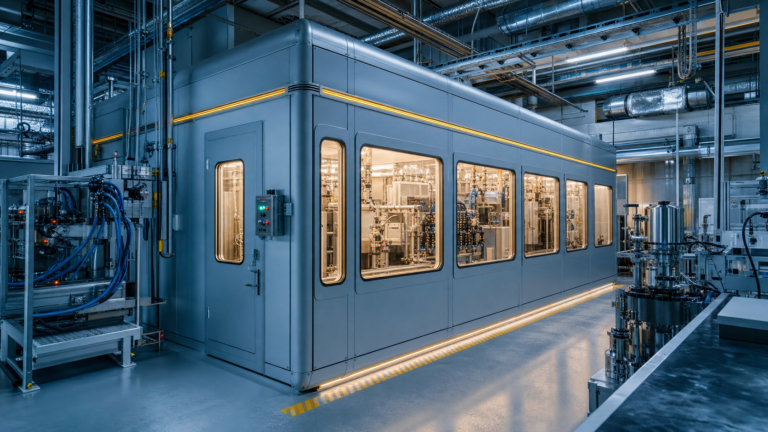
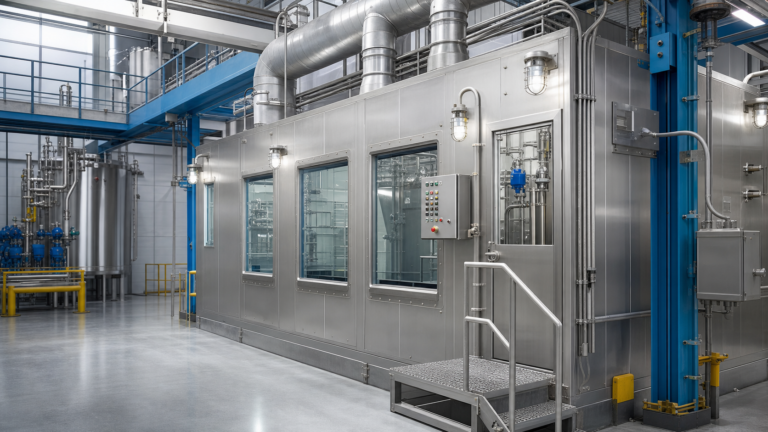
A professionally installed, C1D1 compliant processing booth.
Ventilation and Air Exchange Rates in C1D1 Environments
Effective ventilation is the primary defense against the accumulation of flammable vapors, serving to dilute and remove potentially explosive concentrations before they can ignite. The NFPA 91 Standard for Exhaust Systems for Air Conveying of Vapors, Gases, Mists, and Particulate Solids provides essential guidelines for the design, construction, and installation of these critical systems.
In a C1D1 environment, continuous mechanical exhaust ventilation is typically required, operating at negative pressure relative to surrounding non-hazardous areas to prevent vapor migration throughout the facility. This ensures that any fugitive emissions are captured and exhausted directly to the exterior.
C1D1 processing booths must integrate robust air handling systems capable of rapid air exchange. A common standard is providing a minimum of 1 cubic foot per minute (cfm) of exhaust per square foot of floor area, though specific process hazards, larger solvent volumes, or specific Authority Having Jurisdiction (AHJ) requirements may dictate significantly higher rates.
Furthermore, it is not simply about removing air; make-up air systems must be meticulously designed to supply conditioned air to the space without disrupting the intended airflow patterns, creating stagnant zones where vapors could pool, or causing excessive turbulence that might interfere with delicate processing processes. Find out more about industry leading C1D1 booths engineered to meet and exceed these stringent airflow and pressurization requirements.
Hazardous Exhaust Systems and Fire Protection Engineering
The ductwork designated for hazardous exhaust is subject to strict regulations. It must be independently routed directly to the exterior of the building, constructed of non-combustible materials (typically heavy-gauge steel or stainless steel), and properly supported to withstand both internal pressures and potential external forces. The termination point of this exhaust must also adhere to specific clearance requirements from property lines, operable openings, and air intakes to prevent the re-entrainment of hazardous vapors.
Integrating fire detection and suppression systems is another critical component, heavily regulated by standards such as NFPA 13 Standard for the Installation of Sprinkler Systems and various sections of the IFC. Given the presence of flammable liquids and gases, specialized suppression agents or high-density water applications may be required depending on the specific hazard analysis.
Furthermore, processing rooms frequently utilize sophisticated interlocked systems. In these setups, a lower explosive limit (LEL) gas detection alarm will automatically trigger a complete, fail-safe equipment shutdown, severing power to non-essential systems while simultaneously ramping the exhaust ventilation up to emergency purge rates. Electrical installations within the established C1D1 boundary must rigorously comply with the requirements of the NFPA 70 National Electrical Code (NEC) Article 500, mandating explosion-proof enclosures, specific sealed wiring methods, and specialized fittings designed to contain any internal ignition.

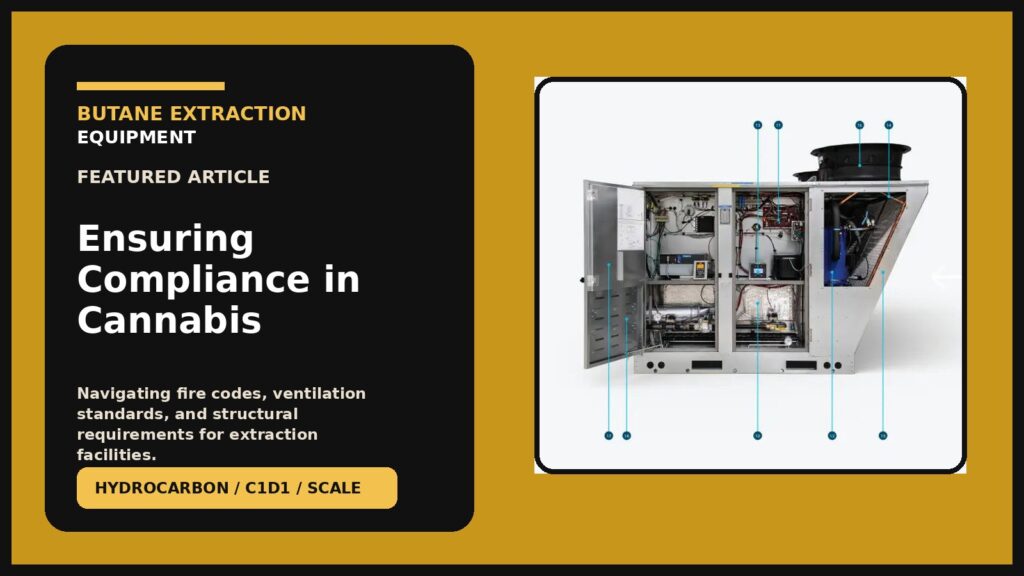
ASME certified components utilized in a closed-loop system.
Selecting the Right Equipment for C1D1 Labs
The equipment utilized for processing must be as carefully vetted as the facility itself. Utilizing uncertified or modified equipment introduces unacceptable levels of risk into a C1D1 environment. Pressure vessels operating at specific thresholds (typically over 15 psi) should unequivocally bear the ASME U-stamp, ensuring they have been engineered, manufactured, and independently inspected to withstand operational pressures safely.
This includes material columns, collection vessels, and solvent recovery tanks. Discover quality hydrocarbon processing equipment built specifically for demanding C1D1 operational conditions and rigorous continuous use.
Crucially, the entire system—encompassing the C1D1 booth, the processing equipment, chillers, heaters, and all ancillaries—should undergo a comprehensive review by a licensed Professional Engineer (PE). This Peer Review process, often required by local municipalities before issuing operational permits, verifies that the proposed design and equipment align with all applicable codes and that the system is intrinsically safe for its intended use.
By prioritizing comprehensive code compliance, implementing robust and verifiable ventilation strategies, and investing in properly certified, peer-reviewed equipment, processing professionals can maintain a highly efficient, thoroughly safe environment that easily meets rigorous regulatory scrutiny and protects both personnel and capital investments.