Understanding Hazardous Material Storage Classification
For industrial processing facilities managing hydrocarbons, ethanol, or blended solvents, compliance begins with appropriately classifying hazardous materials. According to the International Fire Code (IFC) and National Fire Protection Association (NFPA) standards, processing rooms handling flammable liquids and gases fall under strict occupational and building codes. Whether evaluating C1D1 processing rooms for butane processing or dedicated C1D2 processing rooms for ethanol winterization, understanding how control areas interact with Maximum Allowable Quantities (MAQ) is essential.

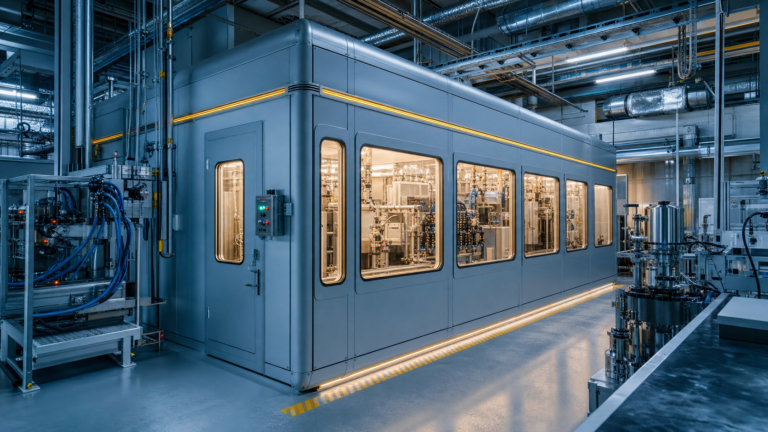
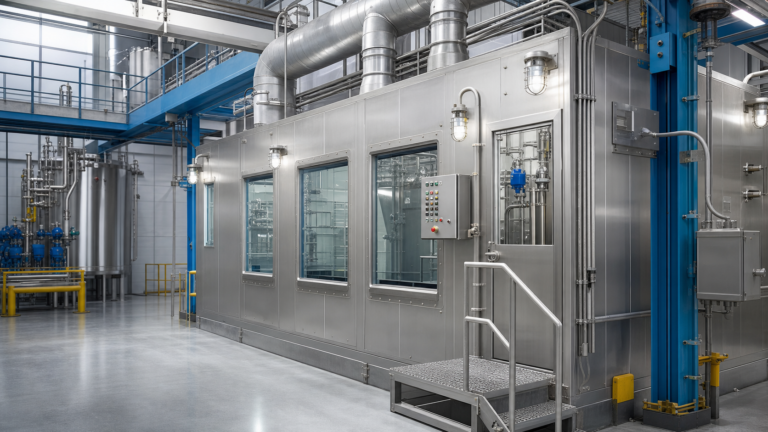
C1D1 compliant electrical controls with explosion-proof enclosures
NFPA and IFC Compliance for Hydrocarbon Processing Equipment
When selecting hydrocarbon processing equipment, fire protection engineering must dictate facility layout. Equipment that processes propane and butane presents unique risks due to vapor density and flammability limits. The NFPA 58 (Liquefied Petroleum Gas Code) outlines storage limits and separation distances for these materials. Processing facilities must utilize closed-loop systems with certified ASME pressure vessels to prevent incidental atmospheric venting. Secondary containment systems, gas detection alarms interlocked with emergency exhaust fans, and explosion-proof (Class I Division 1) electrical installations are not just recommended—they are mandatory.
Deflagration Venting and Fire Protection Engineering
When solvent storage exceeds standard MAQ limits, the processing room transitions into a High-Hazard (Group H) occupancy classification under the International Building Code (IBC). These designated H-2 or H-3 spaces demand advanced structural protection. Fire-resistance-rated partitions and damage-limiting construction, such as deflagration venting compliant with NFPA 68 (Standard on Explosion Protection by Deflagration Venting), mitigate the impact of catastrophic overpressure events. Ensuring continuous operation of makeup air units and exhaust ventilation under emergency generator power adds a final layer of critical safety, keeping atmospheric solvent concentrations safely below 25% of the Lower Flammable Limit (LFL).