Navigating IBC and IFC for High-Volume Processing
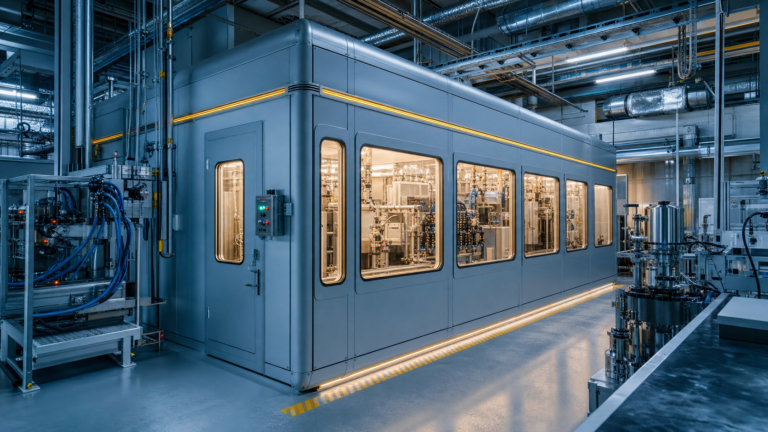
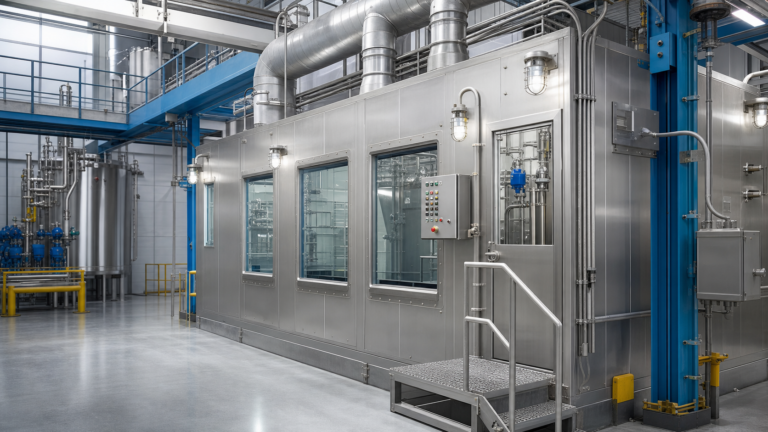
For operations implementing industrial scale ethanol processing, designing high-throughput C1D2 processing rooms requires rigorous alignment with the International Building Code (IBC) and International Fire Code (IFC). Integrating significant volumes of hazardous materials triggers stringent structural and mechanical demands. Proper hazardous occupancy designation, generally transitioning to an H-3 occupancy, obligates specific damage-limiting construction methods, such as utilizing deflagration venting explicitly engineered following NFPA 68 criteria to safely direct any potential overpressure events to the facility’s exterior.

Explosion-proof electrical installations suited for Class I, Division 2 environments.
Electrical Area Classification and Dedicated Equipment Integration
Integrating large-scale hydrocarbon processing equipment or ethanol processing machinery demands a cohesive electrical distribution approach. NFPA 70 (National Electrical Code) mandates meticulous Class I, Division 1 and Division 2 delineations depending on continuous versus occasional vapor exposure risks. Facilities executing extensive liquid solvent storage and processing must rely on hermetically sealed relays, explosion-proof motors, and intrinsic safety barriers. Implementing interlocked hazard mitigation arrays is standard practice; for example, coupling low-level explosive gas detectors with primary and backup high-velocity exhaust mechanisms ensures the atmospheric concentration of ethanol or butane never approaches 25% of the Lower Flammable Limit (LFL) as set by NFPA 497.
Secondary Containment, Mechanical Exhaust, and Fire Protection Engineering
A central pillar of modern C1D1 processing rooms and corresponding C1D2 spaces is comprehensive fluid management. According to IFC Chapter 50 (Hazardous Materials) and IFC Section 5704, rooms housing substantial solvent inventories require monolithic, non-combustible secondary containment capable of holding the volume of the largest primary vessel, combined with the projected output of any active fire sprinkler system extending over the footprint. Dedicated fire suppression systems utilizing aqueous film-forming foam (AFFF) or high-expansion mechanical suppression mechanisms are typically required to combat the risk profiles presented by these volatile liquid solvent processing processes.