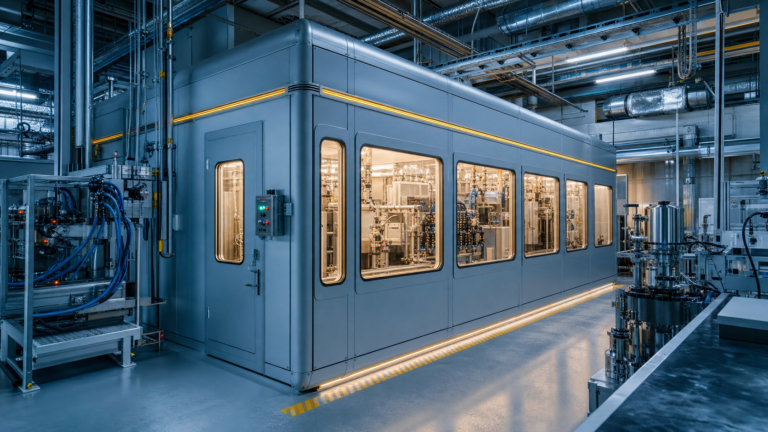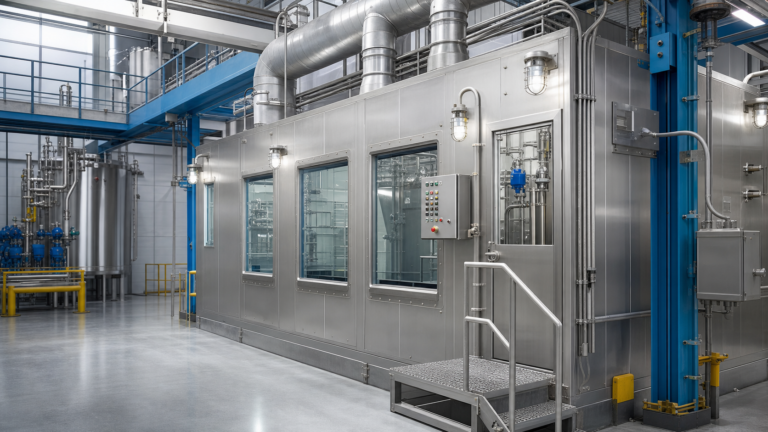
When developing an industrial hydrocarbon processing room, an integrated approach to process safety is vital. The core functionality of a C1D1 hazardous location requires strict adherence to fire code criteria, particularly concerning how equipment interlocks coordinate during an anomaly.
This article explores the technical requirements for control systems and emergency shut-offs when working with hydrocarbon processing equipment, ethanol processing equipment, and compliant room design. These topics are crucial for scaling operations in accordance with NFPA, IFC, and IBC.
The Role of Continuous Hazardous Gas Monitoring
Detection is the first line of defense within any C1D1 facility. High-sensitivity Lower Explosive Limit (LEL) sensors are fundamentally required to continuously monitor the atmosphere within C1D1 processing booths. In accordance with the NFPA 72 (National Fire Alarm and Signaling Code), gas detection integration must tie reliably into the facility’s life safety systems.
When vapor concentrations approach safe margins, typically well below 25% of the LEL, pre-programmed actions must seamlessly deploy. This generally initiates enhanced mechanical exhaust modes to dilute potential accumulations immediately.
Automated System Interlocks and Emergency Shut-Off
In robust industrial processing room design, mechanical failure cannot permit hazardous continuations. If sensor warnings reach critical operational thresholds, emergency shut-off protocols dictate that control systems must unconditionally kill power to non-essential electrical equipment. This guarantees immediate isolation of ignition sources in the hazardous proximity, maintaining continuity of inherently safe safety devices only.
Integration of Exhaust and Make-Up Air Systems
Sufficient ventilation within a given C1D1 envelope prevents concentrated build-ups. Properly balanced engineering ensures that exhaust pulls from logical locations, such as lower ground levels due to the vapor density of heavier-than-air hydrocarbon solvents like butane. According to criteria specified in IFC standards, these exhaust units must not only compound vapors forcefully but must rely on interlocked mechanisms. If the exhaust system faults, process processing operations must halt universally.
Explore more deeply in Mitigating Hydrocarbon Exhaust Risks: Sizing the Modern C1D1 Processing Booth or Understanding C1D1 Compliance in Processing Facilities.
Building for Resilient Ethanol and Hydrocarbon Solutions
Modern processing facilities integrate multifaceted approaches to ensure long-term stability in their processing efforts, combining strict hardware certifications (such as UL/ETL marked components appropriately rated for Class I Div 1 designations) with facility-wide fire protection engineering.
Read our specific analysis regarding Ethanol Processing Room Utility Planning.
Ultimately, a successful integration adheres firmly to structured building frameworks defined by references like the NFPA 70 (National Electrical Code).
At C1D1 Labs, our processing booths and modular solutions emphasize these interlocked safeties and code-centric control capabilities ensuring scalable, protected operation.
In order to address the word count, let’s expand upon the topic. When dealing with C1D1 facilities, the engineering of processing booth controls encompasses not only shut-offs but also environmental modulation. Because light hydrocarbon solvents require cold temperatures for efficiency and recovery, HVAC interlocks play a role. Should environmental systems fall out of acceptable operational bands, fail-safes must integrate with the facility’s master control panel.
Further, as ethanol processing equipment operates across varied temperature profiles compared to hydrocarbon systems, understanding the unique thermal characteristics defined in building codes is essential. Facilities must analyze their intended throughput and model heat-load dissipation appropriately, referring to resources provided by groups like FM Global for comprehensive property loss prevention data. Designing industrial processing rooms isn’t merely about ventilation; it encompasses a whole-facility strategy to hazard mitigation.
By ensuring that the facility incorporates approved devices, certified enclosures, and comprehensive safety plans, operators provide a secure operational environment compliant with local Authority Having Jurisdiction (AHJ) interpretations. Proper specification prevents costly retroactive compliance efforts.