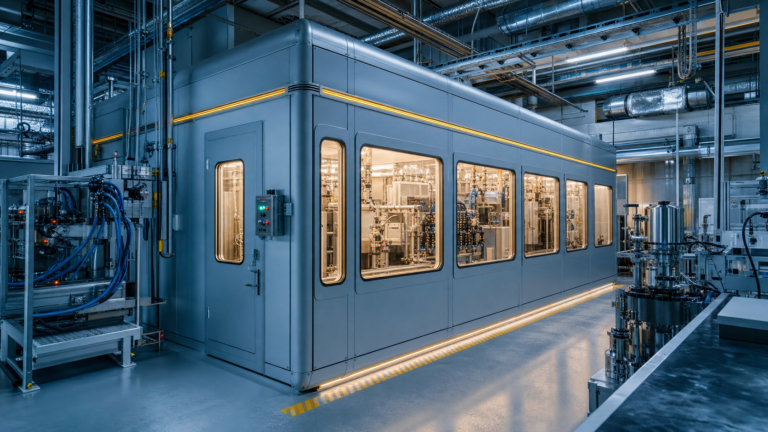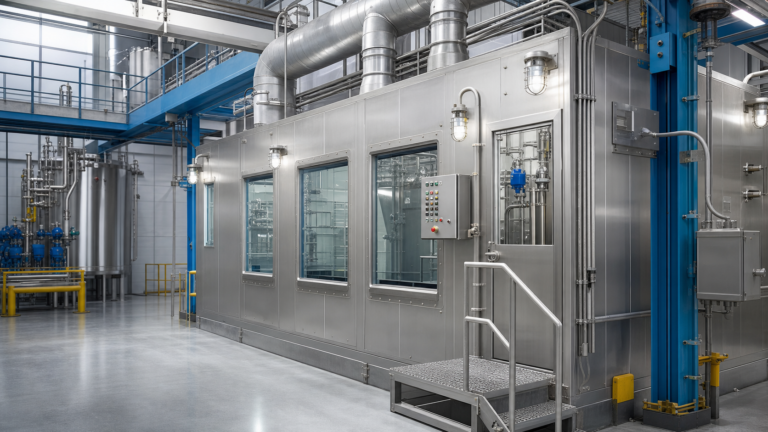
When operating a hydrocarbon processing facility, ensuring that all equipment meets stringent safety requirements is paramount. The presence of flammable gases such as butane and propane necessitates an environment meticulously designed for hazard mitigation. Implementing a C1D1 environment with explosion-proof equipment, including modular C1D1 booths, is not merely a best practice; it is a code-mandated prerequisite for operating safely under the National Fire Protection Association (NFPA) guidelines. A critical element for safe and reliable facility function is standardizing hardware components from a reputable source for industrial processing equipment designed explicitly for classified areas. Ensuring safety relies on selecting the right equipment while mitigating potential threats posed by explosive compounds.
In hazardous locations where ignitable concentrations of flammable gases can exist under normal operating conditions, the risk of an explosive event is significantly elevated. High-capacity operations operating in these conditions utilize specialized hardware engineered to provide secure containment. These mechanisms act as robust enclosures that intercept and negate environmental instability that may result from electrical or thermal activity, protecting vital process assets, whether dealing with closed-loop butane systems or high-volume ethanol processing equipment. Through appropriate systems integration, thermal anomalies or excessive friction limits can be confined within certified modules instead of spreading toward neighboring systems.
Defining the Environment and Equipment Requirements
The baseline for industrial processing room design must integrate specialized classification standards to ensure structural compliance. The meticulous framework applied requires an analytical evaluation of the potential hazards and their proximity to essential personnel and processes. Equipment classified and installed within these confined environments must strictly adhere to rigorous mechanical engineering parameters indicating robust containment.
Classifications apply when specifying equipment and outlining operational parameters. Enclosures, motors, instrumentation arrays, and related control mechanisms must securely restrict explosive effects without breaking structural integrity. This prevents an interior detonation from reaching the exterior hydrocarbon atmosphere. Every module introduced to the working perimeter must verify its capacity to neutralize these inherent combustion risks effectively.

Extensive documentation provided by the International Fire Code (IFC) and the International Building Code (IBC) defines critical directives regarding safe facility construction. In tandem with these directives, meticulous architectural assessments ensure structural boundaries are accurately designed to tolerate catastrophic pressure potentials. Applying compliant engineering guidelines enhances containment efficiency significantly.
Optimizing Layout and Containment Structures
A proficiently structured C1D1 operational perimeter leverages advanced compartmentalization. This process integrates heavy-grade construction methods, effectively creating independent pressure boundaries capable of sustaining isolated detonations. Advanced containment relies fundamentally on rigid specifications designed specifically to outlast any destructive energy dispersion associated with rapid solvent expansion.
Professional facility planners consistently seek robust containment structures that exceed minimum requirements for hydrocarbon interactions. Proper configuration extends beyond walls and reinforced boundaries. The deployment strategies utilized align precisely with specialized engineering that determines precisely where electrical systems must remain physically isolated. Reliable physical partitioning contributes immensely to preventing rapid propagation.
Maintaining Environmental Controls and Airflow
One of the primary defensive layers within industrial processing processes relies on meticulously managing the airborne concentrations of flammables. Efficient and reliable air movement systems must be specified to provide continuous or triggered dilution ventilation, rapidly compounding ambient risks. Reliable mechanical ventilation dilutes dense volatile fumes securely below their calculated lower flammability limit (LFL) before critical danger levels materialize within the room envelope.
According to NFPA 70 guidelines and standards, electrical interlock functions alongside primary mechanical exhaust pathways remain indispensable. These vital control mechanisms immediately register any disruption within exhaust capacities. Should comprehensive airflow limits be exceeded or diminished inappropriately, these fail-safes efficiently de-energize active systems until ambient concentrations reset, protecting operators and minimizing equipment vulnerability.

Implementing Integrated Safety Systems
Advanced facility architecture demands looking beyond the primary mechanical processing components to successfully evaluate complete functional risk. Complete facility protection necessitates integrating automated life-safety arrays, relying fundamentally on integrated fire detection and early warning atmospheric monitoring mechanisms. Proper calibration is paramount; interconnected logic boards efficiently interpret rising hazards to activate automated suppression responses smoothly.
Engineered detection equipment directly limits continuous catastrophic incidents during processing production operations. The rigorous continuous assessment offered by automated monitoring equipment actively triggers necessary contingency programming and provides crucial fail-safes. The seamless assimilation of high-end active suppression technology underscores the priority for complete life-safety system engineering protocols.
Industrial organizations continually evaluate process security by demanding reliable National Electrical Manufacturers Association (NEMA) certified equipment to implement sustained mitigation solutions within modern production systems. Recognizing established best practices drives effective improvements and solidifies facility certifications critical for prolonged compliance.
Ensuring Sustainable Hydrocarbon Processing Equipment Maintenance
Even properly classified components remain susceptible to inevitable long-term degradation resulting from continuous, demanding operations. Rigorous procedural inspections remain vital in assessing wear around structural constraints such as threaded metallic enclosures, O-ring assemblies, and precision seals. This periodic condition assessment safeguards against compromised components rendering processing processes unstable and failing safety provisions.
Consistent preventative lifecycle management must address all potential vulnerabilities associated directly with structural decay or vibration and heat exposure. Establishing thorough periodic maintenance cycles assures that active mechanisms consistently manage excessive strains reliably throughout extensive operations. High operational capacities combined with sophisticated hydrocarbon processing equipment necessitate stringent observation standards guaranteeing all parts fulfill ongoing functionality requirements efficiently.
Comprehensive Facility Protection Engineering
Executing modern processing processes accurately dictates prioritizing sophisticated physical protection systems to efficiently manage energy discharge vulnerabilities properly. Extensive risk reductions achieved by combining heavy reinforced construction with redundant monitoring create a secure foundation focused entirely on mitigating hazards fundamentally attached to dense processing procedures securely. Structural considerations function optimally to isolate environmental variability safely effectively limiting significant system vulnerabilities.
Industrial facility planning evaluates all operational hazards proactively. Expert fire protection engineering services develop specialized strategies based entirely upon integrating advanced fluid dynamics assessments while precisely measuring energy distribution potential across complex manufacturing perimeters reliably. By actively addressing both passive defensive mechanisms and precise functional mitigations comprehensively, facilities correctly preserve operator security and sustain maximum production viability securely.