Introduction to Hydrocarbon Processing Facility Design
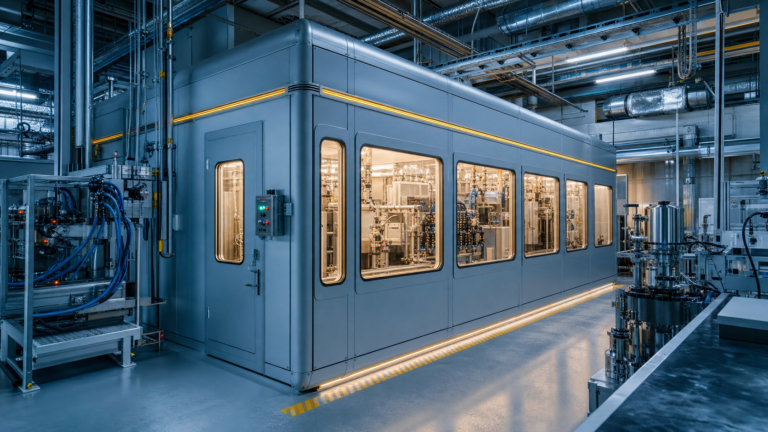
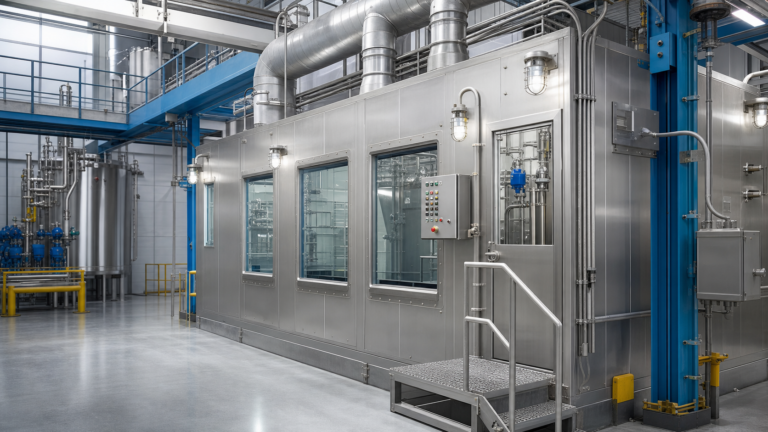
Hydrocarbon processing facilities handling highly flammable solvents represent high-hazard industrial environments. Designing a C1D1 processing booth requires strict engineering controls and rigorous fire protection planning to ensure a safe, code-compliant operation. Adherence to established codes such as the National Fire Protection Association (NFPA), the International Fire Code (IFC), and the International Building Code (IBC) is essential for developing processing room infrastructure.
Integrating specialized processing room designs necessitates understanding electrical classifications, ventilation strategies, and continuous hazardous gas detection methodologies to manage fire risk in a volatile atmospheric setting.

NFPA and IFC Compliance for Hydrocarbon Processing
Hydrocarbon solvents introduce severe fire and deflagration hazards. A facility engineering plan relies heavily on standardizing risk mitigation around technical standards like NFPA 58 (Liquefied Petroleum Gas Code) and NFPA 400 (Hazardous Materials Code). These frameworks define maximum allowable quantities, suppression agent selection, and deflagration venting requirements for high-hazard (Group H) occupancies under the IBC.
Operators investing in comprehensive hydrocarbon processing equipment require environments where active purging and emergency interlocking systems function harmoniously to negate hazard concentrations below their lower explosive limit (LEL).
Ventilation and LEL Atmospheric Control
Proper atmospheric control is arguably the most critical engineering mechanism in processing operations. Spaces designated as Class I, Division 1 under the National Electrical Code (NFPA 70) mandate continuous and mechanically assisted ventilation to intercept vapor leaks before they cross safety thresholds.
An industrial processing room design will feature interlocking sensors configured to continuously evaluate LEL saturation. When atmospheric sensors detect gas approaching the LEL, programmable logic controllers will automatically command exhaust blowers to high-purge speed and immediately disconnect power to non-essential processes, isolating equipment inside the hazard boundary.

Integrating High-Efficiency Fire Suppression Networks
Because structural defense alone cannot mitigate an ignition event, processing room strategies mandate complex fire protection arrays. Wet pipe sprinkler systems serve basic building defense, but high-hazard processing often relies on specifically targeted fast-response dry chemical or clean agent total-flooding systems engineered to actuate before a deflagration pressure wave damages primary structures.
Effective fire protection engineering necessitates consultation with groups like FM Global to establish loss-prevention strategies focused directly on highly volatile operational hazard characteristics. The suppression infrastructure must protect life safety while preventing secondary loss events resulting from prolonged fire extension to external solvent reservoirs.
Strategic Facility Planning for Future Scaling
An effective, code-driven facility design process is highly systematic. An processing laboratory cannot simply be assembled without an integrated peer review and rigorous hazard analysis validation. Engineers calculate spatial constraints against regulatory demands, allowing owners to develop processes safely.
Proper engineering, combined with certified enclosures and hazard control suites, builds a comprehensive safety mechanism that ensures an operational path protected against uncontrolled risk exposure. This proactive framework protects current investments and future operational capacity in industrial hydrocarbon processing.