The Crucial Role of Fire Protection Engineering in Hazardous Material Processing
In the highly regulated landscape of industrial hydrocarbon processing, safety cannot be an afterthought. Ensuring that your facility operates securely requires rigorous fire protection engineering from the earliest phases of facility planning. For any operation utilizing flammable solvents, designing to meet stringent building and fire codes is fundamental to both operational efficiency and risk mitigation.
At the core of this safety infrastructure are code-driven facility plans that integrate architectural design, mechanical systems, and life safety protocols. These systems work in concert to protect personnel, preserve high-value capital equipment, and maintain uninterrupted processing. In this guide, we dive deep into the specific engineering principles and regulatory frameworks that govern the design and operation of commercial hydrocarbon processing facilities.
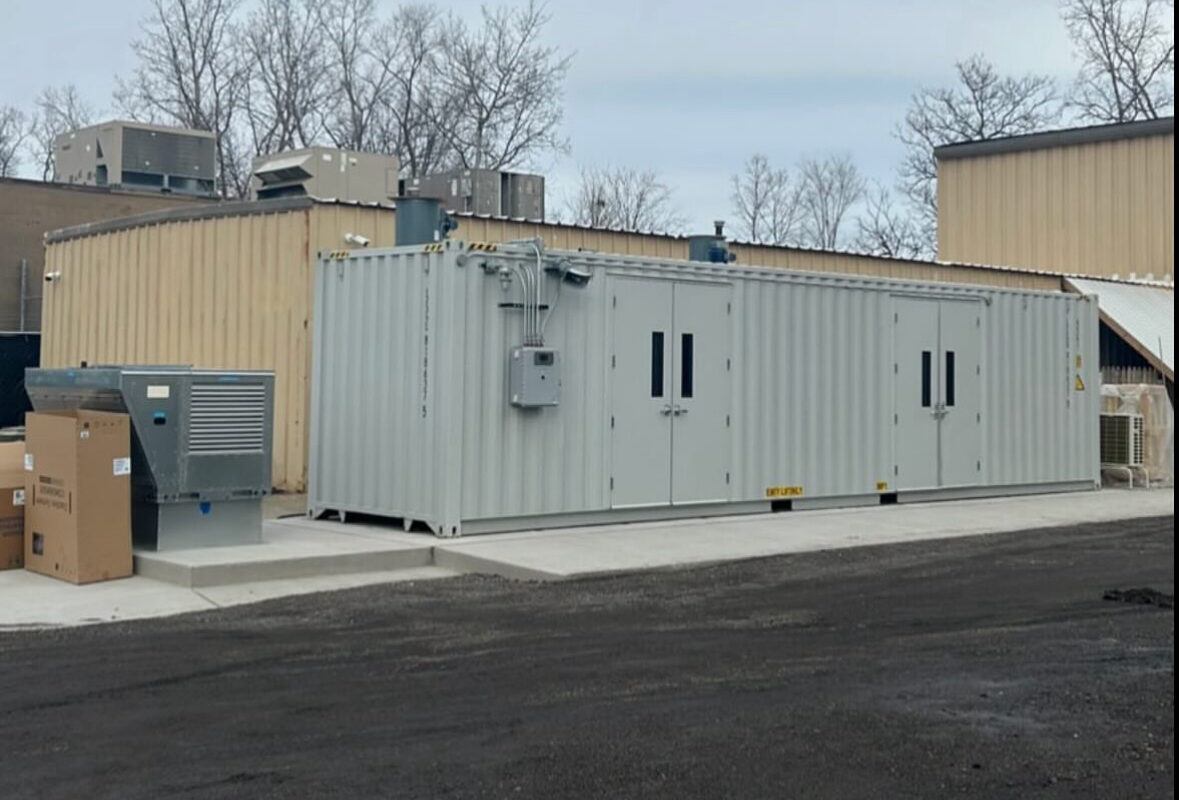
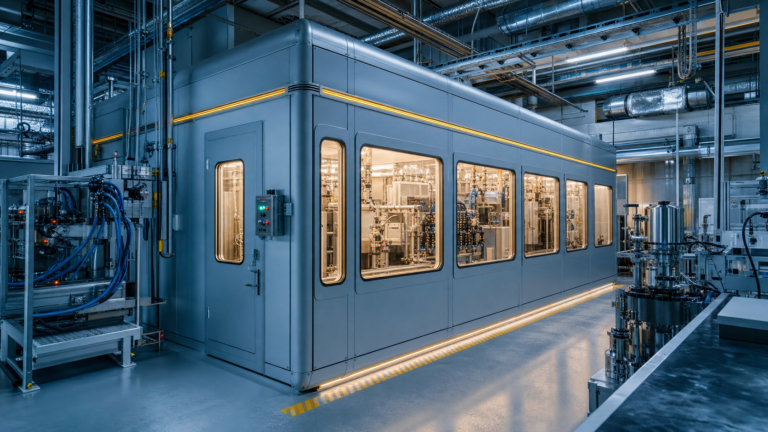
A fully engineered Class 1 Division 1 processing booth designed for high-capacity continuous operation.
Understanding the Regulatory Landscape: NFPA and IFC
When designing a hazardous material processing room, engineers must navigate a complex web of interrelated codes. The two most critical frameworks dictating facility design in the United States are the NFPA 1: Fire Code and the International Fire Code (IFC).
These comprehensive codes outline the exact requirements for Maximum Allowable Quantities (MAQs) of hazardous materials, the necessary fire-resistance ratings for structural elements, and the strict guidelines for handling liquefied petroleum gases, as detailed in NFPA 58. Fire protection engineers utilize these frameworks to define control areas within a facility, ensuring that the volume of flammable solvents stored and processed never exceeds the safety thresholds dictated by the building’s construction type and occupancy classification.
Core Components of Code-Driven Facility Planning
An effective fire protection strategy for a hydrocarbon processing lab goes far beyond simply installing a sprinkler system. It demands a holistic approach to hazard mitigation. The primary components of this strategy include advanced ventilation, continuous gas detection, and intrinsically safe electrical infrastructure.
1. Engineered Ventilation and Continuous Airflow
The first line of defense against explosive atmospheres is mechanical ventilation. In a hazardous processing environment, maintaining a continuous purge of the atmosphere prevents the accumulation of heavier-than-air hydrocarbon vapors near the floor. C1D1 process booths are engineered to provide precise air changes per hour (ACH) based on the specific volume of the room and the type of solvent in use. This highly calculated airflow guarantees that any fugitive emissions are immediately captured and safely exhausted to the exterior of the building.
2. Advanced Gas Detection and Interlock Systems
Human detection of hazardous gas leaks is unreliable and often too late. For this reason, continuous Lower Explosive Limit (LEL) gas monitoring is a non-negotiable requirement. These sophisticated sensors are calibrated to detect trace amounts of solvent vapor. When atmospheric concentrations reach a predetermined threshold—typically 10% to 25% of the LEL—the detection system automatically triggers a series of life-safety interlocks.
These automated responses include:
- Sounding local audible and visual alarms to notify personnel.
- Activating emergency purge ventilation to rapidly evacuate the hazardous atmosphere.
- Disconnecting power to all non-essential and non-classified electrical equipment inside the processing area.
- Closing actuated valves to halt the flow of additional solvent into the processing equipment.
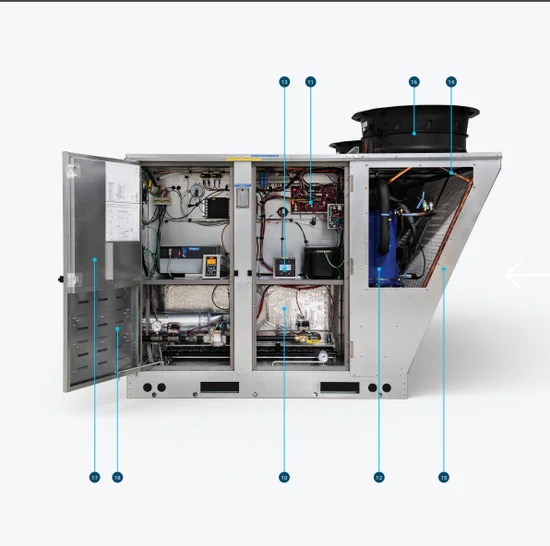
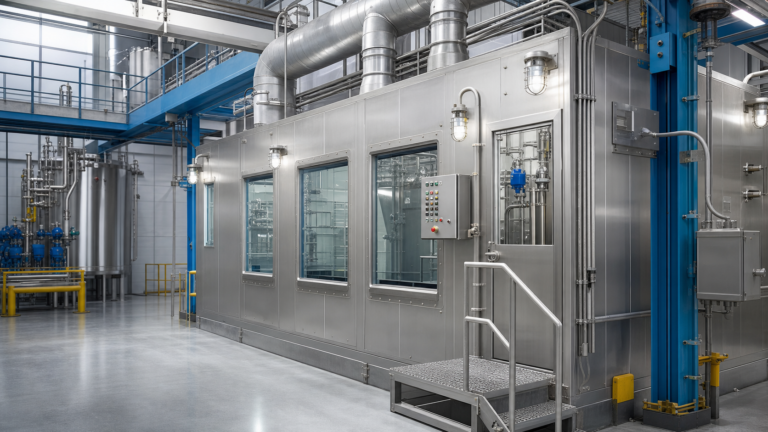
Dedicated mechanical ventilation systems are crucial for maintaining safe atmospheric conditions.
Equipment Selection and C1D1 Compliance
Beyond the structural and mechanical design of the room itself, the equipment utilized within the space must conform to strict electrical classifications. Because hydrocarbons like butane and propane present a constant risk of ignition when mixed with air, all machinery operating within the designated hazardous boundary must be certified for Class I, Division 1 environments.
When selecting butane processing equipment, facility operators must verify that all motors, sensors, and electrical enclosures are either intrinsically safe or explosion-proof. This ensures that in the event of an internal electrical fault or spark, the ignition is contained within the heavy-duty enclosure and cannot propagate into the surrounding volatile atmosphere.
The Importance of Professional Fire Protection Services
Attempting to navigate fire codes and mechanical engineering requirements without specialized expertise often leads to costly construction delays, failed inspections, and compromised safety. Partnering with dedicated professionals for fire protection services for processing labs is the most reliable path to achieving full compliance and securing municipal operating permits.
A specialized fire protection engineer will evaluate the unique workflows of your operation, calculate precise MAQs, design code-compliant control areas, and provide the stamped engineering drawings required by the local Authority Having Jurisdiction (AHJ). This rigorous documentation proves to fire marshals and building inspectors that every conceivable risk has been identified and mitigated.
Conclusion
As the industrial processing sector continues to scale, the demand for high-capacity, safe, and code-compliant facilities has never been greater. By prioritizing fire protection engineering from day one, operators can build resilient processing environments that protect their workforce, satisfy regulatory authorities, and ensure long-term operational success. Understanding and implementing the requirements set forth by the IFC and NFPA is not merely a legal obligation—it is the foundation of a sustainable and secure industrial enterprise.