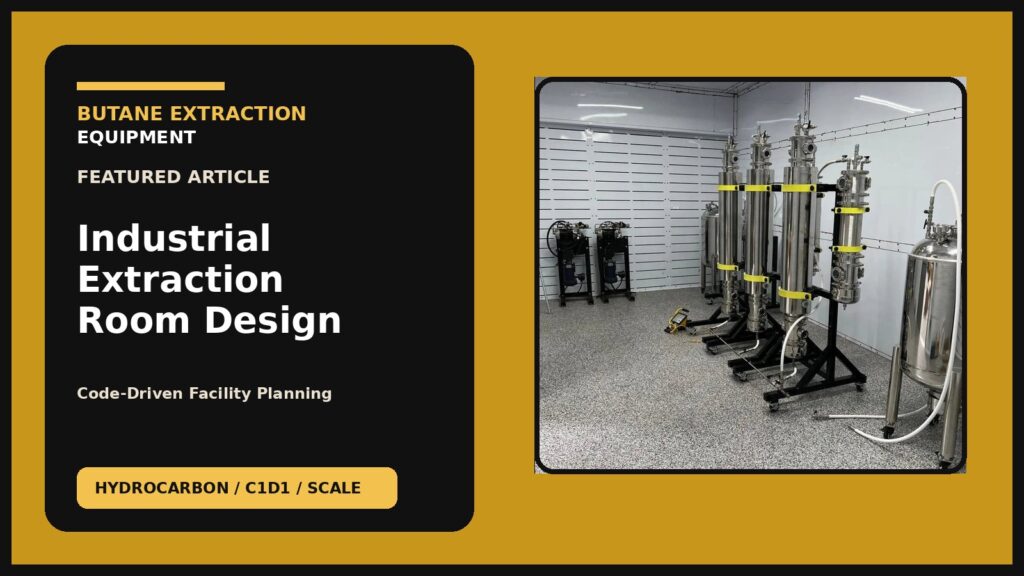
When planning a large-scale hazardous facility, establishing properly defined control areas is fundamental to complying with the International Building Code (IBC) and the International Fire Code (IFC). In industrial extraction, the presence of flammable solvents requires robust storage strategies to maintain safety and legality. Navigating the requirements of these codes ensures that facilities can safely house processing zones, solvent storage, and hazardous waste without unnecessary risk to personnel or neighboring properties. Correct extraction room design mitigates these hazards by controlling flammable limits, integrating sophisticated fire suppression, and actively monitoring the indoor atmosphere.
As the scale of operations grows, from initial pilot runs to high-capacity continuous production, the complexity of facility planning increases exponentially. Early engagement with fire protection engineering professionals and comprehensive adherence to established codes are not merely regulatory hurdles; they are essential components of a sustainable, safe, and efficient operational model. A deeply integrated approach to safety design prevents costly retrofits, operational downtime, and most importantly, catastrophic incidents that endanger life and property.
Defining the Control Area Concept
A control area is a designated space within a building where hazardous materials can be stored, handled, or dispensed under strictly defined limitations. For hydrocarbon extraction or ethanol extraction equipment, flammable liquids and gases fall within these high-hazard classifications. The IBC establishes Maximum Allowable Quantities (MAQ) for these hazardous materials, and keeping operations below these thresholds is crucial. Designing specific, fire-rated control areas provides a safe buffer zone, slowing the propagation of a fire event and keeping overall building quantities manageable.
Control areas are architecturally defined zones, separated by fire-resistance-rated construction. The number of allowable control areas and the MAQ permitted within each depend heavily on their location within the building. For instance, ground floor setups generally allow for greater hazardous quantities compared to subsequent floors, heavily influencing where heavy industrial processing and storage should physically exist within the building’s footprint. The strategic placement of these areas is a cornerstone of intelligent extraction room design.
Integrating compliance within high-volume hazardous storage
Applying the International Building Code (IBC) and International Fire Code (IFC)
Effective facility layout requires meticulous planning surrounding walls and fire barriers. Code guidelines from the ICC and IBC Chapter 4 outline special detailed requirements for hazardous environments, dictating the necessary construction elements. These documents provide the framework for structural integrity, egress routes, and the necessary separation between varying hazard classifications.
Additionally, utilizing rigorous NFPA 30 (Flammable and Combustible Liquids Code) standards is mandatory when handling bulk ethanol or bulk pentane. Maintaining comprehensive compliance translates into clear aisles, proper solvent transfer practices, and the presence of properly calibrated gas detection systems that can rapidly identify hazardous vapor concentrations. NFPA 30 also provides detailed specifications for the design and construction of storage cabinets, inside liquid storage areas, and hazardous material storage lockers.
Working alongside experienced architectural teams and adopting thorough fire protection engineering principles at the blueprint phase minimizes costly post-installation modifications. Structural walls serving as control area boundaries often require a one- or two-hour fire resistance rating, depending on the floor level and the building’s fire sprinkler presence. The interaction between the building’s passive fire resistance and its active suppression systems is a critical dynamic in obtaining final approvals.
Integration of Active and Passive Mitigation
Passive fire containment is useless without active systems supporting it. An effective strategy employs robust ventilation to keep potential flammable clouds far below their Lower Explosive Limit (LEL). When hazardous quantities approach the MAQ limits, continuous, non-recirculating ventilation pulling out heavier-than-air vapors from ground level must be in effect. Standards published by groups like FM Global strongly influence these ventilation design strategies, guiding the installation of intrinsically safe (Class 1 Division 1) HVAC electrical components inside these control boundaries.
Proper ventilation is not merely about removing contaminated air; it is about engineering precise airflow patterns that sweep vapors away from ignition sources and breathing zones. This requires calculated make-up air systems that replenish the exhausted air without creating disruptive turbulence or static zones where dangerous concentrations can accumulate.

Proper electrical infrastructure handling high-capacity solvent flow
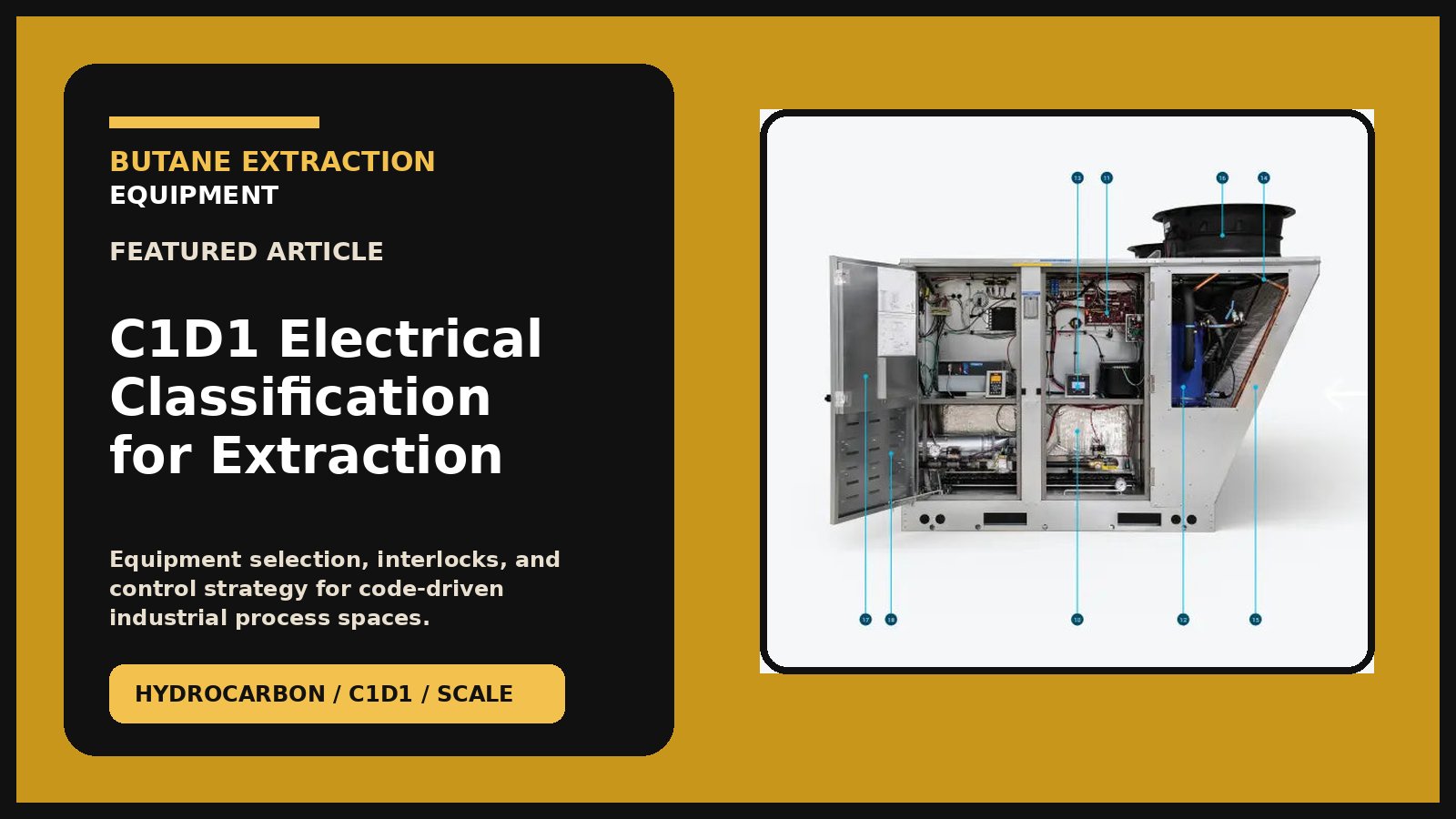
Simultaneously, fire protection services for extraction labs rely heavily on precision detection integrated directly with emergency shut-off controls on the process floor. This safety interlock shuts off solvent transfer valves, removes power from non-essential electronics, and ramps up emergency purge exhaust to its maximum cubic feet per minute (CFM) rate, significantly reducing the probability of catastrophic ignition within the C1D1 boundaries.
These interlocked systems represent the cutting edge of industrial safety. When a lower explosive limit (LEL) sensor detects a rising concentration of solvent vapor, it triggers a cascaded response. Long before the concentration reaches the actual explosive limit, the system isolates the hazard, increases ventilation to dilute the vapor, and alerts personnel to evacuate or address the leak.
Code-Driven Equipment Selection
The equipment utilized within these meticulously designed spaces must also meet rigorous standards. Pressure vessels, pumps, and process piping must be engineered to withstand the specific thermal and pressure stresses of the extraction process. Utilizing equipment that lacks proper certification or engineering review introduces a severe vulnerability into an otherwise compliant facility.
This includes ensuring that all electrical components within the classified area meet the requirements of the National Electrical Code (NEC) for hazardous locations. Explosion-proof enclosures, intrinsically safe circuits, and specialized conduit sealing fittings are mandatory to prevent an electrical spark from igniting ambient vapors.
Understanding and applying hazardous storage techniques in parallel with correct zoning provides a stable pathway for successfully navigating strict local extraction lab building permits, ultimately enabling a fast track toward safe, compliant industrial processing. A holistic approach that integrates architectural design, fire protection engineering, and process safety is the only viable path forward in the highly regulated extraction industry.