Introduction to C1D1 Design Principles
In the realm of extraction facility design, particularly when working with light hydrocarbon solvents, the establishment of a Class 1 Division 1 (C1D1) hazardous location is critical for operational safety and fire code compliance. Ensuring that both the extraction equipment and the surrounding room environment adhere to the stringent requirements set forth by the National Fire Protection Association (NFPA) and the International Fire Code (IFC) is paramount.
A C1D1 designated environment indicates that ignitable concentrations of flammable gases or vapors can exist under normal operating conditions. This necessitates specialized engineering controls, particularly concerning electrical installations, ventilation, and fire suppression systems.

Example of an explosion-proof walk-in fume hood booth, engineered for C1D1 environments.
Ventilation and Air Exchange Dynamics
One of the most essential aspects of C1D1 room design is the ventilation system. The NFPA 497 provides specific guidance on the recommended practices for the classification of flammable liquids, gases, or vapors and of hazardous locations for electrical installations.
Effective ventilation dilutes any released hydrocarbon vapors well below their Lower Explosive Limit (LEL). Continuous air exchange rates must be calculated based on the maximum anticipated release volume and the room’s total cubic footage. Mechanical exhaust systems must be interlocked with extraction operations to prevent processing if adequate airflow is compromised.
Electrical Intrinsic Safety and Enclosures
All electrical components within the C1D1 zone—including lighting, switches, sensors, and motors—must be rated as intrinsically safe or housed within explosion-proof enclosures. This prevents any electrical arcing or thermal heat generation from becoming an ignition source.
When selecting your hydrocarbon extraction equipment, evaluating the manufacturer’s compliance with national listing agencies helps verify that the unit meets rigorous safety evaluations. More details on compliant extraction configurations can be reviewed on our C1D1 Extraction Booths page.
Fire Protection Engineering Controls
Beyond prevention through ventilation and spark elimination, robust fire suppression is an engineering requirement. The IFC 2021 mandates specific fire protection systems tailored to the hazard class of the facility.
C1D1 environments frequently integrate clean agent suppression systems, such as FM-200 or specialized dry chemical suppression, calibrated to deploy rapidly while minimizing damage to expensive extraction apparatus.

Integrated Fire Suppression System aligned with international safety codes.
Strategic Integration and Facility Layout
Optimal facility planning involves strategic isolation. High-risk zones, such as the active closed-loop extraction area, should be strictly segregated from post-processing and administration environments. Properly engineered fire-rated partitions and self-closing, vapor-tight doors ensure that in the event of an anomaly, the hazard is localized.
Consultation with a registered Fire Protection Engineer (FPE) is crucial. They bridge the gap between architectural plans and complex code requirements. For more resources on professional compliance assistance, see our overview of Fire Protection Engineering services.
Ongoing Safety Management
Securing initial permits and approval is only the beginning. Sustained compliance hinges on scheduled preventative maintenance, particularly evaluating gas detection sensors and ventilation fan belts. We highly recommend reviewing standards such as those from FM Global for comprehensive property loss prevention data regarding hazardous materials processing.
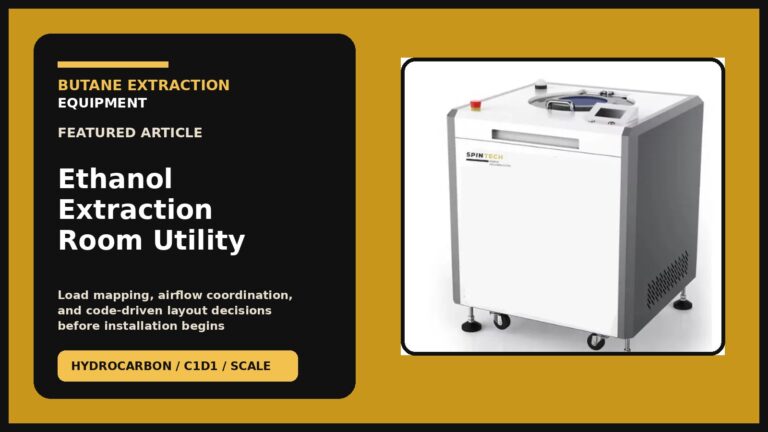
Integrating compliant technologies such as ethanol extraction equipment similarly requires diligent adherence to fire code criteria, particularly concerning flammable liquid storage maximum allowable quantities (MAQs).