Introduction to Scalable Facility Planning
As industrial extraction demands grow, operators frequently face the challenge of scaling operations safely without compromising safety or regulatory compliance. Designing an industrial extraction room for expanded capacity requires meticulous planning and an unwavering focus on code requirements. When transitioning from smaller batch setups to high-volume continuous processes, the integration of specialized C1D1 booths, hydrocarbon extraction equipment, and ethanol extraction equipment must align with the International Fire Code (IFC), the International Building Code (IBC), and applicable National Fire Protection Association (NFPA) standards.
Capacity planning is not merely about calculating square footage; it involves a comprehensive assessment of hazardous material quantities, control areas, ventilation demands, and fire protection engineering. Proper facility design ensures that future growth does not necessitate costly retrofits or result in operational bottlenecks due to compliance violations.
Hazardous Material Control Areas (MAQ)
The foundation of any code-driven facility planning for extraction operations is the determination of Maximum Allowable Quantities (MAQ) of hazardous materials. The IFC and IBC define specific limits on the volume of flammable liquids and gases that can be stored and utilized within a single control area. When scaling up operations, exceeding these baseline MAQs triggers stricter building classifications, often moving a facility into a High Hazard (Group H) occupancy classification.
To safely manage increased throughput, engineers must design multiple control areas separated by fire-resistance-rated construction or employ specialized hazardous material storage systems. Understanding the interplay between solvent usage—whether in hydrocarbon extraction equipment or ethanol extraction systems—and facility design is crucial. Operators should consult the NFPA 30 Flammable and Combustible Liquids Code to ensure their storage and handling strategies align with national safety benchmarks.
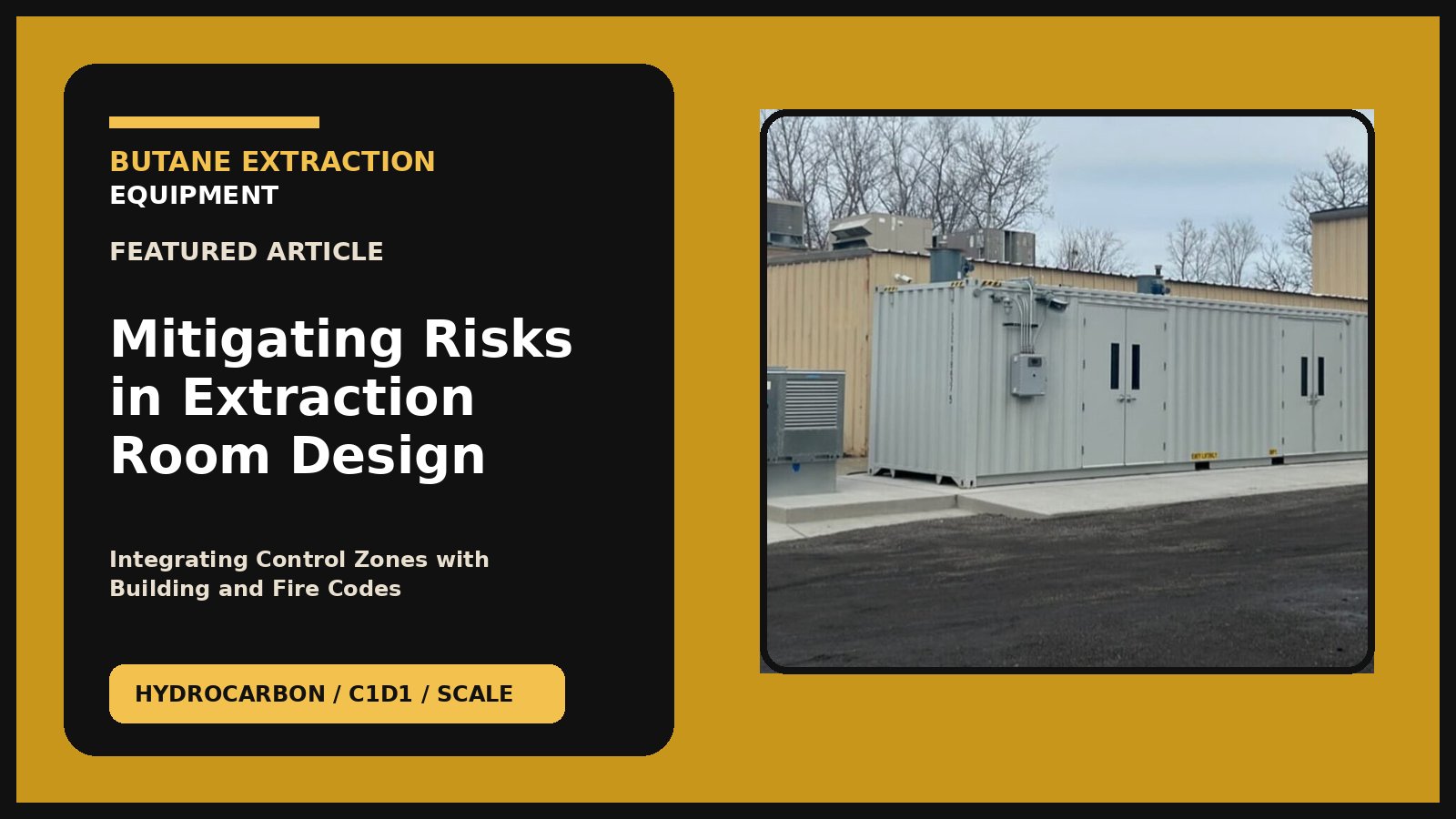
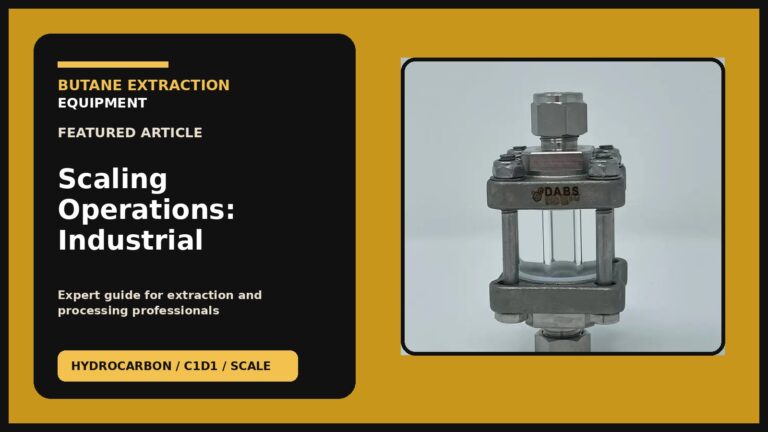
Industrial hydrocarbon extraction equipment integrated into a code-compliant C1D1 booth.
Engineering Ventilation and Exhaust Systems
Scaling extraction operations inherently increases the risk of solvent vapor accumulation. Therefore, robust ventilation is a critical component of industrial extraction room design. Specialized C1D1 booths are engineered to maintain a safe working environment by continuously exhausting hazardous vapors, keeping concentrations well below the Lower Flammable Limit (LFL).
When capacity expands, the exhaust system must be scaled proportionally. This involves upgrading variable frequency drives (VFDs), increasing duct sizes, and ensuring makeup air units can deliver sufficient tempered air without creating negative pressure issues in adjacent building areas. The NFPA 91 Standard for Exhaust Systems for Air Conveying of Vapors, Gases, Mists, and Particulate Solids provides essential guidelines for designing systems capable of safely mitigating the increased vapor loads generated by scaled-up hydrocarbon and ethanol extraction equipment.
Fire Protection Engineering and Suppression
Increased operational capacity demands a corresponding elevation in fire protection engineering. Standard sprinkler systems are often inadequate for facilities handling high volumes of flammable solvents. Upgrading to specialized suppression systems is a non-negotiable aspect of responsible capacity planning.
For operations utilizing substantial quantities of ethanol extraction equipment or large-scale hydrocarbon systems, operators must consider advanced suppression technologies. These may include foam-water deluge systems, clean agent suppression, or high-expansion foam systems, depending on the specific hazard profile. Coordinating these systems with the facility’s overall fire alarm and emergency shutdown (ESD) protocols is essential. Integrating extraction equipment with facility-wide safety interlocks ensures that in the event of an anomaly, solvent flow is halted, and suppression systems deploy rapidly. Reference to NFPA 13 Standard for the Installation of Sprinkler Systems and specialized FM Global data sheets is crucial when designing high-hazard fire protection systems.
Integrating Equipment within C1D1 Booths
As equipment footprints expand, the layout within C1D1 booths must be optimized for both operational efficiency and safety. Code-driven facility planning requires that adequate egress pathways are maintained, regardless of equipment density. The placement of hydrocarbon extraction equipment, solvent recovery vessels, and chillers must allow for routine maintenance and rapid evacuation.
Furthermore, scaling operations often involves linking multiple pieces of equipment through hard-piped solvent transfer lines. These lines must be engineered to withstand process pressures and must include appropriate pressure relief valves vented safely to the exterior. For more information on achieving seamless compliance during scale-up, review our resources on extraction lab building permits.
Electrical Classifications and Power Management
Expanding extraction capacity significantly impacts a facility’s electrical load. Upgrading electrical service must be carefully planned to accommodate the increased power demands of larger chillers, heaters, and high-capacity extraction systems. Crucially, all electrical installations within the extraction room and surrounding control areas must adhere strictly to Class I, Division 1 (C1D1) or Class I, Division 2 (C1D2) requirements as dictated by the National Electrical Code (NEC).
When scaling, operators must ensure that all new motors, sensors, and control panels are properly classified for hazardous locations. Implementing intrinsically safe barriers and explosion-proof enclosures is mandatory to prevent ignition sources in areas where flammable vapors may be present. Comprehensive engineer peer reviews are vital to verify that the upgraded electrical infrastructure meets all stringent code requirements.
Conclusion
Successfully scaling an industrial extraction facility is a complex engineering challenge that extends far beyond simply installing larger equipment. It requires a holistic approach to capacity planning, rooted in a deep understanding of fire code, building code, and specialized engineering principles. By prioritizing robust ventilation, advanced fire protection engineering, and strict adherence to MAQ limits, operators can safely expand their capabilities.
Investing in code-compliant C1D1 booths and expertly engineered facility designs ensures that operations can grow efficiently while maintaining the highest safety standards. For operations seeking comprehensive guidance on expanding their capabilities, exploring fire protection services for extraction labs provides the necessary expertise to navigate complex regulatory landscapes.